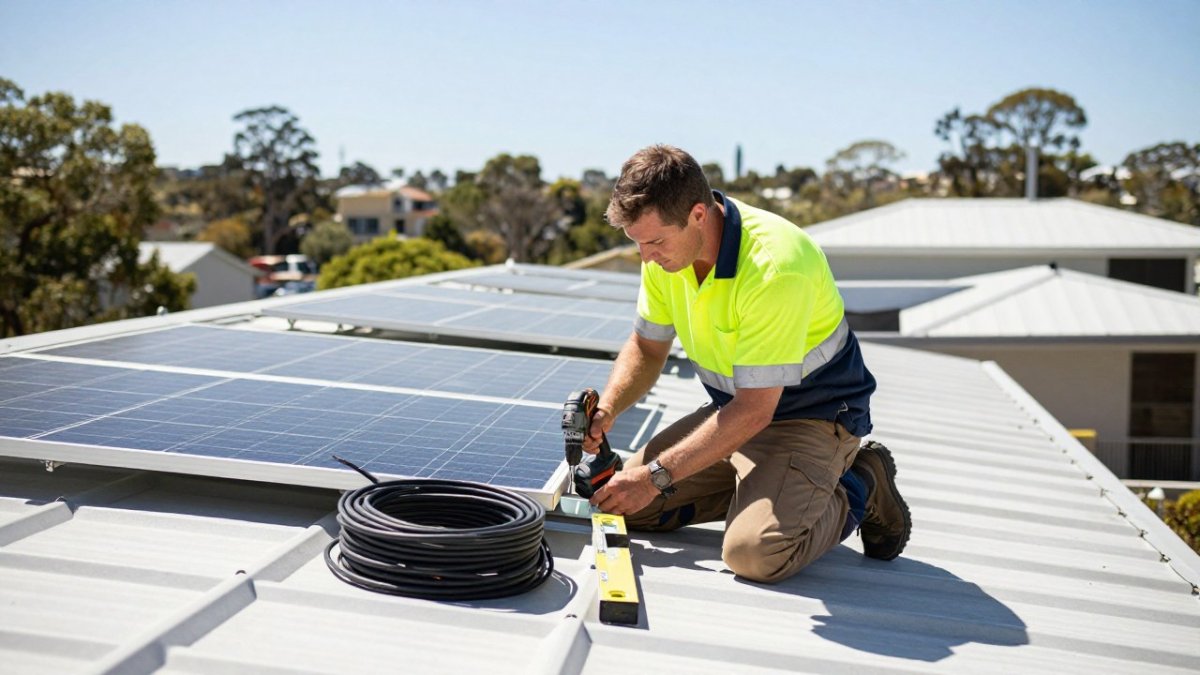
Local Solar Electrical Contractors: Why Local Wins
Last Updated: November 11, 2026
Quick Summary
Hiring local solar electrical contractors gives you accountability, because the person who quotes your job also does the wiring, so there is nobody to blame and nobody to chase. Call centres book the work and hand it to whichever crew is free, while local contractors make a site visit a normal part of the process.
- Brux Electrical runs an owner-operated team, so the person quoting your job also does the work.
- Check for a current electrical contractor licence, Clean Energy Council accreditation and current insurance before you sign.
- Ask for an itemised quote, not a lump sum, and question any quote that will not name the inverter model.
- Confirm in writing who lodges manufacturer claims and whether after-sales service is in-house or outsourced.
- Off-grid system sizing must account for winter generation, not just summer, or you lose power in bad weather.
Table of Contents
- Why Local Solar Electrical Contractors Beat the Call Centres
- Proximity and Rapid Response Times Across the Coast
- What a Licensed Solar Installer Queensland Actually Means
- Your Solar Installation Quote Checklist Before You Sign
- Questions to Ask a Solar Installer Before You Commit
- Solar Panel Installation Warranty and After-Sales Service That Holds Up
- Battery Storage, Off-Grid Systems and Post-Installation Troubleshooting
- Get a Quote from a Local Team That Does the Work Itself
- Frequently Asked Questions
Why Local Solar Electrical Contractors Beat the Call Centres
The benefits of hiring local solar electrical contractors come down to one thing: accountability. When the person who quotes your job also does the wiring, there is nobody to blame and nobody to chase. At Brux Electrical, we run an owner-operated team, and that structure changes how a solar job gets done.
Call centres book the work, then hand it to whichever crew is free. Local solar electrical contractors work the other way around, and a site visit is a normal part of the process.
Below, we break down what that difference means for response times, compliance, warranty support and the quote you sign.
Proximity and Rapid Response Times Across the Coast
Distance matters in electrical work, because a local team is closer to your property when it needs attention.
Larger call-centre models often route jobs to subcontractors across a wide area, which can make the crew that turns up less familiar with your property.
Local solar electrical contractors are familiar with the area's housing, which helps with planning the installation.
- One point of contact, with the person quoting your job also doing the work
What a Licensed Solar Installer Queensland Actually Means
Brux Electrical is fully licensed and insured. When choosing any solar installer in Queensland, it is worth checking that they hold a current electrical contractor licence and, for solar work, Clean Energy Council accreditation.
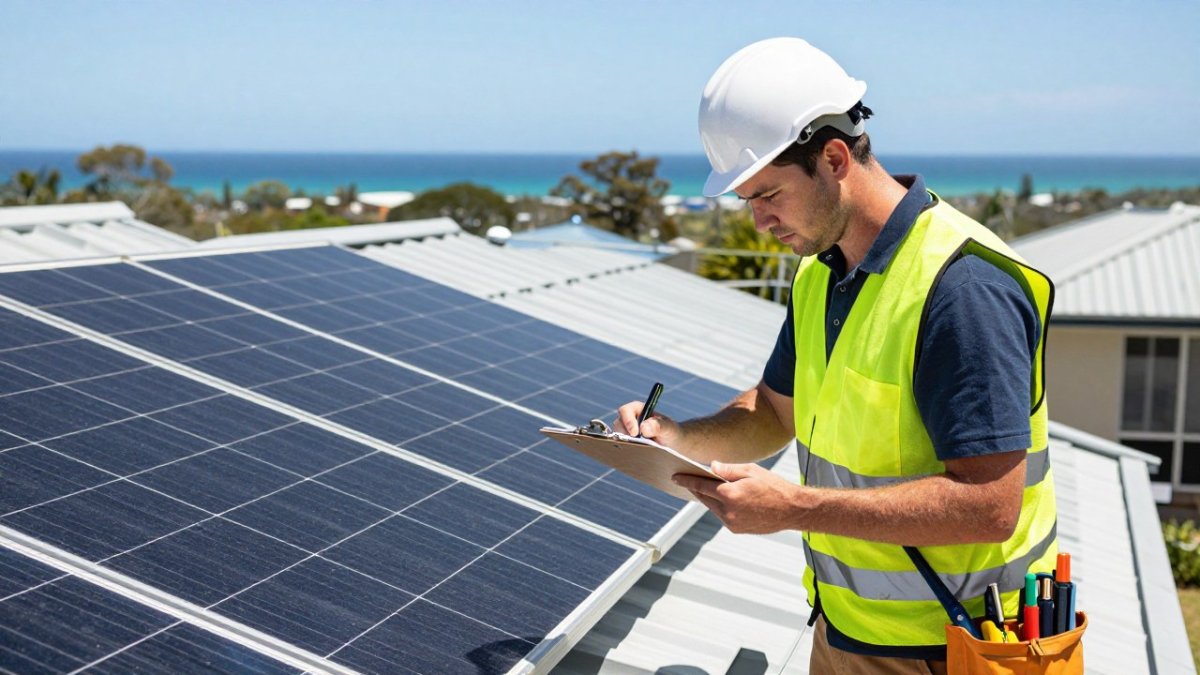
Electrical work in Queensland must be carried out by a licensed electrical contractor, so it is worth confirming the licence before work begins.
Three things to check before you sign:
- The electrical contractor licence, verified with the relevant Queensland authority
- Clean Energy Council accreditation for the installer
- Current insurance covering the work
Compliance standards are not paperwork for its own sake. Voltage regulation, inverter configuration and system commissioning all affect whether your system performs safely for the next decade. Where work is subcontracted, accountability can become harder to trace when something goes wrong, which is why it helps to confirm who holds the licence.
Your Solar Installation Quote Checklist Before You Sign
A quote should let you compare apples with apples. Here is a checklist to use when comparing quotes before you commit.
| Checklist Item | What Good Looks Like | Red Flag |
|---|---|---|
| Panel and inverter models | Named brands and model numbers | "Tier 1 panels" with no brand |
| System size | Matched to your bill and usage | Oversized system, no usage data |
| Rebate treatment | STC discount shown as a line item | Vague "government rebate included" |
| Warranty terms | Separate panel, inverter and workmanship terms | One combined "25-year warranty" claim |
| Installer details | Licence number and accreditation listed | No licence number anywhere |
| Payment terms | Deposit plus staged payments | Large upfront cash request |
Ask for an itemised quote, not a lump sum. If a quote will not name the inverter model, that is worth questioning. For a fuller walkthrough of getting and comparing quotes, see our guide to getting a solar installation quote on the Gold Coast.
Questions to Ask a Solar Installer Before You Commit
The best filter is a direct question about who turns up on the day. Ask it early.
Judging a quote on price alone can be a mistake, since the workmanship guarantee and aftercare affect the total cost of ownership.
Ask these before you sign:
- Who will physically install the system, and are they employees or subcontractors?
- How did you size this system, and can I see the usage figures behind it?
- What happens if the inverter fails in year four?
- Who handles the warranty claim, you or the manufacturer?
- Will you show me the monitoring app setup at handover?
If the answers get vague, walk away. Our guide on how to choose a solar installer goes deeper on vetting and red flags.
Solar Panel Installation Warranty and After-Sales Service That Holds Up
Warranty support matters after installation. Panels and inverters carry manufacturer warranties, while the workmanship guarantee comes from the installer, so it is worth confirming who will stand behind the work.
Local solar electrical contractors have a reputation to protect in their own area, which supports accountability after installation.
What to confirm in writing:
- Workmanship guarantee length and what it covers
- Who lodges the manufacturer claim on your behalf
- Response time commitments for faults and who your contact will be
- Whether after-sales service is in-house or outsourced
Post-installation troubleshooting is worth asking about. Common faults include tripped isolators, inverter firmware that needs updating, and settings changed during commissioning that reduce generation.
Preventative maintenance is also worth considering, as routine checks can catch small faults early. Our steps for avoiding solar installation warranty issues cover the paperwork side in detail, and our off-grid solar troubleshooting walkthrough covers common faults step by step.
Battery Storage, Off-Grid Systems and Post-Installation Troubleshooting
Battery storage changes the install, and it changes the support you need afterwards. A grid-connected system with a battery needs correct inverter configuration and commissioning.
Off-grid systems raise the stakes. Sizing must account for winter generation, not just summer. Get that wrong and you lose power in bad weather, which is exactly when you need it most.
Post-installation troubleshooting is worth planning for. When a system underperforms, the cause is often a tripped isolator, a firmware update, or a setting changed during commissioning.
If you already run off-grid and something has drifted, our off-grid solar troubleshooting walkthrough covers the common faults step by step.
Get a Quote from a Local Team That Does the Work Itself
The real test of any installer is what happens after the invoice is paid. Systems need checking, faults need fixing, and warranties need someone who answers the phone.
At Brux Electrical, we quote the job and we do the job. No subcontractors, no call centre between you and the sparkie. We are fully licensed and insured, and we size systems to your actual bills rather than a sales target. If you want to understand why that matters when work gets handed down the chain, read our guide to avoiding subcontractor issues on solar installs.
Get a quote from Brux Electrical and get a clear, itemised price from the team that will be on your roof.
Solar is a long-term purchase, and the installer matters as much as the panels. If you want a system sized to your usage and a local team that handles the aftercare, Brux Electrical can help. We provide clear, itemised quotes, direct communication from first call to switch-on, and systems right-sized to your energy bills. Get started with Brux Electrical and get a solar quote from a local team that does the work itself.
Frequently Asked Questions
What are the benefits of hiring local solar electrical contractors?
Local, owner-operated solar electrical contractors are one point of contact from quote to installation, so the person who quotes your job is the person who does the work. The person who quotes your job is often the same person who installs it, which means fewer surprises and clearer accountability from start to finish.
How do I check whether a solar installer is licensed in Queensland?
Ask for their electrical contractor licence number and check it against the Queensland Electrical Safety Office register. Ask for proof of insurance as well, and confirm the licence covers the solar and battery work you are considering.
What should a solar installation quote include?
A complete quote should itemise the panels, inverter, mounting and battery (if included), plus labour, system commissioning and any switchboard upgrades. It should state the expected system size in kilowatts, the estimated annual output, and whether the price includes grid connection paperwork. Ask whether the quote covers compliance standards and who lodges the rebate paperwork. If a quote is a single lump sum with no breakdown, ask for the itemised version before you compare anything.
Does a local solar installer provide better after-sales support?
It is worth asking. Ask upfront who attends if the inverter faults in year three, and whether that is the same team that installed it. Solar panel installation warranty and after-sales service terms vary widely, so get the response time and the responsible party in writing before you sign.

