How to Choose a Solar Installer: Gold Coast Guide
Table of Contents
- What Makes a Quality Solar Installer on the Gold Coast
- Questions to Ask Solar Installers Before You Commit
- CEC Accredited Solar Installer Gold Coast: Why It Matters
- Understanding Solar Panel Installation Cost Gold Coast
- Red Flags and Common Pitfalls to Avoid
- The Installation Process and What to Expect
- Aftercare and Long-Term Support
- Conclusion
Last Updated: August 18, 2026
What Makes a Quality Solar Installer on the Gold Coast
Choosing a solar installer is one of the most important decisions you'll make when transitioning to renewable energy. A quality installer will assess your property, understand your energy consumption, and design a system that matches your needs rather than oversizing to inflate the quote.
The difference between a good installer and a poor one comes down to transparency and accountability. Look for an installer who provides a detailed, itemised quote breaking down equipment costs, labour, and additional work required. A legitimate installer won't hide behind vague pricing or pressure you into decisions before you understand what you're paying for.
Experience matters, but not in the way many assume. What actually matters is whether they understand your specific situation and have worked on properties similar to yours. Brux Electrical, a Tugun-based owner-operated team, exemplifies this approach by ensuring the same licensed electrician who quotes your job handles the installation from start to finish. This continuity means the person who understands your energy needs implements the solution.
Your installer should also discuss long-term support. You need to know who you'll call when questions arise after installation. An installer who vanishes once the system is switched on leaves you vulnerable when issues emerge.
Questions to Ask Solar Installers Before You Commit
Before signing any contract, ask potential installers these specific questions. Their answers reveal whether they're genuinely interested in your needs or just closing a sale.
Understanding their qualifications and experience
Start by asking whether they're Clean Energy Council (CEC) accredited. This accreditation is essential in Australia and indicates the installer meets national standards. Ask how long they've been installing solar systems and request to see actual documentation of licences and insurance.
Inquire about their experience with your specific roof type and orientation. A metal roof requires different techniques than tile or slate. An experienced installer will have a clear answer about how they've handled similar situations.
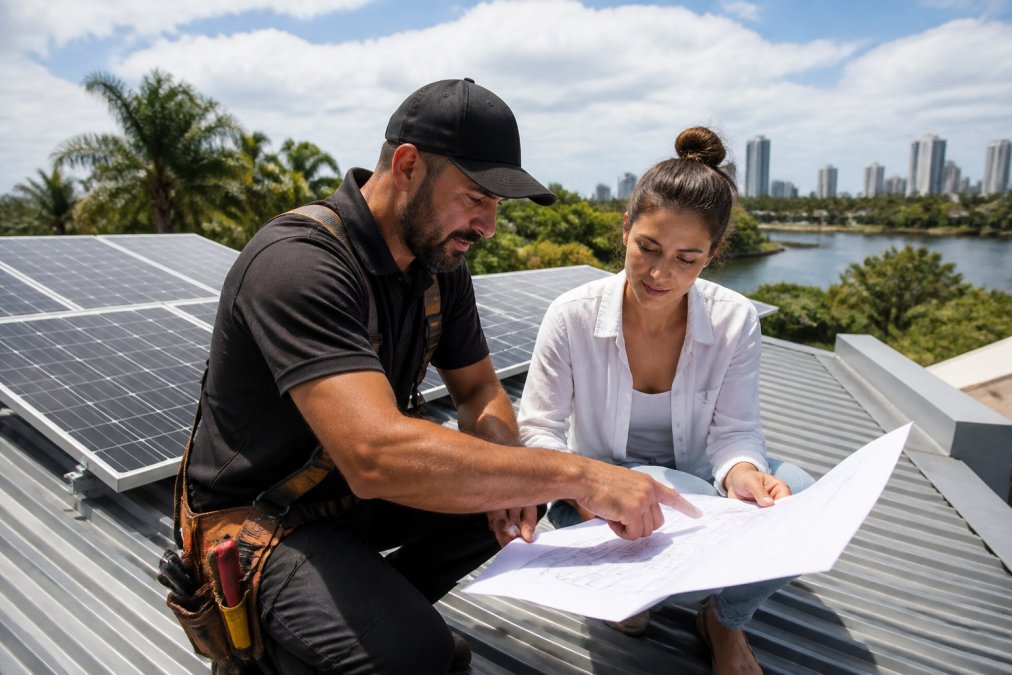
Ask them to explain their process for assessing your energy needs. They should ask about your current electricity bills, daily usage patterns, and whether you plan to add electric heating or an EV charger. If they skip this conversation and jump straight to recommending a system size, they're not sizing the installation to your actual requirements.
How they approach your specific needs
Request a detailed explanation of why they're recommending a particular system size and brand. Ask them to show you the calculation used to determine how many kilowatts you need. A reputable installer will walk you through this step-by-step.
Ask about the equipment they use. Which solar panel manufacturer do they recommend, and why? What inverter model are they proposing? An installer who can articulate the trade-offs between options is more trustworthy than one who insists there's only one right choice.
Discuss the timeline. How long will installation take? What happens if weather delays the work? Ask what happens if something fails after installation and whether they'll return to fix it under warranty.
Finally, ask whether they'll do the work themselves or use subcontractors. If they're handing your job off to someone else, you lose direct communication with the person responsible for quality. Brux Electrical's model of having the quoting electrician perform the installation eliminates this middleman problem.
CEC Accredited Solar Installer Gold Coast: Why It Matters
A CEC accredited solar installer gold coast has met rigorous national standards set by the Clean Energy Council. This accreditation is essential for systems that connect to the grid and claim renewable energy incentives.
CEC accreditation requires installers to complete formal training, pass competency assessments, and maintain ongoing professional development. It also means they're bound by a code of conduct that includes consumer protection measures. If an accredited installer breaches their obligations, you have recourse through the CEC.
Non-accredited installers may offer lower prices, but systems installed by non-accredited operators often face issues with grid connection, warranty claims, and insurance. Your homeowners insurance may not cover damage to a system installed without proper credentials. You also won't qualify for Small-scale Technology Certificates (STCs), which provide financial incentives for solar installations in Australia.
When evaluating a solar installer gold coast, verify their CEC accreditation directly through the Clean Energy Council website rather than taking their word for it. Check the accreditation status of both the company and the individual electricians who'll work on your property.
Understanding Solar Panel Installation Cost Gold Coast
Pricing for solar panel installation cost gold coast varies based on system size, equipment quality, roof complexity, and additional work required. You need quotes from multiple installers to understand what your specific installation will cost.
What matters is understanding what you're paying for. A detailed quote should separate these costs: solar panels, inverter, mounting hardware, electrical work, labour, permits, and any additional components like battery storage. If a quote lumps everything into a single line item, ask for a breakdown.
The cheapest quote isn't necessarily the best value. An installer offering significantly lower prices may be cutting corners on equipment quality or planning to upsell you additional work once started. Conversely, the most expensive quote isn't automatically superior.
Ask installers whether the quoted price includes all necessary work to get your system grid-connected and operational. Some quotes exclude the cost of upgrading your electrical switchboard if outdated, or addressing safety defects in your existing installation.
Request a warranty breakdown. What's covered, for how long, and who honours the warranty if the company goes out of business? A 10-year inverter warranty is standard, but panel warranties often extend to 25 years.
Red Flags and Common Pitfalls to Avoid
Certain warning signs indicate an installer you should avoid. If they pressure you to decide on the same day as your consultation, that's a red flag. Legitimate installers expect you to review quotes and compare options.
An installer who dismisses your questions or becomes defensive when you ask for clarification is signalling they're not interested in genuine dialogue. You're about to invest tens of thousands of dollars; any installer worth hiring will welcome your scrutiny.
Beware of installers who guarantee specific savings or returns on investment. Solar performance depends on weather, shading, system maintenance, and electricity rate changes. Anyone promising guaranteed financial outcomes is either lying or doesn't understand the technology.
If an installer recommends a system significantly larger than your current usage suggests, ask why. Oversizing can make sense if you're planning to add heating or an EV charger, but if they're recommending 15kW when your bills show 8kW average consumption, they're inflating the quote.
Watch for installers who won't provide references or case studies. Ask them to show examples of similar installations on the Gold Coast. A reputable installer will have before-and-after photos and be willing to connect you with previous customers.
Avoid anyone offering unusually generous financing terms or claiming you'll pay nothing upfront. Read the fine print on any financing agreement and understand the total cost including interest.
The Installation Process and What to Expect
Understanding what happens during installation helps you prepare and spot when something's going wrong.
The process typically begins with a site survey. The installer assesses your roof condition, measures available space, checks for shading, and evaluates your electrical switchboard. This survey informs the final system design.
Next comes the design phase, where the installer creates detailed plans showing panel placement, wiring routes, and equipment locations. You should receive these plans in writing and have the opportunity to ask questions before work begins.
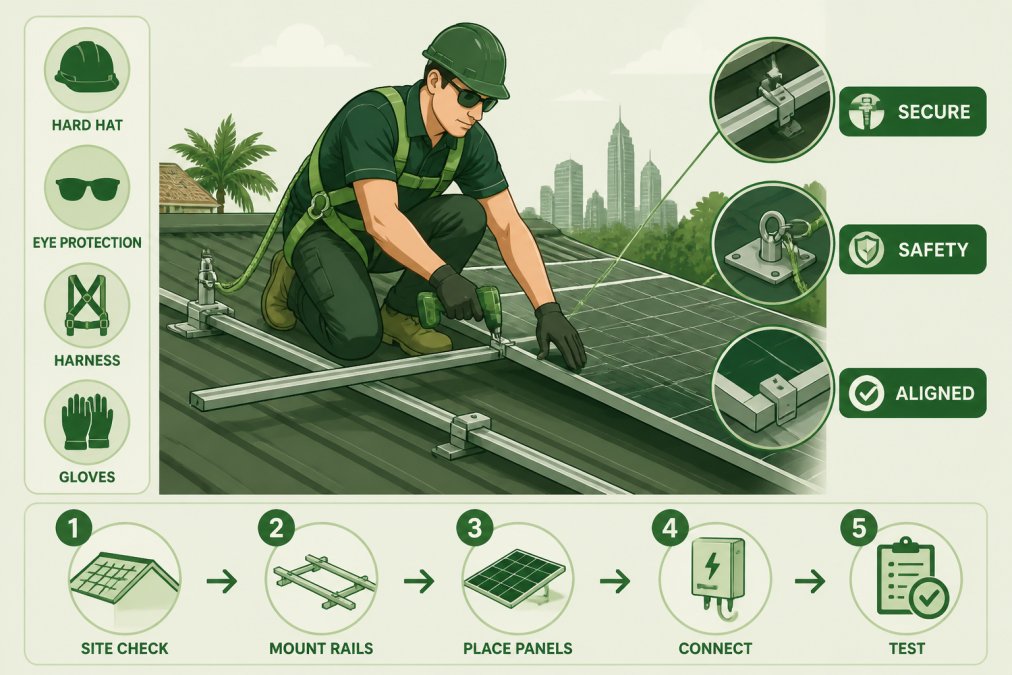
The actual installation involves several stages. First, the mounting structure is installed on your roof. Next, panels are mounted to the structure. Wiring is then run from the panels to the inverter, which converts DC power to AC power for your home. Finally, the system is connected to your switchboard and tested.
Throughout this process, the installer should communicate about progress, any issues that arise, and the timeline for completion. If work stops unexpectedly without explanation, that's a problem.
Before the system goes live, it must be inspected by a qualified electrician. Once inspected and approved, the system is connected to the grid.
The installer should provide documentation including the warranty certificate, performance monitoring login details, and a manual explaining how to use and maintain the system. They should walk you through the monitoring app so you can track your system's performance.
Aftercare and Long-Term Support
Your relationship with your installer shouldn't end when the system is switched on. Quality aftercare separates a good installer from one you'll regret hiring.
Ask potential installers what their aftercare support includes. Do they monitor your system's performance and alert you to issues? Will they respond to service calls, and how quickly? Is there a cost for service calls outside the warranty period?
A system working properly requires minimal maintenance, mainly keeping panels clean and ensuring nothing blocks sunlight. However, if your inverter fails, your monitoring app stops working, or you notice a sudden drop in performance, you need someone you can contact who understands your system.
Understand the warranty structure. Most warranties are transferable if you sell your home, which adds value to your property. Clarify this process upfront.
Ask about spare parts availability. If your inverter fails in five years, will the manufacturer still stock that model? A good installer will either stock common spare parts or have relationships with suppliers ensuring quick replacement.
Finally, discuss what happens if the installer goes out of business. If they're your only point of contact for warranty claims or technical support, and they disappear, you're stranded. Installers who work with reputable equipment manufacturers and have proper documentation in place provide better protection, because the equipment warranty remains valid regardless of what happens to the installation company.
Choosing the right solar installer determines whether your investment delivers the savings and reliability you expect. The process requires asking detailed questions, verifying credentials, and understanding what you're paying for. A quality installer on the Gold Coast will provide transparent quotes, explain their methodology, and remain available long after installation is complete. Prioritise direct communication and accountability over the lowest price. Brux Electrical's commitment to having the quoting electrician handle the entire installation and provide ongoing local support exemplifies the standard you should expect. Get quotes from installers who demonstrate genuine interest in your specific needs, and you'll have a solar system that performs as intended for decades to come.
Frequently Asked Questions
How do I know if a solar installer is CEC accredited?
Check the Clean Energy Council (CEC) database on their website to verify the installer's accreditation. A CEC accredited solar installer has met strict training and competency standards. Always ask the installer directly for their CEC accreditation number and confirm it matches their business name. Accreditation is a key sign they meet industry standards and understand the regulations that apply to your system.
What should I look for in a solar quote?
A quality quote breaks down equipment costs, labour, and any additional work separately. It specifies the brand and wattage of panels, inverter type, and warranty terms. The quote should address your actual energy usage, not oversell capacity. Avoid quotes that are vague about components or labour. Compare quotes from at least two installers, but remember that the cheapest option often cuts corners on quality or uses lower-grade equipment.
Will a solar installer use subcontractors, or will they do the work themselves?
Ask directly whether the installer who quotes your job will be the one installing it, or if they'll hand the work to subcontractors. Owner-operated installers typically handle the full project themselves, giving you consistent communication and accountability. Larger companies often use subcontractors, which can delay problem-solving and reduce quality control. Knowing who will actually be on your roof matters for both the quality of work and your peace of mind.
What happens if something goes wrong after installation?
Confirm the warranty coverage and who handles support after installation. Find out whether the installer provides local aftercare or if you'll be passed to a third party. A reliable installer stands behind their work and is accessible for follow-up issues. Ask about response times for faults and whether they'll troubleshoot remotely or send someone out. Direct access to the installer who installed your system usually means faster, more reliable support.
How is solar panel installation cost determined on the Gold Coast?
Cost depends on system size, panel quality, inverter type, roof complexity, and any additional work like power pole upgrades or battery storage. Larger systems cost more upfront but deliver greater long-term savings. Labour costs vary based on installation difficulty and local conditions. Rather than assuming a price, get itemised quotes from installers who understand your specific property and energy needs. Contact Brux Electrical for a clear quote tailored to your home.
Are there specific solar regulations I need to know about?
Solar installations must comply with the National Electricity Rules and Australian Standards, including AS/NZS 5033 for grid-connected systems. Your installer should handle all necessary approvals and network connection applications. Some council areas have specific rules about roof aesthetics or structural assessments. A CEC accredited installer will know these requirements and ensure your system meets all standards before switch-on.
Why choose a local solar installer over a national company?
Local installers know the regional climate, council requirements, and network conditions. You get direct access to the person who quoted and installed your system, not a call centre. Local aftercare is faster and more personal. Owner-operated installers often prioritise quality over volume, meaning your system is right-sized to your needs rather than oversold. Supporting a local business also keeps money in your community.
This article was written using GrandRanker
