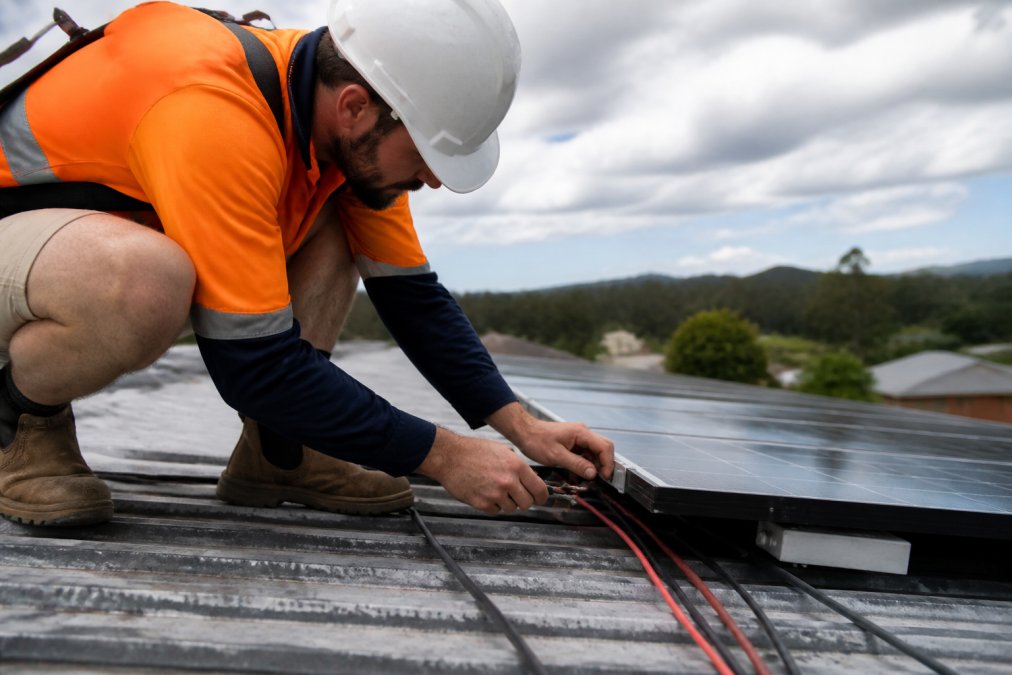
Avoiding Solar Installation Subcontractor Issues: A How-To
Table of Contents
- Why Subcontractor Issues Matter in Solar Installation
- Questions to Ask Solar Installers Before Signing a Contract
- How to Check Electrical Contractor License QLD Status
- Solar Installation Quality Checklist: What to Inspect
- Common Pitfalls to Avoid When Hiring Solar Installers
- Protecting Yourself: Contract Review and Aftercare
- Conclusion: Your Path to a Reliable Solar Installation
Last Updated: August 25, 2026
Why Subcontractor Issues Matter in Solar Installation
Solar installation subcontractor issues can turn a straightforward energy upgrade into a costly nightmare. When you hire a solar company that outsources work to subcontractors, you lose direct accountability. The person who quoted your system isn't the person installing it. Problems emerge weeks or months later, and you're chasing down someone with no stake in making it right.
The real cost isn't just the repair bill, it's disrupted power supply, voided warranties, misconfigured systems, and endless calls to third-party contractors unfamiliar with your property. Many homeowners discover their system was oversized or undersized only after installation, when changes become prohibitively expensive.
Working with a local, owner-operated team like Brux Electrical in Tugun eliminates the middleman entirely. The same person who provides your clear, itemized quote shows up on installation day. There's no handoff to an unknown subcontractor, no communication breakdown, and direct accountability from start to finish.
The sections below walk you through vetting installers, spotting red flags, and protecting yourself contractually. You'll learn what questions to ask, how to verify credentials, what to inspect during installation, and how to ensure reliable aftercare.
Questions to Ask Solar Installers Before Signing a Contract
Before committing to any solar installation, you need specific answers that reveal how the installer operates. Generic responses are a warning sign.
Start with the most important question: "Will you personally handle this installation, or will you be using subcontractors?" If the installer hedges, mentions "trusted networks," or talks about "installation partners," that's a subcontractor arrangement. Ask for names and whether you can contact previous customers who worked with those specific subcontractors.
Next, ask about system sizing: "How did you calculate the system size for my property?" The installer should reference your electricity bills, roof orientation, shading patterns, and energy goals. They should show you the calculation. If they're recommending an oversized system, ask why, a common mistake is pushing larger systems for higher commissions.
Ask about warranties: "What's covered under warranty, and for how long?" Get this in writing. Clarify whether coverage includes parts, labour, or both. Ask who handles warranty claims, the installer directly or the manufacturer? If the installer says contact the manufacturer, ask how they support you through that process.
Ask: "What happens after installation if something goes wrong?" You need to know whether the installer provides ongoing support or hands you off to a third party. Ask about response times and emergency availability. A local operator like Brux Electrical provides reliable aftercare because they're invested in the community.
Finally, ask: "Can you provide proof of your electrical contractor license and public liability insurance?" Don't accept vague answers. Request actual documents. In Queensland, you can verify electrical contractor license QLD status independently through the regulator (rq.qld.gov.au).
How to Check Electrical Contractor License QLD Status
Verifying that your installer holds a valid electrical contractor license QLD is non-negotiable. Queensland's regulator maintains a public register where you can verify current licenses, disciplinary history, and scope of work in minutes.

Search for the installer's name or business registration number. The register shows whether their license is active, what electrical work they're authorised to perform, and any conditions or restrictions.
When you search, look for: Is the license current (not expired or suspended)? Does their license cover solar installation specifically? Some electricians hold general licenses but aren't qualified for solar work. Has there been any disciplinary action? The register notes complaints, investigations, and sanctions.
Verify that the company is registered and that the nominated supervisor is the person you'll work with. Many subcontractor arrangements hide behind corporate structures where the person doing the work isn't the person licensed to do it.
Cross-reference the license information with what the installer told you. If they said they're the owner-operator but the register shows they're listed as a supervisor under someone else's license, ask for clarification. Honest operators have straightforward answers; evasive responses are red flags.
Keep a copy of the license verification for your records. This protects you if something goes wrong after installation, proving you hired someone licensed to perform the work.
Solar Installation Quality Checklist: What to Inspect
Once installation begins, you need to know what to look for. You don't need to be an electrician, but you should be present during the work and understand what's happening.
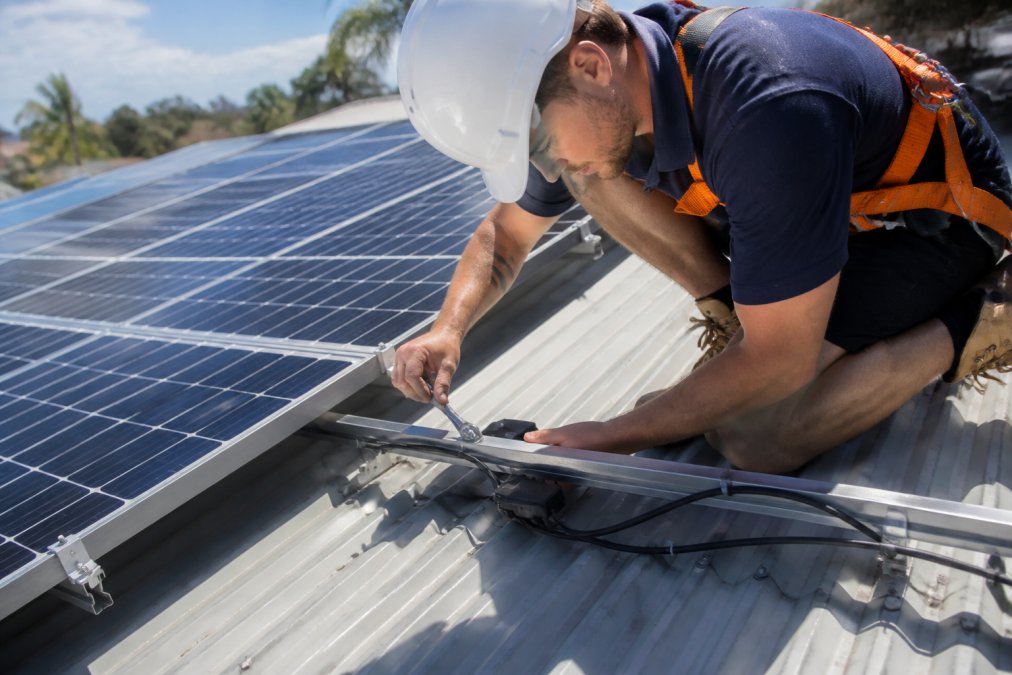
Check that panels are mounted securely and aligned properly. They should be level or at the correct tilt angle for your location. Mounting rails should be straight, not bent or warped. Panels should be spaced consistently.
Examine electrical connections. All visible wiring should be neatly routed and secured with clips or conduit. Wires shouldn't be loose, kinked, or exposed to weather. Connectors should be weather-sealed and properly tightened. Loose connections can pose a fire risk.
Inspect the inverter installation. It should be mounted in a clean, dry location away from direct sunlight and moisture, and accessible for maintenance. All cables should be properly labelled and secured.
For battery systems, check that the battery is installed in a well-ventilated space. Verify that the battery management system communicates properly with the inverter.
Look at the switchboard where the solar system connects to your home. New safety switches and isolators should be clearly labelled. Ask the installer to explain the layout and show you which switches control what.
Document everything with photos. Take pictures of the panel array, inverter, battery, electrical connections, and switchboard. These become evidence if you need to prove the installation was done correctly or incorrectly later.
Ask the installer for a system test. They should run the system under load and show you the output on the inverter display. A properly installed system produces measurable power within minutes of sunrise.
Common Pitfalls to Avoid When Hiring Solar Installers
The first pitfall is accepting a quote without understanding what's included. Some installers exclude the battery, wiring, switchboard upgrades, or council approvals. Always ask: "What's included in this quote, and what isn't?" Get a detailed, itemised breakdown.
The second pitfall is trusting online reviews without verification. Many solar companies pay for fake reviews. Check reviews on multiple platforms and look for specific details. Better yet, ask the installer for references and call those customers.
The third pitfall is choosing the cheapest quote. Solar pricing varies widely, and the cheapest option usually means corners are being cut, lower-quality equipment, rushed installation, or inexperienced subcontractors. Compare quotes based on equipment quality, installer qualifications, and warranty, not just price.
The fourth pitfall is not checking whether your roof can handle the panels. Some installers install on roofs too old, weak, or damaged to safely support the weight. Ask whether the installer will inspect your roof's condition and structural capacity before installation.
The fifth pitfall is failing to understand financing or warranty terms. Read the fine print. Ask questions about anything you don't understand. If the installer gets defensive about detailed questions, that's a red flag.
The sixth pitfall is not verifying that the installer has proper insurance. Public liability insurance protects you if the installer damages your property ([EXTERNAL_LINK: Australian Securities and Investments Commission | asic.gov.au]). Workers' compensation insurance protects their employees. Ask to see proof of both.
Protecting Yourself: Contract Review and Aftercare
A solid contract protects both you and the installer. Before signing, read it carefully. Don't let anyone pressure you into signing quickly.
Your contract should specify exactly what work will be performed, the timeline, total cost, and payment schedule. It should detail what's included and what isn't, outline the installer's warranty, and specify what happens if the system doesn't perform as expected.
The contract should clearly state whether the installer will perform the work directly or use subcontractors. If subcontractors are involved, the contract should name them and specify their qualifications. You should have the right to approve subcontractors before work begins.
Never pay the full amount upfront. A common structure is a deposit (10-20 percent), a progress payment when major work is done, and a final payment when the system is tested and commissioned. This protects you by ensuring the installer has incentive to finish properly.
Include a clause about what happens if the system doesn't work as expected after installation. Will the installer return to troubleshoot at no cost? How long do they have to fix problems? Get these commitments in writing.
Ask about aftercare and ongoing support. How will you contact the installer if something goes wrong? What's the response time for emergency calls? A local operator like Brux Electrical provides reliable local aftercare because they're invested in the community.
Confirm that the installer has obtained all necessary permits and approvals from your local council. The installer should handle all approvals as part of their service.
After installation, ask for comprehensive documentation: system specifications, inverter manual, battery manual, warranty documents, service records, and proof of council approvals. Keep all of this in a safe place.
Conclusion: Your Path to a Reliable Solar Installation
Avoiding solar installation subcontractor issues starts with asking the right questions before you sign anything. Verify licenses, understand what you're paying for, and insist on direct accountability from the installer. A quality solar installation should deliver reliable power for decades.
When you're ready to move forward, work with an installer who stands behind their work. Brux Electrical in Tugun eliminates the subcontractor middleman entirely, the same owner-operator who provides your clear, itemised quote handles your installation from start to finish. This means direct communication, reliable local aftercare, and systems right-sized to your actual energy needs. Get a quote and experience the difference that accountability makes.
Frequently Asked Questions
How do I know if my solar installer uses subcontractors?
Ask directly during your initial consultation: 'Will you personally handle the installation, or will subcontractors be used?' Request a list of all parties involved in the project. Reputable installers are transparent about their team structure. Get the answer in writing before you sign. If they're evasive or claim subcontractors are 'standard practice,' that's a red flag. Owner-operated teams often avoid subcontractors entirely, giving you one point of contact from quote to completion.
What should I verify when checking an electrical contractor's license in Queensland?
Visit the Electrical Contractors Board of Queensland (ECBQ) online register and search the contractor's name and license number. Confirm their licence is current, not suspended or cancelled, and matches their stated qualifications. Check whether they're licensed for the specific work, solar installation, switchboard work, or private power pole work. Cross-reference their business name and address. If anything doesn't match their quote or website, contact the ECBQ directly. Never assume a contractor is licensed; verification takes minutes and protects your installation.
What are the main risks of using solar installers who rely on subcontractors?
Subcontractors create accountability gaps: if something goes wrong, you're caught between the main installer and the subcontractor, each blaming the other. Quality suffers because subcontractors often work across multiple jobs with less oversight. Communication breaks down, you may never speak to the person actually installing your system. Warranty claims become complicated, and follow-up service is slower because the original installer may have limited control. Owner-operated teams eliminate these risks by keeping the same person responsible from start to finish.
What's the difference between CEC accreditation and a Queensland electrical license?
A Queensland electrical license (issued by the ECBQ) is a legal requirement to perform electrical work in Queensland. CEC (Clean Energy Council) accreditation is a voluntary industry standard that certifies a solar installer has met additional training and quality benchmarks specific to solar installations. Both matter: the license proves they're qualified to do electrical work, and CEC accreditation proves they specialise in solar. Check for both. A licensed electrician without CEC accreditation may be competent but unspecialised; a CEC-accredited installer without a current Queensland license is not legally permitted to work in the state.
Hiring a solar installer is one of the biggest energy decisions you'll make for your home. The right choice delivers clean power and peace of mind. The wrong choice leaves you with a system that doesn't work, a warranty you can't claim, and an installer who's impossible to reach. Take the time to vet properly. Your future self will thank you.
This article was written using GrandRanker
