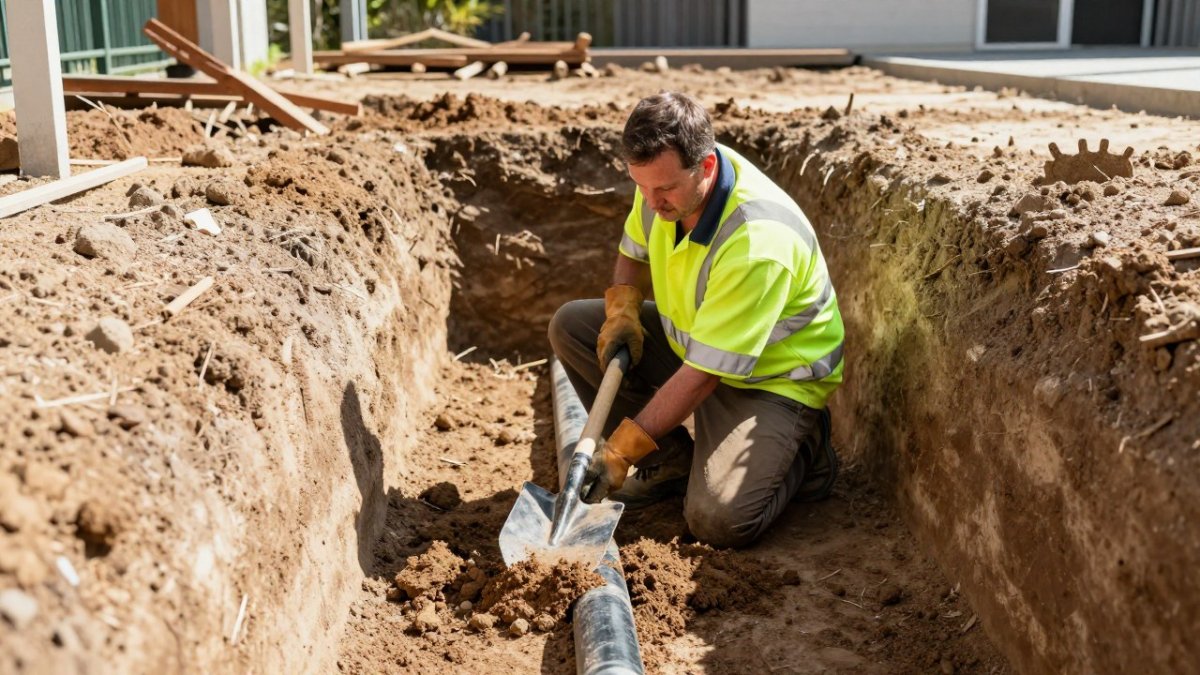
Underground Power Trenching on the Gold Coast: A Guide
Last Updated: November 7, 2026
Quick Summary
Underground power trenching on the Gold Coast requires confirming the cable type, surface and approved depth before digging, locating existing services through Before You Dig Australia, meeting Energex connection rules, and having the trench inspected before backfilling. Responsibilities are split between the property owner, a licensed electrician and the network operator.
- Confirm cable type, voltage, surface and approved depth before any digging starts.
- Request underground service plans through Before You Dig Australia and mark the route first.
- Check Energex connection requirements before finalising the design and trench.
- Have the trench inspected before backfilling, since reopening it costs time and money.
- Lay approved bedding and warning tape, and backfill and compact in layers.
Table of Contents
- Why Underground Power Trenching Requirements Matter on the Gold Coast
- Who Is Responsible for the Trench and the Connection
- Checking Electrical Trench Depth Queensland Requirements Before You Dig
- Locating Existing Services Through Before You Dig Australia Electrical Services
- Meeting Energex Underground Service Connection Requirements
- Electrical Trench Inspection and Backfilling Steps
- Booking Your Underground Power Trench With Brux Electrical in Tugun
- Frequently Asked Questions
Why Underground Power Trenching Requirements Matter on the Gold Coast
Underground power trenching is the process of running electrical supply cables through a buried trench rather than overhead lines. Trenches dug too shallow, services located too late, and connections signed off without a proper inspection are mistakes that commonly repeat on residential and small commercial sites. These mistakes cost time and money, and they can create real safety risks for the people who live and work on the property.
Getting underground power trenching requirements right protects your property, your neighbours, and the people digging. It also keeps your project moving, because a trench that fails inspection has to be opened up again. The steps below explain who is responsible, how deep the trench must be, how to find existing services, what the network operator expects, and how to finish the job properly.
- Trench depth and cable protection must match the rules that apply to your site.
- Existing underground services must be located before any digging starts.
- The connection must meet the network operator's requirements before it is energised.
- The trench must be inspected and backfilled correctly.
Who Is Responsible for the Trench and the Connection
Responsibility for underground power is split between the property owner, the licensed electrical contractor, and the electricity network operator. Readers weighing the trench cost against an alternative can compare a private power pole against underground power. In most Gold Coast projects, the property owner arranges the work, a licensed electrician carries out the electrical installation, and Energex, the local network operator, sets the rules for the connection to the network.
Here is how the roles usually break down:
- Property owner: Arranges the work, pays for the trench and connection, and keeps records of approvals and inspections.
- Licensed electrical contractor: Designs and installs the underground cabling, makes the connection, and certifies the electrical work.
- Network operator: Sets connection standards, approves the design where needed, and connects the supply.
- Digging contractor or owner-builder: Must locate existing services first and dig to the required depth.
Brux Electrical recommends confirming the responsibilities in writing before work starts. You can check licensed electrical contractors on the Gold Coast before you engage anyone for the trench and connection. Ask who lodges the application, who books the inspection, and who signs off the final connection. A clear split of duties prevents delays at the end of the project.
Checking Electrical Trench Depth Queensland Requirements Before You Dig
Trench depth is one of the most common reasons an underground installation fails inspection, and it is the requirement most often described in vague terms. On the Gold Coast, the depth you need depends on the cable type, the voltage, the surface above the trench, and whether the cable is direct-buried or in conduit.
A common approach is to confirm four things before the first shovel goes in: the cable type and voltage, the surface above the trench (lawn, garden bed, driveway, or footpath), whether conduit is required, and the approved depth for that combination. Measure the depth at several points along the route, especially where the ground dips or rises, because a trench that looks deep enough by eye is a frequent mistake.
Standard depths for low voltage and service cables
Required cover depends on the cable type, the route and the surface above it. The current edition of AS/NZS 3000 and the Energex standards set the figures, and requirements can change between editions. Confirm the exact depth, bedding and protection for your cable and route with your licensed electrician before the trench is opened, and record the confirmed figures on the trench plan.
Bedding, conduit, and warning tape
Depth alone does not make a trench compliant. The cable must sit in approved bedding material, typically sand or screened fill free of sharp stones, so the sheath is not damaged by backfill. A warning tape or marker tile is laid above the cable to warn future diggers, and where conduit is required it must be sized, laid, and swept to the radius the cable manufacturer and network operator specify. Warning tape is a warning, not a barrier: it does not replace correct depth or conduit.
Watch out: backfilling with excavated rubble or clay lumps instead of approved bedding is a common shortcut that can damage the cable sheath and fail inspection.
Trench width, route, and separation from other services
The trench must be wide enough to lay the cable without bending it below its minimum bend radius, and the route must maintain the separation distances from water, gas, sewer, and telecommunications services that the relevant standards and asset owners require. Where the trench crosses another service, the crossing detail, often a physical barrier or increased separation, must be agreed before digging. Keep the route as straight as practical and record the as-built path, because future work on the property will rely on that record.
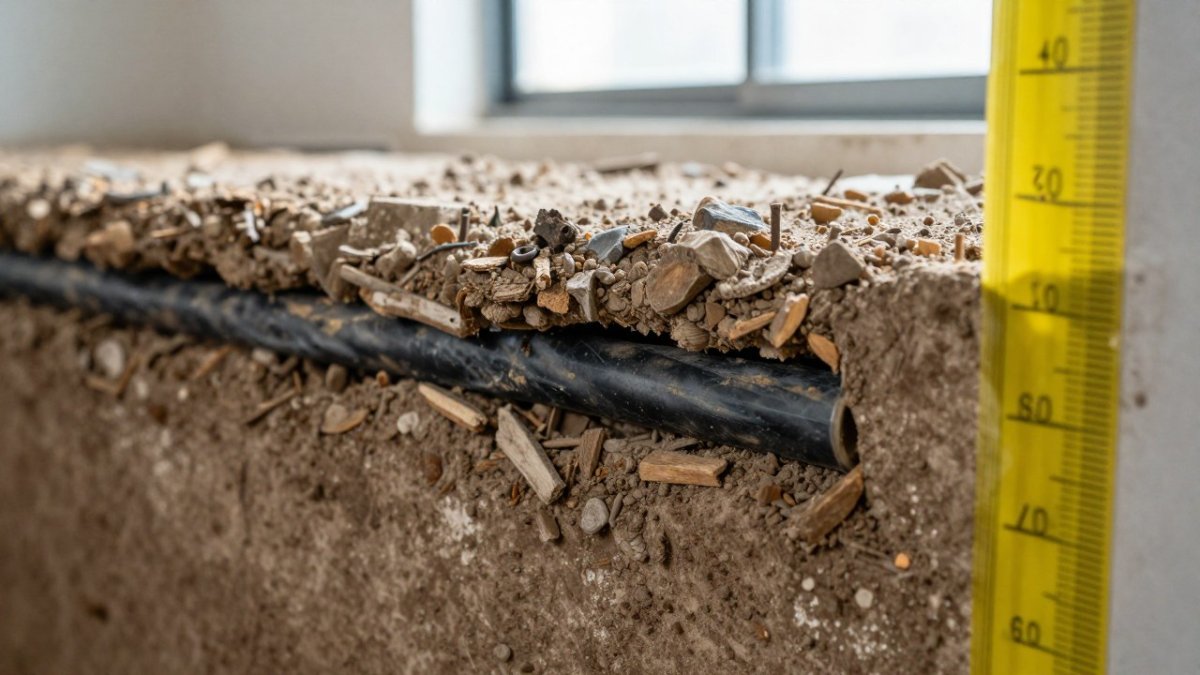
The article sets out the key factors that govern trench depth and protection, summarised below.
| Factor | What the article says | Note |
|---|---|---|
| Cable type and voltage | Confirm before digging | Sets the required depth |
| Surface above trench | Lawn, garden, driveway or footpath | Changes the depth needed |
| Conduit | Confirm whether required | Must be sized and swept correctly |
| Bedding | Sand or screened fill | No sharp stones |
| Warning tape | Laid above the cable | A warning, not a substitute for depth |
| Depth checks | Measure at several points | Dips and rises can hide shallow sections |
Locating Existing Services Through Before You Dig Australia Electrical Services
Before any digging, you must find out where existing underground services run. Water, gas, sewer, telecommunications, and other electrical cables can all sit in the same corridor as your new trench. Hitting one of them can cause injury, outages, and large repair bills.
Before any excavation, request underground service plans through Before You Dig Australia. Read the plans carefully, mark the route on the ground before digging, and remember that plans show approximate locations only, so dig carefully near any marked service.
- Submit a locating request before any excavation starts.
- Mark the proposed trench route with spray paint or pegs.
- Dig by hand or with care near marked services.
- Keep the plans on site while the work is underway.
Meeting Energex Underground Service Connection Requirements
Energex sets the requirements that the underground connection to the network must meet. These requirements cover the cable type, the connection point, the metering arrangement, and how the work is inspected and approved. Requirements can depend on the type of property and the size of the supply, so check them before you finalise the design.
Ask your electrician to confirm the Energex requirements for your specific connection. Where the connection involves a new supply or a change to an existing one, an application may be needed before the work starts. Planning this early reduces the risk of rework once the trench is already in the ground.
Watch out: do not backfill the trench until the connection requirements have been checked. A trench that is closed before inspection may need to be reopened.
Electrical Trench Inspection and Backfilling Steps
Once the cable is laid, the trench must be inspected before it is backfilled. The inspection verifies the depth, the bedding material, the cable protection, the warning tape, the route, and the separation from other services. Backfilling too early means the work cannot be verified, and reopening a trench costs time and money.
Who inspects and what triggers an inspection
Confirm with your electrician who carries out the inspection under the Queensland electrical safety framework, and whether the Energex requirements also apply to your connection. An inspection is normally triggered by new underground service connections, alterations to an existing supply, and any work that will be concealed by backfill or reinstatement. Confirm with your electrician who will attend, what notice period applies, and whether the network operator also needs to inspect the connection point before energisation. When you are ready, you can book an electrical inspection for the completed work.
What the inspector checks
The inspector will typically confirm:
- The cable is the approved type and rating for the supply.
- Cover depth meets the standard at every measured point along the route.
- Bedding material is approved and free of sharp material.
- Conduit, where required, is correctly sized, laid, and swept.
- Warning tape or marker tiles are installed above the cable.
- Separation from other services meets the required distances.
- The route matches the approved plan and any as-built records.
Backfilling and compaction
Backfill in layers rather than in one pass. Place approved bedding around and above the cable first, then add warning tape at the specified height, then backfill with suitable material in layers and compact each layer as you go. Compaction matters most under driveways, paving, and trafficable areas, where poor compaction leads to settlement and surface failure. Reinstate turf, paving, or concrete to the original standard and keep photos and records of the trench, the inspection, and the reinstatement.
Watch out: closing the trench before the inspection has been signed off is the most common cause of rework on underground service jobs, once the trench is backfilled, the only way to verify depth and bedding is to reopen it.
Records and sign-off
Keep the approved plan, the inspection record, the electrical compliance certificate, and the as-built route drawing with your property records. These documents matter if you sell the property, if future excavation is planned, or if a fault needs to be traced. Once the trench is complete and the connection is signed off, check that the compliance certificate is current and filed. Our guide explains how to check your home's electrical compliance certificate.
Booking Your Underground Power Trench With Brux Electrical in Tugun
Brux Electrical is a licensed and insured, owner-operated electrical business based in Tugun, serving the Gold Coast. If you are still comparing options, learn how to choose a private power pole contractor.
For underground power trenching, we can help with the design, the connection requirements, and the paperwork that supports the inspection.
To get started, call us or request a quote through our website. Tell us the property address, the scope of the work, and any existing services you already know about, and we will confirm the next steps for your trench.
Ready to get your underground power trench done right? Brux Electrical is Tugun's owner-operated team for licensed, insured underground power work. Get a quote for your underground power trench.
Frequently Asked Questions
What are the requirements for underground power trenching on the Gold Coast?
Underground power trenching on the Gold Coast must follow the Energex service connection requirements and the applicable Queensland electrical safety rules. Work typically needs a licensed electrical contractor, a dial-before-you-dig search through Before You Dig Australia, correct trench depth and conduit specifications, and an inspection before backfilling. Your electrician can confirm the exact requirements for your property, and you can request a quote from Brux Electrical for pricing specific to your job.
Who is responsible for trenching for an underground power connection in Queensland?
The property owner is usually responsible for the private trench, conduit and any consumer mains on their land, while the electricity distributor, Energex, sets the connection standards and may inspect the work. A licensed electrician performs the installation to those standards. Confirm responsibilities for your specific property with Energex before you start, as the boundary between owner and network works depends on the connection type.
Can a homeowner dig a trench for an electrical cable?
Homeowners can dig the excavation for a trench in many cases, but the cable, conduit and any connection to supply must be installed and terminated by a licensed electrician. Before any digging, check for buried services through Before You Dig Australia, because striking a gas, water or electrical line is dangerous and costly. Ask your electrician whether the trench route and depth meet Energex requirements before you begin.

