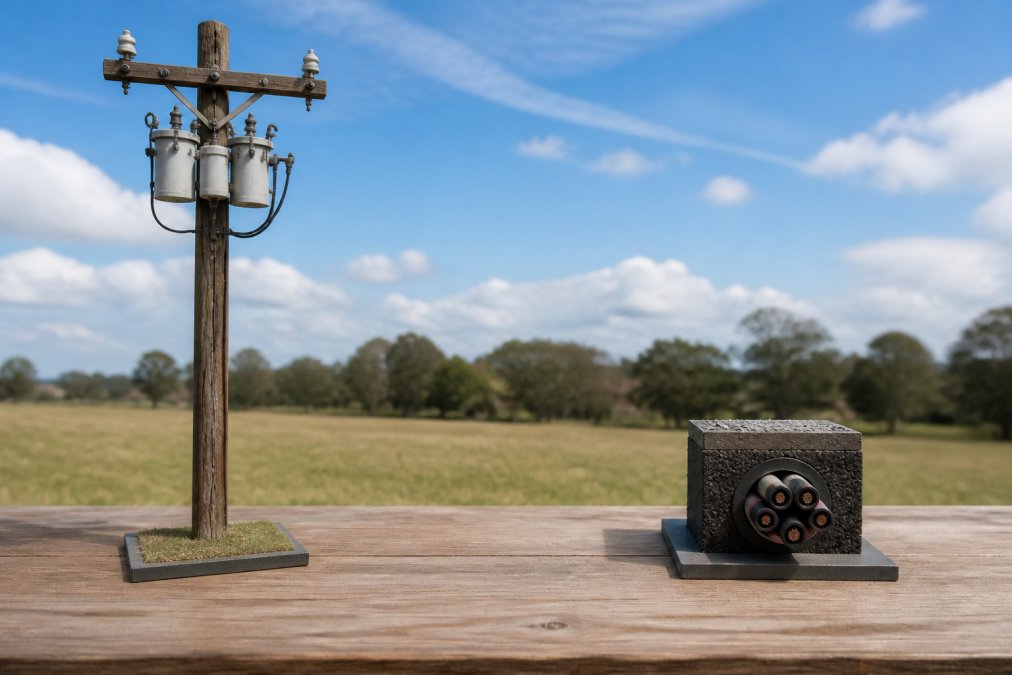
Private Power Pole vs Underground Power: Cost Comparison
Table of Contents
- Private Power Pole vs Underground Power: Quick Comparison
- What Are Private Power Poles and Underground Power?
- Energex Private Power Pole Requirements
- Cost to Convert Overhead to Underground Power in Queensland
- Pros and Cons of Private Power Poles
- Pros and Cons of Underground Power
- Is Private Power Pole Insurance Coverage Worth It?
- Which Option Is Right for Your Property?
Last Updated: August 23, 2026
Private Power Pole vs Underground Power: Quick Comparison
When you're facing an electrical infrastructure decision on the Gold Coast, the choice between a private power pole and underground power comes down to three factors: upfront cost, long-term maintenance, and your property's specific needs. Private power poles are typically cheaper to install but require ongoing maintenance and present safety risks. Underground power costs significantly more initially but offers better aesthetics, improved safety, and lower maintenance once installed.
At Brux Electrical, we've helped Gold Coast property owners navigate this decision. The real question isn't which option is universally "better", it's which one makes sense for your property, your budget, and your risk tolerance. This guide breaks down the actual costs, requirements, and trade-offs so you can make an informed decision.
What Are Private Power Poles and Underground Power?
A private power pole is a wooden or concrete structure installed on your property to distribute electricity from the network provider's main line to your home or building. You own and maintain it. An underground power system routes electricity through buried cables beneath your property instead of overhead lines, connecting directly to the network provider's infrastructure.
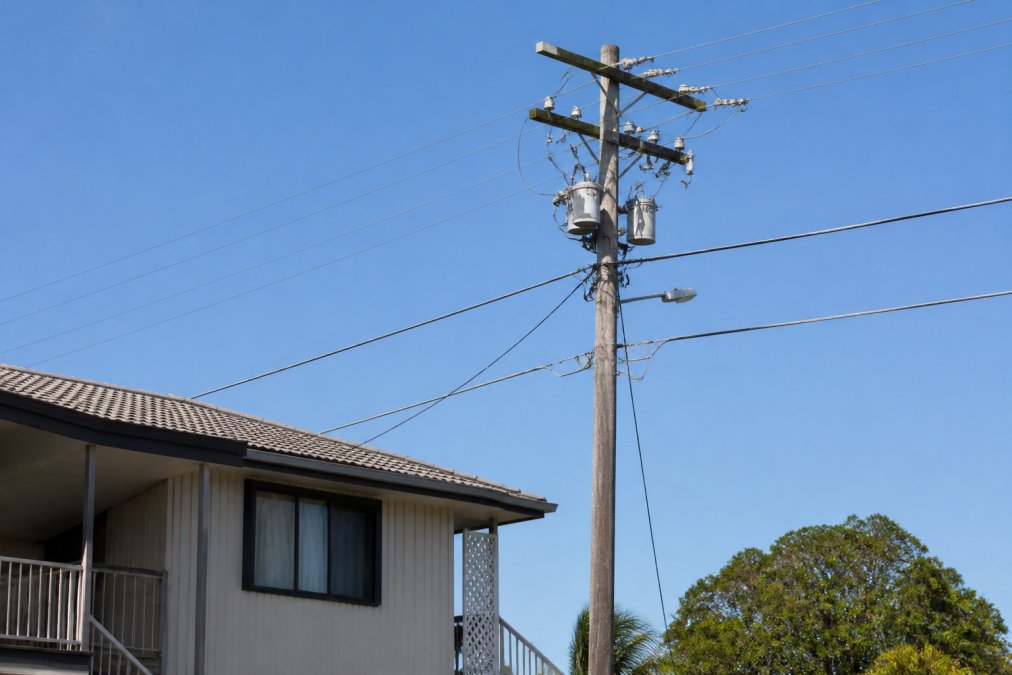
The distinction matters because it determines who pays for installation, who handles repairs, and what safety standards apply. Private poles fall under your responsibility, you must maintain them to Australian Standards (AS/NZS 7000) and comply with local council requirements (standards.org.au). Underground systems are typically installed by licensed contractors and coordinated with Energex (the Queensland network provider) to ensure compliance with electrical safety standards.
Private poles are common on older Gold Coast properties, rural blocks, and new constructions where the main network line is far from the building. Underground power is increasingly popular for new residential builds, property upgrades, and situations where aesthetics or safety concerns justify the higher cost.
Energex Private Power Pole Requirements
Energex sets strict standards for private power poles on the Gold Coast. Your pole must meet AS/NZS 7000 electrical safety standards and comply with Queensland's Electrical Safety Act 2002. This means regular inspections, proper grounding, and structural integrity checks.
Energex requires that private poles be inspected every five years by a licensed electrical contractor, qualified and accredited pole inspector, or RPEQ engineer with a structural engineering area of discipline (energex.com.au). If your pole is damaged, leaning, rotting, or shows signs of deterioration, you're legally required to replace it. Many Gold Coast property owners discover this when they receive a defect notice from the council, at which point replacement becomes urgent rather than planned.
The cost and timeline for bringing a pole into compliance depends on its current condition. A minor repair might take a few days, while a full replacement can take 2-4 weeks once you've coordinated with Energex for disconnection and reconnection. Brux Electrical handles all the paperwork and Energex coordination, so you don't have to navigate the approval process yourself.
One thing most property owners don't realise: if your pole fails inspection or is deemed unsafe, you can't simply ignore it. Energex can disconnect your power supply until the issue is resolved. This makes compliance a genuine safety and legal issue, not just a maintenance preference.
Cost to Convert Overhead to Underground Power in Queensland
Converting from overhead to underground power on the Gold Coast involves several cost drivers. The total investment depends on the distance from the network connection point to your property, the complexity of trenching, soil conditions, and whether you need to coordinate with council approvals.
Research from B-Qyatt Electrical's underground installation guide indicates that short underground runs (under 50 metres) typically start around $3,000, while full overhead-to-underground conversions can reach $20,000 or more. The variation reflects differences in trenching access, directional boring requirements, and approval timelines.
Key cost factors include:
- Distance from connection point: Each additional metre of underground cable increases material and labour costs
- Trenching access: Properties requiring directional boring (to avoid disrupting driveways or gardens) cost significantly more than those with open trenching options
- Soil conditions: Rocky or difficult terrain increases excavation time and expense
- Approval timeline: Council and Energex approvals can add to the timeline; expedited approvals sometimes incur additional fees
- Concurrent work: Installing phone or internet cables alongside power can reduce overall project cost through economies of scale
The Queensland government doesn't subsidise underground power conversions, so the full cost falls on the property owner. However, some property owners find that the improved safety, reduced maintenance, and enhanced property value offset the initial expense over time.
| Factor | Cost Impact | Timeline Impact |
|---|---|---|
| Short run (under 50m) | $3,000-$8,000 | 1-2 weeks |
| Medium run (50-150m) | $8,000-$15,000 | 2-3 weeks |
| Full conversion with approvals | $15,000-$20,000+ | 3-4 weeks |
| Directional boring required | +$2,000-$5,000 | +1 week |
| Concurrent cable installation | -$500-$1,500 | No additional time |
Pros and Cons of Private Power Poles
Private poles offer genuine advantages for certain situations, but they come with real trade-offs that many property owners underestimate.
Pros of private power poles:
- Lower upfront cost: Installation typically costs significantly less than underground conversion
- Faster installation: A new pole can be installed and connected within days, not weeks
- Easier modifications: Adding circuits or upgrading capacity is straightforward with overhead lines
- No trenching disruption: Your driveway, garden, and landscaping remain undisturbed
- Simpler for rural properties: When the network connection is distant, a pole is often the only practical option
Cons of private power poles:
- Regular maintenance required: Five-yearly inspections are mandatory; repairs and eventual replacement are your responsibility
- Safety risks: Damaged poles create electrical hazards; deteriorating poles can fail suddenly
- Aesthetic impact: Poles and overhead lines are visible and can reduce property appeal
- Weather vulnerability: Storms, lightning, and high winds can damage poles and interrupt power supply
- Replacement costs: When a pole fails inspection or deteriorates, replacement costs $2,000-$5,000 or more
- Insurance complications: Some insurers charge higher premiums or require pole certification before covering damage
A common mistake is treating pole maintenance as optional. It's not. Energex inspections are mandatory, and non-compliance can result in power disconnection. The real cost of a private pole isn't just installation, it's the ongoing obligation to maintain it to standard.
Pros and Cons of Underground Power
Underground power eliminates the pole maintenance problem entirely, but it's a significant upfront investment with its own set of considerations.
Pros of underground power:
- No pole maintenance: Once installed, underground cables require no inspections or repairs (unless damaged during excavation)
- Improved safety: Buried cables eliminate the risk of pole failure, weather damage, or electrical hazards from overhead lines
- Better aesthetics: No visible poles or lines; cleaner property appearance
- Increased property value: Many buyers prefer the safety and appearance of underground power
- Reliability: Underground cables are protected from weather events that commonly damage overhead lines
- Flexibility for future upgrades: Underground infrastructure accommodates future electrical needs without visible additions
Cons of underground power:
- High upfront cost: $3,000-$20,000+ depending on distance and conditions
- Longer installation timeline: Approvals and trenching can take 3-4 weeks
- Trenching disruption: Your property may experience temporary excavation, especially if directional boring is required
- Cable damage risk: Excavation work (landscaping, building additions) can damage buried cables; you must know their location
- Limited modification options: Adding new circuits or increasing capacity requires careful coordination with existing underground infrastructure
- Repair complexity: If cables are damaged, repairs are more involved and costly than overhead line repairs
The hidden cost of underground power is the need for cable location awareness. Once installed, you must know where cables run to avoid damaging them during future work. Many property owners underestimate this ongoing responsibility.
Is Private Power Pole Insurance Coverage Worth It?
Insurance for private power poles is a genuine consideration, especially if your pole is older or you live in an area prone to storms. Some insurers offer coverage for pole damage, replacement, and associated electrical repairs. Others exclude poles entirely or require certification that the pole meets current safety standards.
The decision depends on your pole's age, condition, and your risk tolerance. A pole that's already been inspected and certified as compliant is a better insurance candidate than one with known issues. Similarly, properties in storm-prone areas benefit more from pole insurance than those in sheltered locations.
What matters most: don't assume your home insurance covers pole damage. Check your policy explicitly. Many standard policies exclude or limit pole coverage. If your pole fails inspection or requires replacement, you'll want to know whether insurance will contribute to the cost.
Brux Electrical can help you understand your pole's current condition and compliance status, which directly affects whether insurance coverage is available and worthwhile. A certified inspection gives you clarity on what you're actually insuring.
Which Option Is Right for Your Property?
The decision between private power poles and underground power depends on five factors: your current infrastructure, your property's location, your budget, your long-term plans, and your tolerance for ongoing maintenance.
Choose a private power pole if:
- Your pole is relatively new and in good condition
- You're on a tight budget and can't justify $10,000+ upfront investment
- Your property is rural or remote, where underground installation isn't practical
- You need electrical infrastructure quickly (within days, not weeks)
- You're comfortable with five-yearly inspections and eventual replacement costs
Choose underground power if:
- Your current pole is old, damaged, or failing inspection
- You value aesthetics and property appeal
- You're planning a long-term stay and want to eliminate maintenance obligations
- You live in a storm-prone area and want maximum reliability
- You're building new or undertaking major renovations anyway
The middle ground: if your pole is approaching the end of its serviceable life or you've received a defect notice, converting to underground power often makes financial sense. The cost of replacement (pole + installation + Energex coordination) plus future maintenance sometimes approaches the cost of underground conversion.
For Gold Coast property owners, the decision also reflects your property's age and condition. Older properties often have poles that are due for replacement; newer builds frequently come with underground infrastructure already in place. If you're uncertain about your current pole's status, a professional inspection from a licensed electrician provides the clarity you need to make an informed decision.
Brux Electrical offers safety-first assessments of private power poles and can provide fixed-price quotes for both pole replacement and underground conversion. We handle all Energex coordination and council approvals, so you're not navigating the process alone. Whether you're dealing with a defect notice, planning a property upgrade, or simply want to understand your options, a professional assessment gives you the facts you need.
===
Frequently Asked Questions
Q: Is it cheaper to install a private power pole or go underground in Queensland?
A: Costs vary significantly based on distance, trenching access, and approvals. Underground conversions typically range from $3,000 for short runs to $20,000+ for full overhead-to-underground work. Private power poles have lower upfront installation costs but require ongoing maintenance and eventual replacement. Request a fixed-price quote from a local electrician to compare your specific situation.
Q: What are the Energex requirements for underground power connections?
A: Energex sets safety and technical standards for all power connections, including underground installations. Requirements cover cable depth, ducting, clearances, and testing. Your installer must submit forms and coordinate with Energex before and after installation. A licensed electrical contractor handles this process as part of the job, you don't manage it directly.
Q: How long does it take to convert overhead power to underground on the Gold Coast?
A: Short runs (under 30 metres) typically take 1-2 days. Full overhead-to-underground conversions, including council approvals and Energex coordination, can take 2-4 weeks from start to finish. Timelines depend on trenching access, property size, and approval processing times. Your electrician will provide a realistic schedule during the quote phase.
Q: Does underground power increase property value on the Gold Coast?
A: Underground power improves curb appeal and eliminates visual clutter from overhead lines, which can appeal to buyers. However, property value depends on many factors including location, condition, and market conditions. While aesthetically cleaner, underground power alone is unlikely to significantly increase resale value but may help in competitive markets.
If you're facing a private power pole defect notice or considering an upgrade to underground power on the Gold Coast, the decision deserves professional input. Get a clear, itemized assessment from Brux Electrical and understand exactly what your property needs, what it will cost, and what the timeline looks like. Get a quote and move forward with confidence.
This article was written using GrandRanker
