7 Benefits of Underground Power for Gold Coast Homes
Last Updated: November 12, 2026
Quick Summary
Underground power on Gold Coast homes removes the main causes of outages, because buried cables are largely shielded from wind, rain and falling branches that interrupt overhead lines. It also clears the street of exposed wires and poles, though the upfront cost is usually significant and varies with trench length, ground conditions and your switchboard.
- Buried cables are largely shielded from wind, rain and falling branches that cause many outages.
- Removing overhead wires reduces exposure to storm damage, branch falls and accidental contact.
- Upfront conversion cost is typically significant and depends on your property.
- Trench length is the biggest cost driver, followed by ground conditions and driveway crossings.
- Faults in underground cable are usually slower and costlier to locate and repair than overhead faults.
Table of Contents
- Why Gold Coast Homeowners Are Looking at Underground Power
- Benefits of Underground Power for Residential Properties
- Overhead vs Underground Power for Residential Properties
- Underground Power Cost on the Gold Coast and What Drives It
- Trenching Requirements and Queensland Approvals on the Gold Coast
- Underground Power Installation on a Gold Coast Property: Site Suitability and Trade-offs
- Planning Your Underground Power Upgrade With a Local Electrician
- Frequently Asked Questions
Why Gold Coast Homeowners Are Looking at Underground Power
Underground power for residential Gold Coast homes is no longer a niche question. More owners are asking it as storms, branch falls and power outages become part of everyday life on the coast. Brux Electrical works with homeowners who want to understand what moving their supply underground would actually involve. Here is the honest picture: the benefits are real, but so are the trade-offs, and the cost depends on your property.
Much of the confusion comes from mixing up two things. The power lines running down your street are the network, and the service connection from the pole to your home is your property. Upgrades can touch both, and who pays for which part is not always obvious. Clearing that up early saves a lot of frustration.
Benefits of Underground Power for Residential Properties
Underground cables remove the most common causes of supply interruption. Overhead lines are exposed to wind, rain, falling branches and accidental contact, while buried cables are largely shielded from them. For a homeowner, that usually means fewer outages and a steadier supply through storm season.
Improved Electrical and Public Safety
Exposed overhead wires create hazards that buried cables avoid. Storm damage, fallen branches and accidental contact are the main risks, and removing the overhead line removes that exposure from the street. Neighbourhoods also tend to feel safer when cabling is out of sight, and fewer sagging lines means fewer surprises for children and tradespeople working nearby.
Reliability, Fewer Outages and Storm Protection
Weather is the main reason supply fails. Wind, heavy rain and falling branches account for many interruptions, and buried cables are much less exposed to all three. Many homeowners find this the strongest argument for underground power, particularly on tree-lined streets. Reliability gains depend on the network design and your local conditions, so ask your network provider for the specifics of your street.
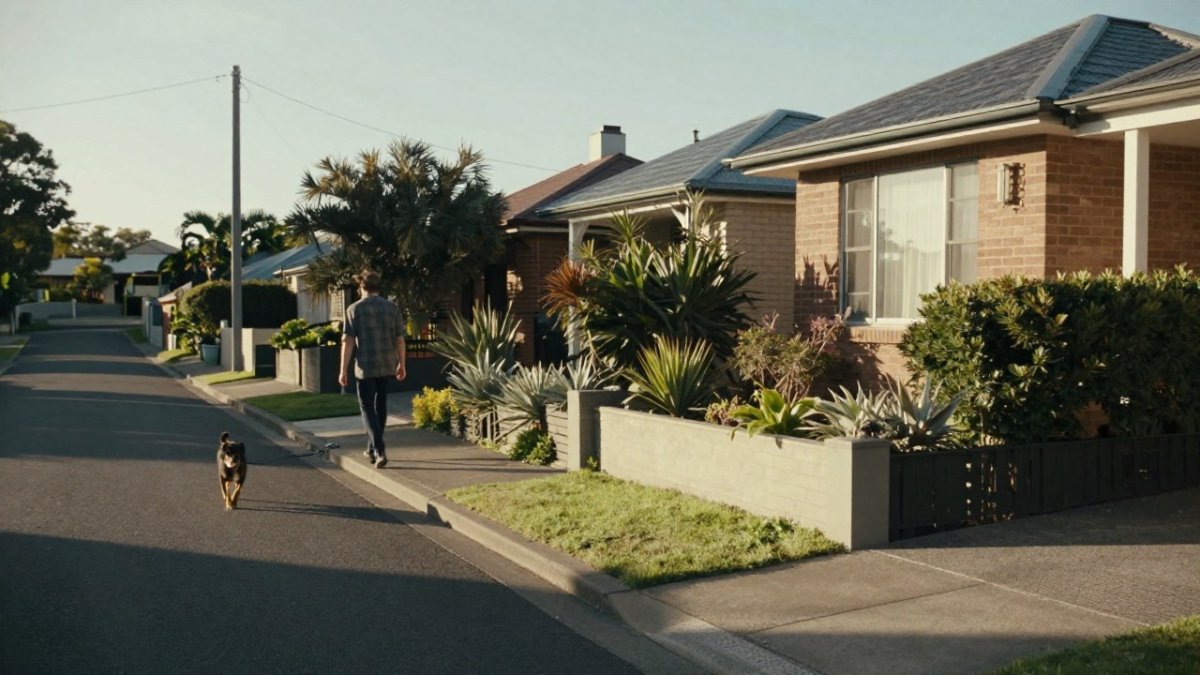
Streetscape, Property Appearance and Maintenance
Removing poles and wires opens up the view and tends to improve the look of a street. Some owners also report fewer repairs to overhead fittings over time. Buried cabling is not maintenance free, though. Faults in underground cable still need locating and repairing, and that work is slower and can be costlier than fixing an overhead line.
Overhead vs Underground Power for Residential Properties
Overhead and underground supply each suit different sites. The table below sets out the practical differences for a typical residential street.
| Factor | Overhead power | Underground power |
|---|---|---|
| Exposure to storms and branches | High | Low |
| Visual impact on the street | Visible poles and wires | Clear streetscape |
| Fault location and repair | Usually faster | Usually slower |
| Upfront cost to convert | Not applicable | Typically significant |
| Impact of tree growth | Ongoing trimming needed | Largely unaffected |
The upfront cost is the main obstacle for most homeowners. Underground conversion is usually a larger project than a like-for-like overhead connection, so it is worth getting a site assessment before deciding.
Underground Power Cost on the Gold Coast and What Drives It
Underground power costs on the Gold Coast vary widely because every property is different. Rather than quote a single figure, it is more useful to understand the main cost drivers so you can assess your own situation. Pricing depends on several site-specific factors, so a site assessment is the best way to get a figure for your property.
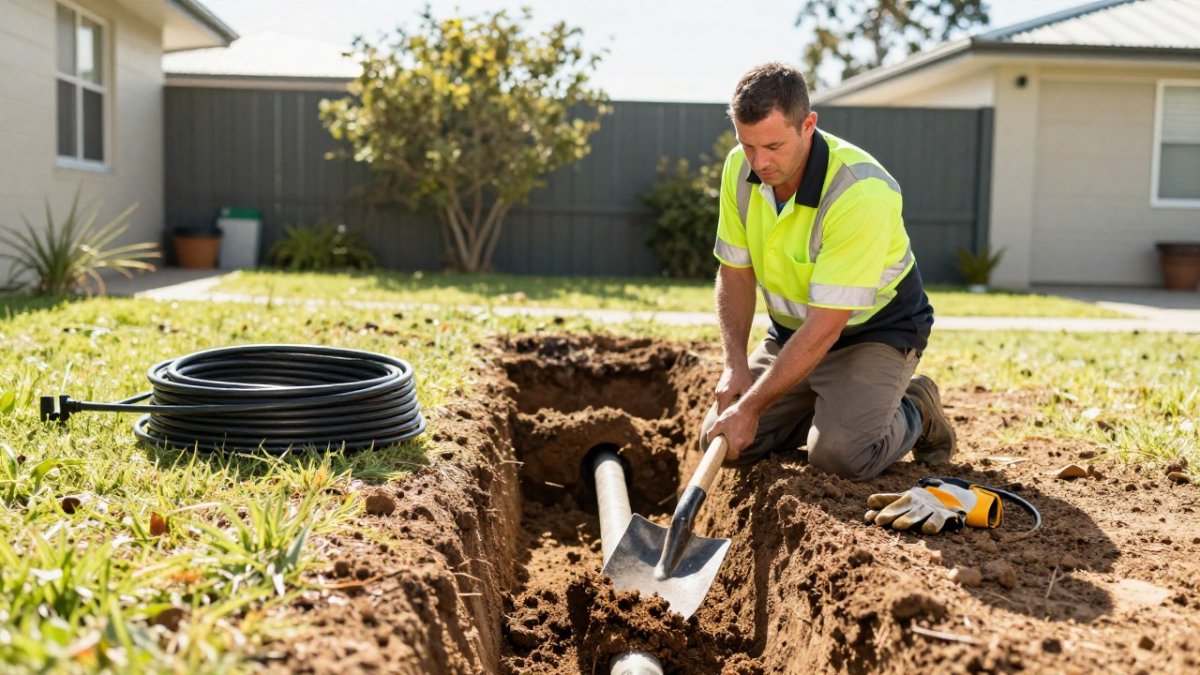
The biggest driver is trench length. The distance from the street supply point to your meter box determines how much excavation is needed. A short run across a front yard is very different from a long run down a side boundary or across a large block. Trench depth and width also matter: cables must be buried at a safe depth, and the trench may need to accommodate conduit, warning tape and bedding sand.
Ground conditions are the second major factor. Sandy soil is easy to dig, but rocky ground, shale or areas with high water tables can slow work and require different equipment. Ground conditions vary across the Gold Coast, so a site assessment should check what your block contains. Driveway crossings add cost because the surface must be cut and reinstated to an acceptable standard. If the trench crosses a concrete driveway, expect additional labour and materials for saw cutting and concrete repair.
Switchboard and meter box work also affect the price. Older homes may need a switchboard upgrade to accommodate the new supply, and the meter box may need to be relocated or replaced to meet current standards. The number of properties sharing a single supply point can reduce the per-home cost if neighbours coordinate, but it also adds complexity in terms of easements and shared agreements.
It is important to distinguish installation cost from ongoing maintenance. Underground cable has low routine maintenance, but if a fault occurs, locating and repairing it is more expensive than fixing an overhead line. That is why a proper site assessment matters: it identifies the real cost drivers for your block before you commit.
For a current estimate, Brux Electrical can assess your property and provide a clear, itemised quote that separates the street network component from your private service connection. You can also request one through the Brux Electrical website.
Trenching Requirements and Queensland Approvals on the Gold Coast
Trenching and connection work on the Gold Coast involves several approvals before digging starts. Requirements depend on the network owner, the work location and whether the service runs through shared or private land. Check the current process with your electricity network provider and the local council, and confirm what is needed for your property before work begins.
Getting this right early avoids delays. A licensed electrician can help identify which approvals apply to your site and prepare the paperwork that goes with them.
Underground Power Installation on a Gold Coast Property: Site Suitability and Trade-offs
Not every Gold Coast property is a good candidate for underground power. Before committing, it helps to assess your block against a few practical criteria. The first is access: can a trenching machine or excavator reach the proposed route without damaging structures, trees or retaining walls? Narrow side access or steep slopes can make machine work difficult and increase manual labour.
Easements and existing services are another key consideration. If your proposed trench crosses an easement, you may need approval from the easement holder, and you must avoid existing underground services such as water, sewer, gas and telecommunications. A service location report is essential before any digging. On older properties, the position of these services may not be accurately recorded, so a locator should be used.
Landscaping and hard surfaces also affect suitability. Trenching through established gardens, paved areas or concrete will require removal and reinstatement. Some homeowners choose to reroute the trench to minimise disruption, but that can add length and cost. The position of the meter box matters too: if it is on the opposite side of the house from the street, the cable run will be longer.
The trade-offs are worth weighing honestly. Underground work is disruptive while it happens, it can be expensive, and it can be harder to locate faults later. For some properties, the benefits may outweigh these issues. For others, a well-maintained overhead connection is the sensible choice. Properties with frequent storm-related outages or prominent overhead lines may benefit most, while those with reliable supply and difficult site conditions may not see a strong return.
A licensed electrician can help you assess these factors. Brux Electrical works as one owner-operated team, so the person who quotes your job is the person who carries it out, and you get direct communication from the first call to switch-on. When comparing quotes, look for an itemised breakdown, clear explanation of what is and is not included, and a named person responsible for the work. Ask how they handle approvals and what aftercare they provide once the job is complete.
Planning Your Underground Power Upgrade With a Local Electrician
Start by confirming whether your street is already scheduled for conversion, since this can change your options and cost. Then ask a licensed local electrician to inspect the existing supply and the meter box. Brux Electrical works as one owner-operated team, so the person who quotes your job is the person who carries it out, and you get direct communication from the first call to switch-on.
When comparing quotes, look for an itemised breakdown, clear explanation of what is and is not included, and a named person responsible for the work. Ask how they handle approvals and what aftercare they provide once the job is complete.
If you are weighing an upgrade on a Gold Coast home, book an electrical inspection to see what your property needs. To find a suitable contractor, read how to hire a reliable local Gold Coast electrician. For the trenching detail, see how to get underground power trenching right on the Gold Coast. Costs are easier to judge when you compare them with private power pole replacement pricing and the cost difference between private power poles and underground power.
Ready to talk through your property? Underground power is a big decision, and the right answer depends on your site, your street and your budget. Brux Electrical, based in Tugun, can assess your home and give you a clear, itemised quote with no subcontractors involved. Get a quote and find out what makes sense for your Gold Coast property.
Frequently Asked Questions
What are the benefits of underground power for a home?
Underground power removes exposed overhead lines from the street, which reduces accidental contact, shields cables from storms, wind, rain and falling branches, and cuts the outages those events cause. It also tidies the streetscape and can improve how a property looks from the road. Benefits depend on the local network and the home's own service connection, so a licensed electrician can confirm what applies to your property before you plan any work.
Is underground power more reliable than overhead power?
Underground cables are largely shielded from the weather events that bring down overhead lines, so they tend to suffer fewer faults from storms, wind and falling branches. They are not immune to faults, however, and repairs underground can take longer because the fault must be located and dug out. Reliability in practice depends on the network, the cable condition and how the street is maintained.
How much does it cost to install underground power at a Gold Coast home?
Costs vary widely with trench length, soil and ground conditions, the number of connections, the distance to the nearest network point and the work needed on the private property. Pricing depends on your site, so contact Brux Electrical for a current quote. Contact Brux Electrical for a clear, itemised quote based on your property, and confirm which parts of the work fall to the network operator and which fall to the homeowner.
What are the disadvantages of underground power?
The main trade-offs are upfront cost, the disruption of trenching, and slower fault repair when a cable fails underground. Underground cables can also be affected by digging, water ingress and ground movement, and changes to the service connection may need approvals. For many homeowners the trade-off is worth it, but the decision depends on the property, the street and how long you plan to stay.

