Solar Panels vs Solar Tiles: Which Suits Your Home?
Table of Contents
- Solar Panels vs Solar Tiles: Head-to-Head Comparison
- How Solar Panels and Solar Tiles Work Differently
- Installation on Tile vs Tin Roof: What Changes
- Durability of Solar Tiles in Coastal Climates
- Small-scale Renewable Energy Scheme STC Rebate Eligibility
- Aesthetic and Structural Considerations
- Which System Suits Your Home
- Frequently Asked Questions
Last Updated: September 25, 2026
Solar Panels vs Solar Tiles: Head-to-Head Comparison
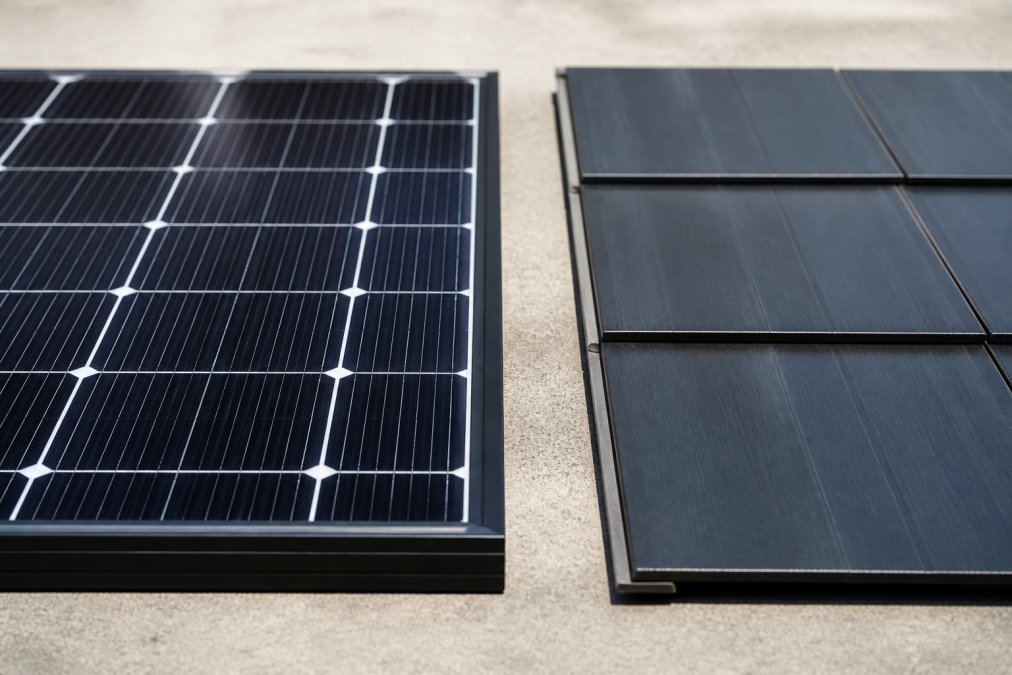
When you're deciding between solar panels and solar tiles for your home, you're making a choice that affects your roof's appearance, energy output, durability, and long-term costs. Both technologies generate electricity from sunlight, but they work differently, install differently, and perform differently depending on your roof type and climate.
Solar panels vs solar tiles comes down to three core trade-offs: cost, aesthetics, and performance. Panels are cheaper and more efficient. Tiles blend seamlessly into your roof but cost significantly more and require specialist installation.
For homeowners in coastal areas like Tugun, durability in salt-air environments is critical. For homeowners in coastal areas like Tugun, durability in salt-air environments is critical. The right choice depends on whether you're prioritising maximum energy output or integrated roofline appearance. The right choice depends on whether you're prioritising maximum energy output or integrated roofline appearance.
Here's the direct comparison:
| Feature | Solar Panels | Solar Tiles |
|---|---|---|
| Starting Cost | Lower per watt | 2-3x higher total investment |
| Installation Complexity | Standard roof mounting | Full roof replacement/integration |
| Energy Efficiency | 18-22% per panel | 12-18% per tile |
| Aesthetic Impact | Visible mounting hardware | Seamless roof integration |
| Roof Compatibility | Works on most existing roofs | Requires structural assessment |
| Durability (Coastal) | High with proper maintenance | Excellent glass construction |
| Lifespan | 25-30 years | 25+ years |
| Best For | Budget-conscious, high output | Aesthetics-first, new builds |
How Solar Panels and Solar Tiles Work Differently
Solar panels and solar tiles both use photovoltaic (PV) cells to convert sunlight into electricity. The core technology is identical, but how they're installed and integrated into your roof changes everything.
Solar panels are rigid rectangular modules mounted on metal rails above your existing roof. They sit several centimetres above the roofline, which allows airflow underneath. This ventilation keeps panels cooler, which improves efficiency. Panels connect to an inverter that converts DC electricity into AC power for your home. Installation typically takes 2-4 days on an existing roof.
Solar tiles replace your actual roof tiles. Products like Tesla Solar Roof use tempered glass tiles that function as both roofing material and PV generators. GAF Energy Timberline Solar shingles work like traditional roofing nails, integrating into standard installation workflows. Solar tiles have no gap between the tile and roof surface, which means they run hotter but eliminate the visual separation between power generation and roofing.
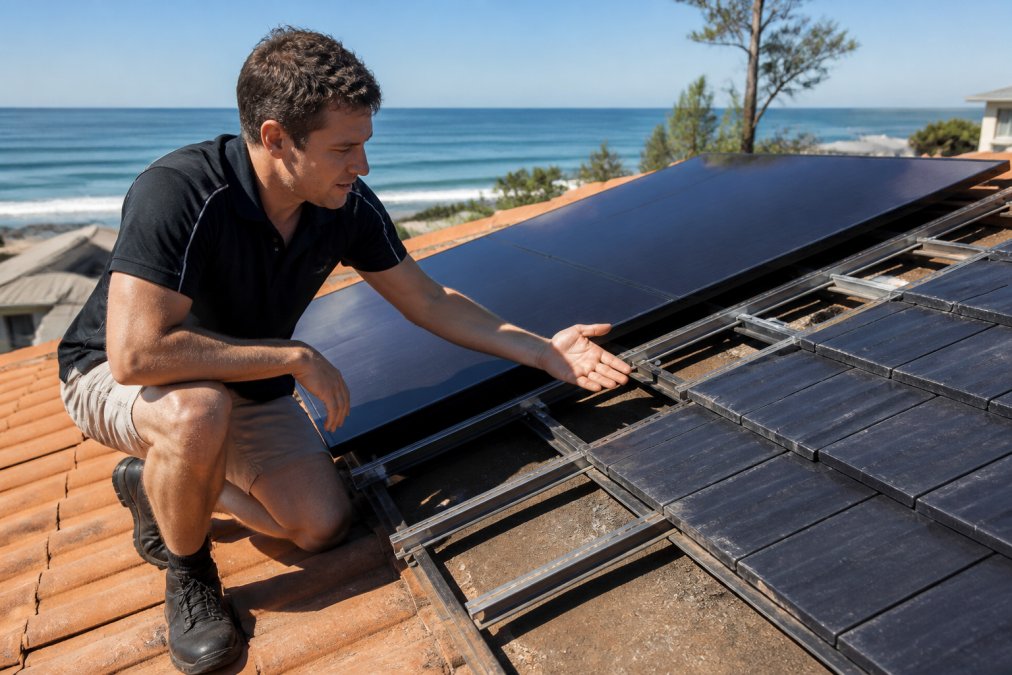
The efficiency difference matters. Panels typically convert 18-22% of sunlight into electricity. Tiles average 12-18% because they run hotter and have less airflow. On a Gold Coast home, that efficiency gap means you'd need more tiles to match the output of fewer panels.
Installation labour differs too. Panel installation is straightforward: mount the rails, bolt panels in place, run electrical conduit, connect the inverter. Tile installation requires roofers trained in the specific system, either full roof replacement (Tesla Solar Roof) or integration during new construction or major roof work (GAF Energy).
Installation on Tile vs Tin Roof: What Changes
Your existing roof material determines which system suits your home. Gold Coast homes typically have tile or metal (tin) roofing, and each presents different challenges for solar installation.
On tile roofs, solar panels require careful penetration points. Installers remove tiles where roof rails will be mounted, install flashing and waterproofing, then remount the tiles around the rail feet. This method preserves your existing tile roof and avoids major structural work. Tiles can support the additional weight of panels without reinforcement in most cases.
Solar tiles on a tile roof mean full replacement. You're removing the entire existing tile roof and installing glass or shingle solar tiles as the new roofing material. This is labour-intensive and typically reserved for new builds or homes needing a roof replacement anyway.
On tin (metal) roofs, panel installation is simpler. Metal roofing allows non-penetrating clamps that grip the roof without drilling holes. No flashing needed. This reduces installation time and eliminates waterproofing concerns at penetration points. Tin roofs are common on Gold Coast residential properties, and they're ideal for panel installations.
Solar tiles on metal roofs are less common. The structural requirements differ, metal roofs have different load-bearing characteristics than tile, and most solar tile systems are designed for tile or shingle compatibility. You'd typically need to replace your metal roof with a compatible tile system first, which defeats the cost advantage.
For most Tugun homeowners with existing roofs, panels on tile or metal roofing offer the fastest, least disruptive installation path. Tiles make sense only if you're building new or replacing your roof anyway.
Durability of Solar Tiles in Coastal Climates
Coastal environments like Tugun present specific durability challenges: salt spray, high winds, UV intensity, and humidity. How each system handles these conditions differs significantly.
Solar panels in coastal areas perform well when properly maintained. Panels themselves are extremely durable, tempered glass fronts resist salt corrosion. The weak points are the metal frame (which needs corrosion-resistant aluminium) and electrical connections. Salt spray can corrode standard steel fasteners and connectors. Quality panel systems use stainless steel hardware and sealed connectors rated for coastal exposure. Regular rinsing with fresh water removes salt buildup and maintains output.
Proper material selection, stainless hardware, sealed connectors, quality frames, ensures 25+ year lifespans without degradation from salt exposure.
Solar tiles are inherently more salt-resistant because they're solid glass or engineered shingles with minimal metal exposure. Tesla Solar Roof tiles are tempered glass, salt spray doesn't corrode glass. The sealing points between tiles are the durability consideration. If seals fail, water and salt can penetrate beneath the tiles, causing structural damage to the roof substrate.
Wind resistance matters in coastal areas. Panels mounted on rails can be engineered to withstand high wind loads through proper bracing. Tiles must be individually secured and sealed. A compromised seal on one tile can affect the entire roof.
Small-scale Renewable Energy Scheme STC Rebate Eligibility
Australia's Small-scale Renewable Energy Scheme (SRES) provides Small-scale Technology Certificates (STCs) for eligible solar installations. These certificates reduce your upfront cost by representing the renewable energy your system will generate over its lifetime.
Always confirm STC eligibility with your installer before committing.
Aesthetic and Structural Considerations
Your roof is visible from the street and from inside your home. The aesthetic choice between panels and tiles affects both curb appeal and personal satisfaction with your installation.
Which System Suits Your Home
Choosing between solar panels and solar tiles depends on your priorities, roof condition, budget, and energy goals.
Choose solar panels if:
- You want maximum energy output per square metre
- Your existing roof is in good condition and doesn't need replacement
- Budget is a primary concern
- You prioritise fast installation (2-4 days vs. weeks for tiles)
- Your roof is tile or metal and you want to preserve its current structure
- You're comfortable with visible mounting hardware
Choose solar tiles if:
- You're building a new home or replacing your entire roof anyway
- Seamless roofline aesthetics matter more than cost
- You want a single integrated system rather than visible panels
- You're willing to pay 2-3x more for the aesthetic integration
- Your roof structure can support tile weight (structural assessment needed)
Frequently Asked Questions
Are solar roof tiles more efficient than traditional solar panels in Australia?
Traditional solar panels typically deliver higher energy conversion efficiency than solar tiles. High-efficiency panels like SunPower Maxeon can achieve 22-23% efficiency, while most solar tiles range from 15-18%. However, the difference in real-world output depends on your roof orientation, shading, and system size. A smaller panel system with higher efficiency may produce similar total energy to a larger tile system with lower efficiency. Your installer can calculate the actual annual output for your specific home.
Do solar tiles qualify for the Small-scale Renewable Energy Scheme STC rebate?
Yes, both solar panels and solar tiles can qualify for Small-scale Technology Certificates (STCs) under Australia's Small-scale Renewable Energy Scheme. The rebate value depends on your location, system size, and the number of certificates created. STCs are typically claimed at the point of installation, reducing your upfront cost. Your installer handles the STC paperwork as part of the installation process. Eligibility and rebate amounts can vary, so confirm the current scheme details with your installer before purchasing.
Can solar tiles be installed on an existing roof in Tugun?
Installation feasibility depends on your roof's age and condition. Solar tiles work best during new roof construction or full roof replacement because they integrate into the roofing structure. Adding tiles to an existing roof requires the underlying roof to support the additional weight and weatherproofing. Traditional panels are easier to retrofit onto existing roofs using mounting brackets. Discuss your specific roof type and condition with your installer to determine whether tiles are practical or whether panels offer a better solution for your situation.
What is the cost difference between solar tiles and solar panels for a standard home?
Solar tiles typically cost significantly more upfront than traditional panels due to their integrated design, specialised installation, and manufacturing complexity. However, pricing depends on your system size, roof type, and the specific products chosen. Panels offer lower upfront costs but require mounting hardware. Tiles may reduce long-term maintenance costs and roof replacement expenses since they serve as both roof and power system. Request quotes from your installer for an accurate comparison based on your home's specifications.
How do solar tiles handle the harsh Queensland sun and coastal salt air?
Quality solar tiles are tested to withstand Australian weather, including UV exposure, high temperatures, and salt corrosion. Products like Tesla Solar Roof use tempered glass and corrosion-resistant materials designed for coastal conditions. Durability depends on the manufacturer's materials and testing standards. Regular maintenance, rinsing salt spray and debris, extends lifespan in coastal areas. Both panels and tiles degrade over time, but modern systems are engineered to retain 80-85% output after 25 years. Verify warranty coverage for your specific location and product before installation.
Get a quote from Brux Electrical and we'll assess your roof, calculate your potential energy savings, and recommend the system that matches your actual energy needs, not an oversized installation designed to inflate the invoice. We're fully licensed and insured, and we handle your installation from quote to switch-on without passing you to subcontractors.
