Safe Underground Mains Installation Guide
Electrical, Underground Installation, Gold Coast
A Homeowner’s Guide to Safe Underground Mains Installation on the Gold Coast
Thinking about running power underground to your new home, shed, or future pool house? Proper underground mains installation is one of the most important investments you can make in the safety, reliability, and appearance of your property. This guide walks Gold Coast homeowners through the key steps, safety guidelines, and when to call a licensed emergencyelectrician like Brux Electrical for help.
What Is Underground Installation and Why Choose It?
Underground installation simply means running your Mains Electrical supply below ground instead of using overhead power lines. For many Gold Coast residents and new home builders, undergroundmainsinstallation offers clear advantages:
Cleaner street appeal with no poles or wires blocking views
Better protection from storms, falling branches, and salt-laden coastal winds
Reduced risk of accidental contact with live overhead lines during building or landscaping work
Whether you are connecting a brand-new build, upgrading an older property, or planning for future solar and battery, getting the underground work right from the start prevents expensive rework later. At Brux Electrical, the same licensed electrician who designs and quotes your job is the one installing it, so there are no surprises between plan and reality.
Planning Your Underground Mains Installation
A safe, compliant undergroundmainsinstallation starts long before any soil is moved. Good planning considers your current needs and what your property might require in ten or twenty years. This is where working with a local, owner‑operated team like Brux Electrical makes a real difference: you get honest advice based on how people actually live and build on the Gold Coast, not a one‑size‑fits‑all template.
Load Requirements and Future 3 Phase Upgrade
One of the most important early decisions is whether you need a single‑phase supply now, or whether it is smarter to allow for a future 3phaseupgrade. Three‑phase power is often recommended if you plan to install:
Larger solar systems and home batteries
Electric vehicle chargers or multiple EVs in the household
High‑demand appliances such as ducted air conditioning, big workshop tools, or commercial‑style kitchens
Even if you are not ready for three‑phase right now, designing your underground installation with a potential 3phaseupgrade in mind can save you from digging up driveways or landscaped gardens later. Brux Electrical can size conduits and plan routes so upgrading is a straightforward job, not a major rebuild.
Coordinating With the Network and Other Trades
Underground mains sit at the intersection of your private property and the electricity distributor’s network. That means permits, inspections, and strict standards. A licensed electrician will coordinate with the supply authority, arrange disconnections and reconnections, and ensure the work meets Queensland regulations. For new builds, timing the underground works with plumbers, concreters, and builders stops trenches being dug twice and keeps your project on schedule.
Trenching Techniques: Getting the Groundwork Right
Safe, durable underground installation depends heavily on how trenches are planned and dug. Modern Trenching Techniques focus on protecting both the cables and anyone who may work near them in future. On the Gold Coast, sandy soils, tree roots, and existing services all need to be considered before the first bucket of earth is moved.
Locating Existing Services Before You Dig
Before any trenching starts, your electrician should arrange for underground service locations. This may include power, water, gas, communications, and drainage. Striking a live cable or gas pipe is not just inconvenient; it can be life‑threatening. A professional emergencyelectrician is trained to recognise risks and will never rely on guesswork or old plans alone.
Depth, Width, and Separation Distances
Australian standards specify minimum depths for Mains Electrical cables, as well as separation distances from water, gas, and communication lines. Trenches are usually dug deep enough to protect cables from everyday gardening, future fence posts, and minor landscaping works. Where driveways or vehicle access are involved, additional depth or mechanical protection (such as conduit and marker tape) may be required. A careful installer will keep the trench as straight as practical, avoiding unnecessary bends that make future fault‑finding harder.
Cable Laying: Protecting Your Power Supply for Decades
Once the trench is prepared, the focus shifts to Cable Laying. This is where attention to detail really shows, and where Brux Electrical’s “quality over cheapest” approach pays off for homeowners over the long term.
Choosing the Right Cables and Conduit
Underground mains cables are designed to withstand moisture, soil movement, and the occasional inquisitive shovel. Your electrician will select cable sizes based on the distance from the street pillar or pit to your switchboard, the expected load, and any future plans for solar or a 3phaseupgrade. In many cases, cables are run inside heavy‑duty conduit to provide extra mechanical protection and make replacement easier if it is ever needed.
Bedding, Backfilling, and Marking the Route
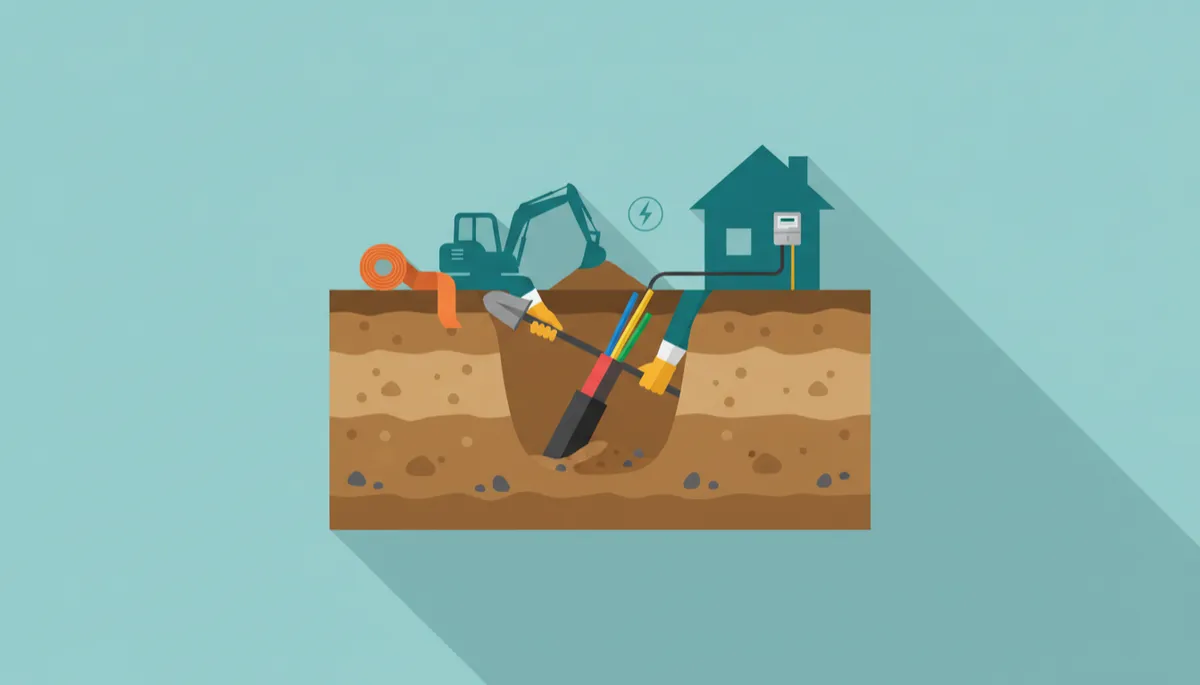
Correct Cable Laying is not just about dropping cable into a trench. A layer of sand or fine soil is usually placed beneath and around the cable to cushion it from rocks. After the initial backfill, marker tape is laid above the cable run so anyone digging in future gets a clear warning before they reach live conductors. Finally, the trench is compacted and restored so lawns, paths, and gardens look as close to original as possible.

Correct bedding, spacing, and warning tape help protect underground mains for decades.
Safety Guidelines Homeowners Should Know
While only licensed electricians should carry out undergroundmainsinstallation, it is important for homeowners to understand key Safety Guidelines. Knowing what is normal—and what is not—helps you protect your family and property, and tells you when it is time to call an emergencyelectrician.
Never dig blindly. Before planting trees, installing a fence, or adding a new garden bed, confirm where your underground mains and other services are located.
Watch for warning signs. Flickering lights, frequent tripping, or unusual buzzing near your switchboard after recent digging work can point to underground cable damage.
Keep DIY to non‑electrical work. Homeowners can help with access and basic trench preparation under guidance, but all Mains Electrical connections, terminations, and testing must be carried out by a licensed electrician.
Call an emergencyelectrician in a fault. If you see exposed cables, smell burning, or lose power after nearby excavation, stay clear of the area and call a licensed professional immediately.
💡 Pro Tip: Ask your electrician for a simple sketch or digital plan showing the route of your underground mains. Keep it with your house documents so future trades and landscapers know exactly where to avoid digging.
How Brux Electrical Handles Underground Mains on the Gold Coast
As an owner‑operated business, Brux Electrical approaches every underground installation as if it were our own property. There are no subcontractors and no hand‑offs: the person who inspects your site and prepares your quote is the same licensed electrician on the tools completing your undergroundmainsinstallation. That means clear communication, consistent quality, and no last‑minute surprises on the day of the job.
Because we also design and install solar, batteries, poles & mains, and full new‑build electrical systems, we look at your underground works as part of the bigger picture. If you are planning rooftop solar next year or a battery down the track, we will size your Mains Electrical, conduit, and switchboard layout so everything works together cleanly and efficiently. This whole‑of‑home approach often costs less over the life of the property than piecing together upgrades one by one.
When to Upgrade, When to Repair, and When to Start Fresh
Older homes on the Gold Coast often started with overhead services or undersized underground cables that were never designed for today’s loads. If you are adding a granny flat, major air‑conditioning, or a large solar system, it may be time to review your mains. Sometimes a targeted repair is enough; in other cases, a full 3phaseupgrade and new underground installation is the safest option. A transparent, local electrician will walk you through the pros and cons in plain language, including costs, disruption, and long‑term benefits.
Brux Electrical’s commitment is simple: we recommend what we would do on our own home. If that means reinforcing an existing underground run rather than replacing it, we will say so. If starting fresh is the only way to meet safety guidelines and future‑proof your property, you will get a clear explanation and an upfront price before any work begins.
Ready to Talk Underground Mains? Get a Quote You Can Trust
Installing or upgrading underground mains is not a job you want to do twice. The right planning, careful trenching techniques, and professional cable laying will give you safe, reliable power for decades, while the wrong shortcuts can leave you with faults buried under concrete and gardens. If you are building, renovating, or simply unsure whether your current Mains Electrical setup is up to standard, now is the time to get clear advice.
Brux Electrical provides fully licensed, insured undergroundmainsinstallation across the Gold Coast, with no subcontractors and no hidden extras. From the first site visit to final testing, you deal with the same local electrician who understands your property and your plans. If something ever goes wrong down the track, you know exactly who to call—and you can actually reach us.
If you are ready to discuss underground installation, a possible 3phaseupgrade, or need an emergencyelectrician to assess existing underground cables, reach out to Brux Electrical today. Get a quote from a local you can actually reach, and enjoy the peace of mind that comes with safe, compliant underground mains done properly the first time.
