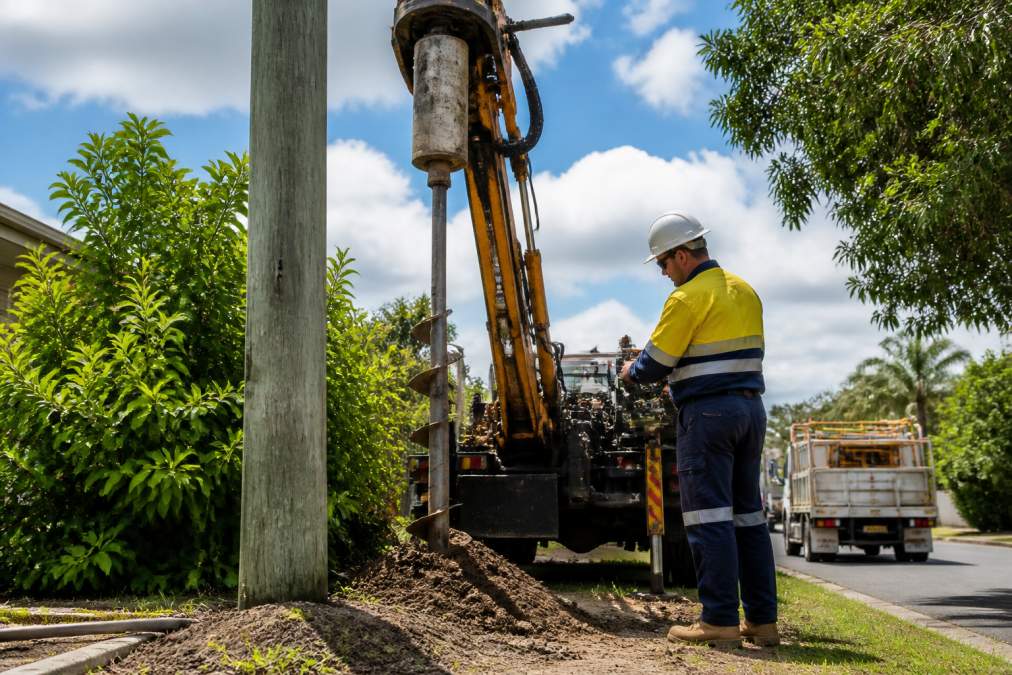
Private Power Pole Replacement: Gold Coast Guide
Table of Contents
- When Your Private Power Pole Needs Replacement
- Private Power Pole Inspection Checklist
- Understanding Private Power Pole Maintenance in Queensland
- The Power Pole Replacement Process: What to Expect
- Cost of Underground Power Conversion on the Gold Coast
- Safety Standards and Compliance for Private Power Poles
- Why Choose a Local Licensed Electrician
- Conclusion
Last Updated: August 23, 2026
When Your Private Power Pole Needs Replacement
A private power pole that's deteriorating, damaged, or failing safety inspections creates genuine risk to your home and family. Unlike poles owned by the grid operator, your responsibility for maintenance and replacement falls entirely on you, and that responsibility carries real consequences if something goes wrong.
The decision to replace a private power pole isn't one most homeowners face often. You'll encounter technical language, regulatory requirements specific to Queensland, and the need to coordinate with a licensed electrician who understands both the engineering and the compliance side. This guide from Brux Electrical covers what you need to know to make that decision confidently.
Private power poles deteriorate from wood rot, storm damage, vehicle impact, corrosion, or age. Some are replaced as part of planned upgrades, moving from overhead to underground power or upgrading capacity for solar and battery installations. Others require replacement because an inspection revealed a defect that makes the pole unsafe.
The cost and complexity of replacement vary significantly based on your situation. A straightforward replacement costs less than one requiring trenching for underground conversion or dealing with multiple service connections. Understanding what triggers replacement, what inspections reveal, and what your options are puts you in control of the decision.
Private Power Pole Inspection Checklist
Your private power pole should be inspected regularly, and a professional inspection becomes urgent if you notice visible damage, suspect rot, or receive a defect notice from your local council.
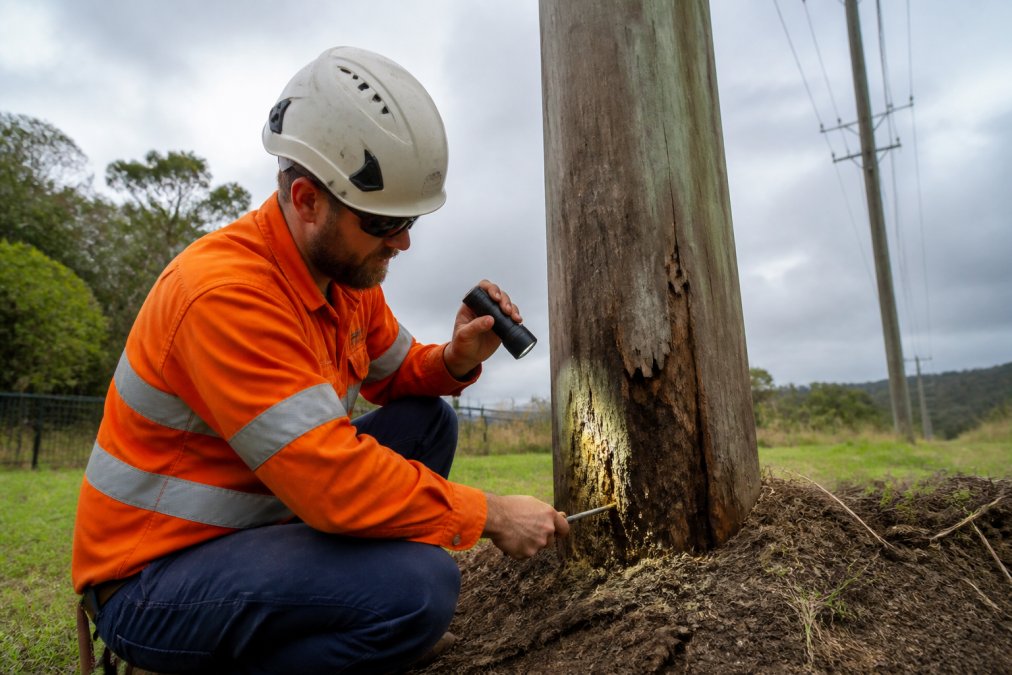
A thorough inspection covers several key areas. The pole's structural integrity, particularly the lower section where moisture accumulates, is the first priority. Wood rot develops from the ground up, and an inspector will probe the wood with a metal tool to check for soft spots indicating decay (peer-reviewed research). Metal poles or metal components are checked for rust and corrosion. Cross-arms and insulators are examined for damage. The foundation is assessed to ensure the pole remains stable and isn't leaning or shifting.
Electrical safety is equally critical. The inspector verifies that all connections are secure, insulation is intact, and the pole can safely support the weight of lines and equipment currently attached. If your property has had recent solar installation, battery systems, or electrical upgrades, the pole may be carrying more load than originally designed for.
Common defects triggering replacement include deep wood rot, splits or cracks compromising strength, severe leaning, corrosion eating through metal components, or storm damage. Some defects are repairable; others make replacement the only safe option.
Document the inspection findings. If you receive a defect notice from your local council or grid operator, keep that documentation. When you contact a licensed electrician for a quote, share the inspection report so they understand exactly what they're working with.
Understanding Private Power Pole Maintenance in Queensland
Queensland's regulatory environment shapes what you're required to do with a private power pole and when replacement becomes mandatory. A privately owned pole falls under your responsibility, not the grid operator's.
The Australian Standard AS/NZS 7000 sets requirements for the safe use of electricity in buildings and on properties, including overhead power lines and poles (standards.org.au). Queensland's Electrical Safety Act 2002 establishes minimum safety standards (legislation.qld.gov.au). These aren't optional guidelines; they're legal requirements. A pole that fails to meet these standards can't legally remain in service, and you're liable if someone is injured due to a defective pole.
Local councils may issue defect notices if a pole is identified as unsafe. Once you receive a notice, you have a specified timeframe to address the defect. Ignoring the notice creates legal exposure and prevents you from selling or refinancing your property.
The cost of maintaining compliance falls on you. That means regular inspections, prompt repairs when issues are identified, and replacement when the pole can no longer be safely maintained. Many homeowners are surprised to learn this, especially if they've assumed the grid operator handles all pole maintenance. They maintain the poles they own; if the pole on your property is privately owned, it's your asset and your responsibility.
Private power pole maintenance in Queensland typically includes annual or bi-annual visual inspections, prompt treatment of wood rot or corrosion, and replacement of damaged cross-arms or insulators. If you're planning major electrical work, solar installation, or battery storage, a pre-work inspection confirms the pole can handle the additional capacity.
The Power Pole Replacement Process: What to Expect
A private power pole replacement follows a structured sequence. Understanding the steps helps you anticipate what's involved, how long it takes, and what coordination is needed.
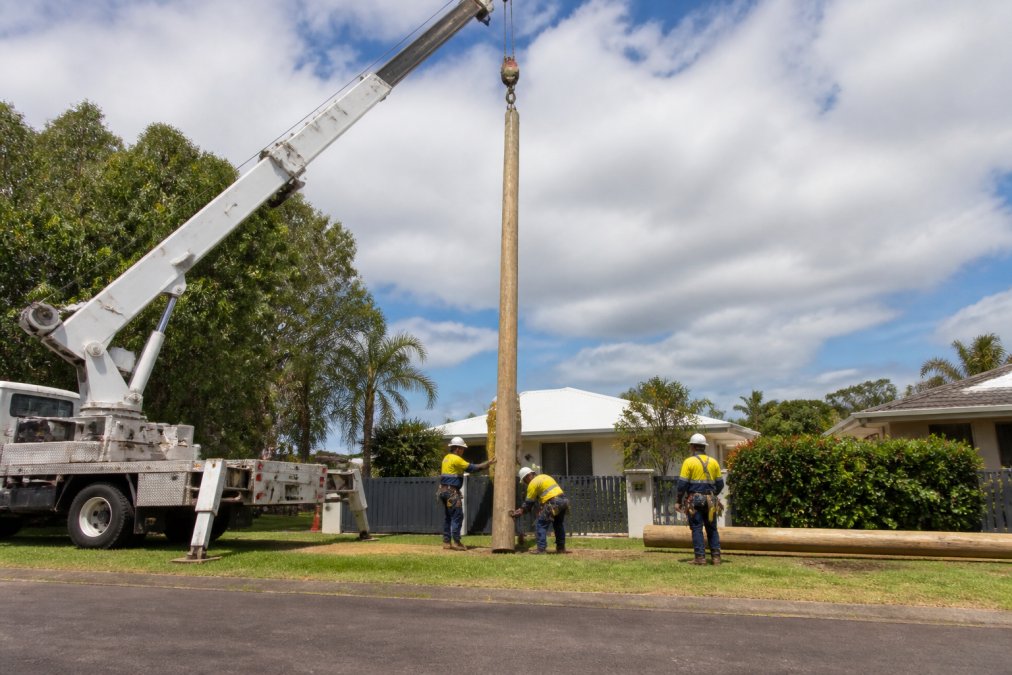
The process begins with a detailed site assessment. The licensed electrician identifies the exact location of the existing pole, verifies all connections and services running through it, checks soil conditions and access for equipment, and confirms there are no underground services that could be damaged during removal.
Permits come next. Depending on your local council's requirements and whether the replacement involves changes to the power configuration, you may need council approval. Your electrician typically handles permit applications on your behalf. This step usually takes one to two weeks.
Power isolation is critical for safety. Before any work begins, the grid operator must isolate the power supply to the pole. This usually happens on a scheduled day and may affect your electricity supply temporarily. Your electrician coordinates this timing with you and the grid operator.
Removal of the old pole involves disconnecting all lines and equipment, extracting the pole from the ground, and safely disposing of it. The work typically takes one to two days depending on site conditions and the number of connections.
Installation of the new pole follows immediately. The new pole is positioned, set to the correct depth and angle, backfilled and compacted, and all lines and equipment are reconnected. The electrician tests all connections for safety before handing the system back to you.
The entire process typically takes two to four weeks from initial assessment to completion, depending on permit timelines and site-specific conditions. Brux Electrical coordinates all these steps directly, with the same electrician who assessed your pole overseeing the replacement from start to finish.
Cost of Underground Power Conversion on the Gold Coast
Many homeowners ask about converting from overhead private power poles to underground power at the same time as replacement. Underground power eliminates the need for poles entirely and offers aesthetic and safety advantages, but the cost is significantly higher than pole replacement alone.
Underground power conversion involves trenching from your meter to the property boundary, installing underground conduit and cable, and connecting to the grid operator's underground network if available. The cost depends on the distance to be trenched, soil conditions, whether existing utilities must be relocated, and the complexity of your electrical configuration.
Tugun and the broader Gold Coast have variable underground infrastructure. Some areas have established underground networks; others require new trenching through difficult terrain. An electrician can assess your property and determine whether underground conversion is feasible.
The decision between pole replacement and underground conversion is partly financial and partly practical. Pole replacement is the lower-cost option and is appropriate if your existing pole can be safely replaced. Underground conversion is worthwhile if you're planning long-term improvements, want to eliminate pole maintenance entirely, or are undertaking major electrical work anyway.
Brux Electrical can assess both options for your property and explain the trade-offs clearly.
Safety Standards and Compliance for Private Power Poles
Queensland's electrical safety standards exist to prevent injury and property damage. Understanding what compliance means for your private pole helps you make informed decisions about maintenance and replacement.
The Australian Standard AS/NZS 7000 specifies design, installation, and maintenance requirements for overhead power lines. These standards cover pole strength, conductor spacing, clearances from buildings and vegetation, grounding and bonding, and inspection intervals. A pole that meets these standards is safe; one that doesn't creates liability.
Regular inspection is the foundation of compliance. Queensland guidance recommends that private poles be inspected at least every five years, and more frequently if the pole shows signs of age or damage. An inspection by a qualified electrician is what the regulations contemplate. The inspector documents findings and recommends maintenance or replacement based on what they find.
Documentation matters. Keep records of all inspections, maintenance work, and repairs completed. If a council defect notice is issued, this documentation shows you've been managing the pole responsibly. If someone is injured due to a pole failure, documentation of your maintenance efforts provides evidence that you met your legal obligations.
Grounding and bonding are critical safety features. The pole and all metal components must be properly grounded to prevent dangerous voltages from developing if a fault occurs. Your electrician verifies this during inspection and ensures grounding remains effective throughout the pole's life.
When replacement becomes necessary, the new pole must meet current standards. An electrician installing a new pole ensures it's sized appropriately for your load, installed to the correct depth and angle, properly grounded, and configured to maintain safe clearances.
Why Choose a Local Licensed Electrician
The decision to work with a licensed, local electrician isn't just about credentials; it's about accountability, expertise, and the quality of the work you receive.
A licensed electrician in Queensland has completed formal training, passed competency assessments, and holds a current license. This license is your assurance that the person working on your power pole has demonstrated knowledge of electrical safety, Queensland regulations, and proper installation practices. An unlicensed operator may be cheaper, but they're not legally permitted to do the work, and any failures create serious liability for you.
Local expertise matters. An electrician familiar with Tugun and the Gold Coast understands local soil conditions, council requirements, typical pole configurations, and the specific challenges of properties in this region. They know which permits are required and how long they typically take.
Direct communication with the electrician who will do the work is valuable. When the same person who quotes your job performs the installation, they're invested in getting it right and available if questions arise during the work.
Insurance and guarantees are essential. A licensed, insured electrician carries professional indemnity insurance and public liability insurance. If something goes wrong, you have recourse.
Brux Electrical operates as an owner-operated team based in Tugun. The electrician who assesses your pole and provides your quote is the same person who oversees the replacement. This direct accountability means you're working with someone who understands your property, has a stake in the outcome, and is available for questions and follow-up.
Conclusion
A private power pole that's deteriorating or failing inspection requires prompt attention. The replacement process is straightforward when you understand the steps involved, but it's not a task for an unlicensed operator or a decision to delay once a defect is identified.
Brux Electrical specialises in private power pole assessment, replacement, and the electrical upgrades that often accompany them. Whether you need a straightforward pole replacement or you're considering underground power conversion as part of a larger solar or battery installation, a licensed local electrician can assess your situation, explain your options clearly, and deliver the work with the accountability and expertise your property deserves.
Frequently Asked Questions
Who is responsible for maintaining a private power pole in Queensland?
As the property owner, you are responsible for maintaining your private power pole. This includes regular inspections, repairs, and eventual replacement. If your pole is defective or poses a safety risk, the local council may issue a defect notice requiring remediation. A licensed electrician can assess the condition and advise on necessary maintenance or replacement to meet Queensland electrical safety standards.
What does a private power pole inspection checklist include?
A thorough inspection checks for wood rot, cracks, splits, insect damage, corrosion on metal components, leaning or tilting, damaged cross-arms, deteriorated insulators, and loose hardware. The electrician also verifies that earthing is intact, clearances meet safety requirements, and all connections are secure. A professional inspection identifies issues early, preventing costly emergency replacements and safety hazards.
What is involved in converting from overhead to underground power?
Underground power conversion involves trenching, installing underground cables, connecting to your switchboard, and decommissioning the overhead pole. The process requires council approval, coordination with your energy distributor, and compliance with Queensland electrical standards. Costs depend on property size, trench depth, and cable distance. A licensed electrician can provide a detailed quote and manage the entire conversion process from start to finish.
How long does a private power pole replacement typically take?
Replacement usually takes one to three days, depending on pole condition, access, and whether underground conversion is involved. The electrician will disconnect power safely, remove the old pole, install the new one, reconnect all services, and test the system. The exact timeline depends on site conditions and council requirements. Your electrician will confirm the schedule before work begins.
Get a quote from Brux Electrical. We'll assess your pole, explain what's needed, and provide a clear, itemised quote with no surprises. [EXTERNAL_LINK: Contact Brux Electrical for a private power pole replacement assessment | bruxelectrical.com.au] and speak directly with the electrician who will handle your work.
This article was written using GrandRanker
