Monocrystalline vs Polycrystalline Solar Panels
Table of Contents
- How Monocrystalline and Polycrystalline Solar Panels Differ
- Monocrystalline vs Polycrystalline Solar Panel Efficiency
- Monocrystalline vs Polycrystalline Solar Panel Cost in Australia
- Solar Panel Efficiency in Hot Weather
- How to Identify Monocrystalline Solar Panels
- Which Panel Type Suits Your Home
- Frequently Asked Questions
Last Updated: October 10, 2026
How Monocrystalline and Polycrystalline Solar Panels Differ
When you're considering solar for your home, understanding monocrystalline vs polycrystalline solar panels matters more than many installers explain. Monocrystalline vs polycrystalline solar panels represent two fundamentally different manufacturing approaches that affect efficiency, cost, and performance in ways that directly impact your electricity savings.
At Brux Electrical, we've installed many solar systems across the Gold Coast. The difference comes down to how the silicon is processed. Monocrystalline panels are made from a single, continuous crystal of silicon, while polycrystalline panels are made from multiple silicon fragments melted together. That distinction sounds technical, but it changes everything about how the panel performs on your roof.
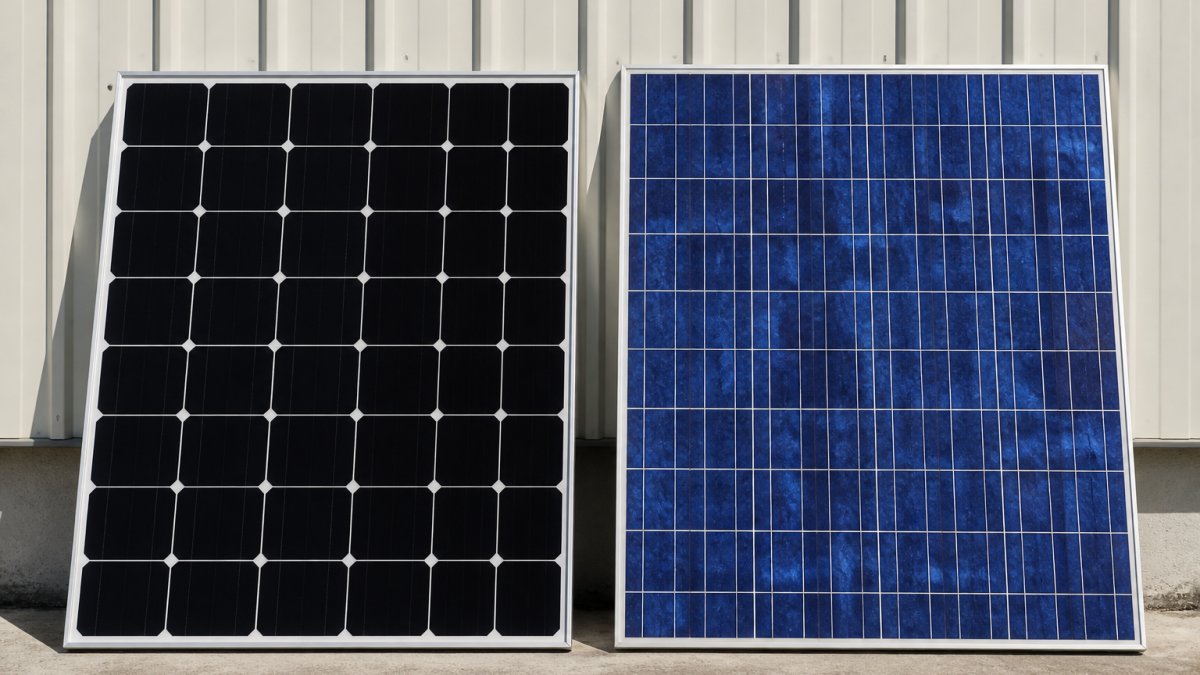
Monocrystalline panels have a uniform dark appearance because the single-crystal structure is more organized at the atomic level. Polycrystalline panels have a speckled, multi-coloured look due to the visible grain boundaries between different crystal fragments. Beyond appearance, this structural difference determines how efficiently each panel converts sunlight into electricity and how much you'll pay upfront.
The real question isn't which is "better", it's which is right for your property. A small rooftop in Tugun has different constraints than a sprawling rural property. Your budget, available roof space, and local climate all shift the equation.
Monocrystalline vs Polycrystalline Solar Panel Efficiency
Monocrystalline panels convert sunlight to electricity at higher rates than polycrystalline alternatives. The organised crystal structure allows electrons to move more freely, which translates to measurable efficiency gains in real-world conditions.
Research indicates that monocrystalline panels typically achieve higher efficiency ratings than polycrystalline panels. That difference means a monocrystalline array can generate more power from the same roof space.
However, efficiency ratings tell only part of the story. Real-world performance depends on installation angle, shading, temperature, and how the inverter manages the system. A perfectly installed polycrystalline system often outperforms a poorly positioned monocrystalline one.
The efficiency advantage of monocrystalline panels becomes most valuable when roof space is limited. If you have a small, partially shaded roof, monocrystalline panels maximise your output from whatever area you can use. On a large, unshaded roof with plenty of space, polycrystalline panels deliver solid performance at lower cost.
Temperature also affects efficiency. Both panel types lose performance as they heat up, but monocrystalline panels typically handle high temperatures slightly better than polycrystalline alternatives. In Queensland's hot climate, this advantage compounds over the system's 25-year lifespan.
Monocrystalline vs Polycrystalline Solar Panel Cost in Australia
Monocrystalline panels cost more upfront because the single-crystal manufacturing process is more complex and produces more waste silicon during production. That additional cost typically translates to higher panel prices compared to polycrystalline alternatives, though total system cost depends on many factors beyond panel type alone.
The cost difference matters most when you're deciding between a smaller monocrystalline system and a larger polycrystalline one. Sometimes spending more on fewer, higher-efficiency panels makes sense. Other times, buying more polycrystalline panels for the same budget delivers better returns.
Installation costs remain roughly the same regardless of panel type. Your electrician's labour, the inverter, wiring, mounting hardware, and council approvals don't change based on which panel you choose. That means the panel cost difference becomes proportionally more significant on smaller systems and less significant on larger ones.
Australian solar incentives, including the Small-scale Renewable Energy Scheme (SRES), apply to both panel types equally. Your rebate depends on system size, not panel type. That said, the efficiency difference means you might need fewer monocrystalline panels to reach your energy goals, which could affect your total out-of-pocket cost.
When we quote systems at Brux Electrical, we calculate the cost per watt of installed capacity, not just the panel price. A 6kW monocrystalline system and a 7kW polycrystalline system might cost similar amounts upfront, but they'll generate different amounts of electricity over 25 years. The long-term return depends on your actual electricity consumption and how much you're currently paying per kilowatt-hour.
Solar Panel Efficiency in Hot Weather
Queensland's climate is a genuine advantage for solar, but heat reduces efficiency for both panel types. Understanding how temperature affects performance helps you predict real-world output, especially during summer months when you need cooling power most.
Monocrystalline panels typically have a temperature coefficient that means for every degree your panels heat up above the standard test temperature, monocrystalline panels lose slightly less efficiency than polycrystalline ones.
On a hot day, common on the Gold Coast, your panels might be running at elevated temperatures depending on airflow and mounting. At that temperature, a monocrystalline panel might deliver closer to its rated efficiency, while a polycrystalline panel might drop more. The gap widens in heat.
Roof colour, mounting distance from the roof surface, and ventilation all affect panel temperature. Black metal roofs absorb more heat than light-coloured ones. Panels mounted flush against the roof stay hotter than panels mounted on rails with airflow underneath. These installation details sometimes matter more than the panel type itself.
The practical takeaway: in Queensland's heat, monocrystalline panels' superior temperature performance becomes a real advantage. If you're planning a system that needs to deliver peak output during summer afternoons, monocrystalline panels justify their higher cost more convincingly than they would in cooler climates.
How to Identify Monocrystalline Solar Panels
Monocrystalline panels are visually distinct once you know what to look for. The cells appear uniformly dark blue or black because they're cut from a single crystal. Look closely and you'll see a clear grid pattern, but the cell colour is consistent across the entire panel with no visible variation between cells.
Polycrystalline panels, by contrast, have a speckled appearance with visible colour variation between cells. The blue isn't uniform, you'll see lighter and darker spots where different crystal fragments meet. The overall impression is more textured and less uniform than monocrystalline alternatives.
The cut corners on monocrystalline cells are another identifying feature. Manufacturers cut monocrystalline wafers from a cylindrical ingot, which leaves the corners slightly rounded or bevelled. Polycrystalline cells are cut from square ingots, so their corners are sharper.
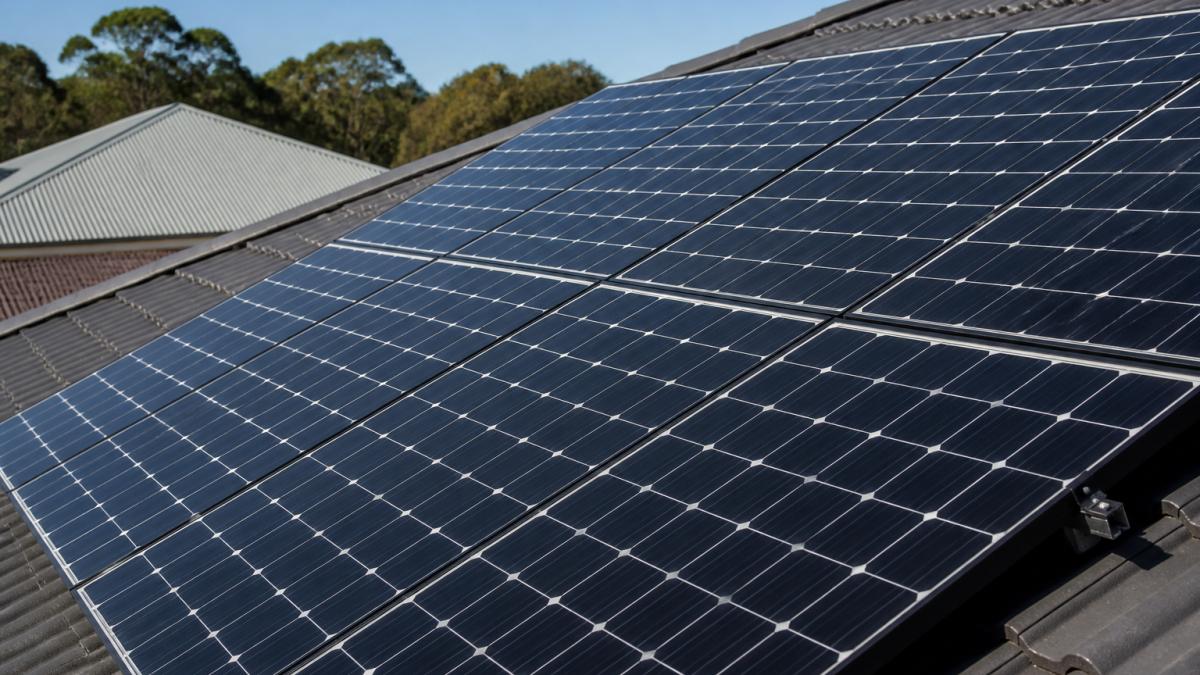
If you're inspecting panels already installed on a roof, the visual difference is clear from ground level. Monocrystalline panels look sleeker and more uniform. Polycrystalline panels look busier and more varied in colour. Neither appearance indicates better performance, it's purely visual.
The nameplate on the back of each panel lists the type, efficiency rating, and power output. That's the most reliable way to confirm what you're looking at. If you're requesting quotes from installers, ask them to specify panel type in writing. Don't assume based on appearance alone.
Which Panel Type Suits Your Home
Your choice depends on three factors: available roof space, budget, and how long you plan to stay in the property.
Choose monocrystalline if: You have limited roof space, your roof is partially shaded, you live in a hot climate like the Gold Coast, or you plan to stay in your home for 15+ years. The higher upfront cost pays back through superior efficiency and temperature performance.
Choose polycrystalline if: You have plenty of unshaded roof space, you're budget-conscious and want to maximise system size for a fixed budget, or you're in a cooler climate where the heat advantage matters less.
Most residential systems in Queensland benefit from monocrystalline panels because roof space is typically limited and heat performance matters. If your roof is large and unshaded, polycrystalline panels deliver solid returns at lower cost.
The installer you choose matters more than the panel type. A poor installation with monocrystalline panels underperforms a well-designed polycrystalline system. At Brux Electrical, we size every system to match your actual electricity consumption, not to hit a sales target. We explain the trade-offs between panel types based on your specific property and usage patterns, then recommend what makes sense for your situation.
When you request quotes, ask each installer to justify their panel recommendation. If they can't explain why they chose one type over another for your roof, that's a red flag. A good installer should discuss your roof space, shading patterns, budget, and long-term plans before recommending a panel type.
Choosing between monocrystalline and polycrystalline panels is one of several decisions that shape your solar system's performance and value. The real difference emerges when an experienced installer evaluates your specific property, calculates your actual energy needs, and recommends the option that delivers the best return on your investment. At Brux Electrical, we handle every installation ourselves, the same person who quotes your system performs the work, ensuring you get equipment right-sized to your electricity bills and a system you can trust for decades. Get a quote from our team near you on the Gold Coast and see how we approach solar differently.
Frequently Asked Questions
What is the main difference between monocrystalline and polycrystalline solar panels?
Monocrystalline panels are made from a single silicon crystal, giving them a uniform dark appearance and higher efficiency. Polycrystalline panels are made from multiple silicon crystals, resulting in a speckled blue look and slightly lower efficiency. Monocrystalline panels typically achieve higher efficiency, while polycrystalline panels usually reach slightly lower efficiency. Both types work reliably for residential installations, but monocrystalline panels take up less roof space for the same power output.
Are monocrystalline solar panels worth the extra cost in Australia?
Whether monocrystalline panels justify their higher upfront cost depends on your roof space and energy goals. If your roof is limited, monocrystalline's higher efficiency means you need fewer panels to meet your electricity needs. For most residential properties with adequate roof area, the cost difference may not be significant enough to outweigh the benefits of either type. A local installer can assess your roof size, shading, and energy consumption to recommend the best option for your situation.
Do monocrystalline or polycrystalline panels perform better in hot weather?
Both panel types experience a slight drop in efficiency as temperature rises, but monocrystalline panels generally maintain better performance in hot conditions. Polycrystalline panels are slightly more affected by heat, losing a bit more output at elevated temperatures. In hot climates like those found across Australia, monocrystalline panels may deliver marginally better returns over the system's lifetime. However, proper installation with adequate ventilation behind the panels helps both types perform well in warm conditions.
How can I tell if solar panels are monocrystalline?
Monocrystalline panels have a uniform dark blue or black colour with a smooth, even appearance across all cells. The cell structure looks like a grid of identical squares. Polycrystalline panels, by contrast, have a speckled or mottled blue appearance with visible crystal boundaries that create a less uniform look. If you're unsure, ask your installer to clarify the panel type in your quote. A reputable local installer will provide transparent details about the equipment they're recommending.
