Managing Off-Grid Power During Storms
Table of Contents
- Prepare Your Off-Grid System Before Storm Season
- Solar System Surge Protection During Storms
- Electrical Safety During Storms
- Managing Battery State of Charge Through Outages
- What to Do Immediately After a Storm
- Common Mistakes to Avoid During Storm Events
- Frequently Asked Questions
Prepare Your Off-Grid System Before Storm Season
The difference between weathering a storm and losing power entirely comes down to preparation. Before the season hits, your battery bank and backup sources need a thorough audit. Many off-grid systems fail not because they're undersized, but because they haven't been tested under real stress.
Start by checking your battery bank capacity and condition. Know exactly how many kilowatt-hours you're storing and how much usable capacity remains after accounting for depth of discharge limits. A battery that's supposed to hold 15 kWh might only deliver 10 kWh if you're protecting its lifespan (peer-reviewed research). Test your backup power sources, whether that's a generator, a second solar array, or another method. Run them under load, not just at idle. Generators especially need regular exercise to stay reliable when you actually need them.
Corroded battery terminals, loose connections, and outdated firmware all create weak points that show up exactly when conditions are worst. Spend an afternoon now checking every connection, cleaning terminals, and updating your inverter software. It's the cheapest insurance you'll buy.
Check your battery bank capacity and condition
Your battery bank is your lifeline during extended outages. Before storm season, measure its actual state of health. Most modern batteries report their condition through monitoring software, check what yours tells you. If your system uses lead-acid batteries, test specific gravity on each cell. If you're using lithium, check the battery management system logs for any warning codes or capacity degradation.
Write down your usable capacity in kilowatt-hours. This is the amount of energy you can actually draw without damaging the battery. Many systems are rated at 100 per cent depth of discharge in marketing materials but are designed to operate at 80 per cent for longevity. Know your real number. During a storm, you need to know exactly how long you can run your essential loads.
Test your backup power sources
A generator sitting idle for months will often fail to start when you need it most. Run it under load for at least 30 minutes before storm season (fema.gov). Let it reach operating temperature and pull realistic current. If you have a second solar array or wind turbine as backup, verify that your inverter can switch to it cleanly and that all connections are secure.
Document your backup source's fuel consumption or generation capacity. A generator that produces 5 kW continuous output will run your essential loads differently than one rated at 10 kW. Know the limits so you can plan accordingly when the storm arrives.
Solar System Surge Protection During Storms
Lightning and electrical surges are the primary threats to off-grid systems during storms (the CDC). Surge protection devices sit between your solar array, inverter, and battery bank, sacrificing themselves to protect the expensive equipment behind them. They're not optional, they're the first line of defence for managing off-grid power during storms.
Install and verify surge protection devices
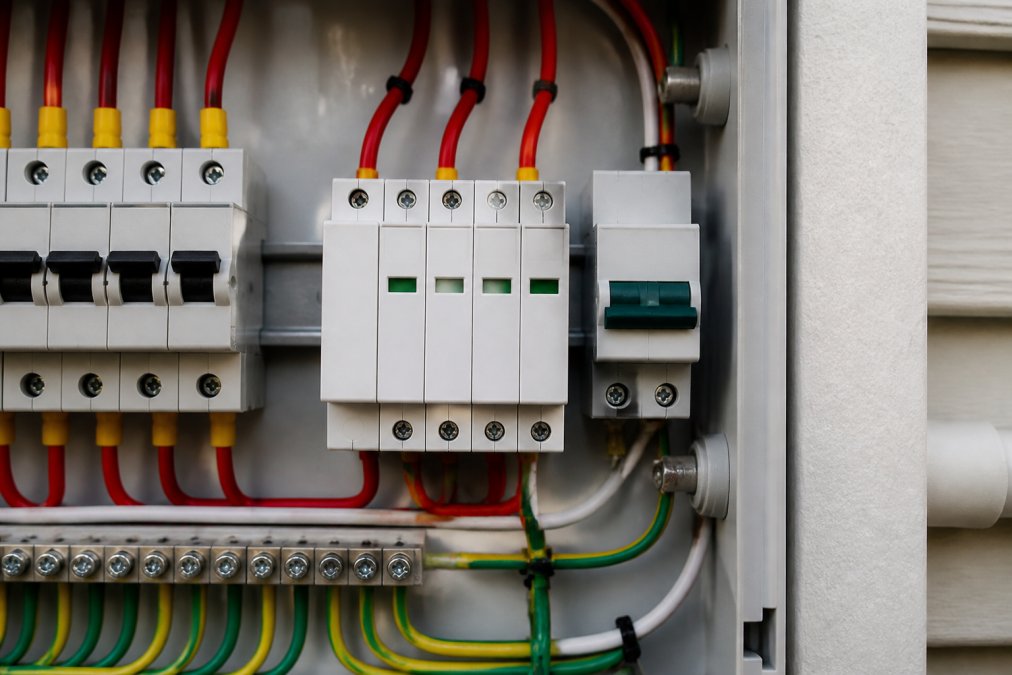
Surge protectors come in two main types: DC-side protection for your solar array and battery connections, and AC-side protection for your inverter output. Most systems need both. DC surge arrestors should be installed at the array combiner box and at the battery bank. AC surge protectors go between your inverter and your home's electrical panel.
Verify that your surge protection is rated for your system voltage and current. A 48-volt system needs different protection than a 12-volt system. Check the manufacturer's specifications and ensure your installer matched the protection to your actual system design. Many systems use undersized protection because it's cheaper, this is where corners get cut that cost you dearly when a storm hits.
Test your surge protectors annually. Some devices include a test button that simulates a surge. Use it. If your protection devices have status lights, confirm they're all green. Replace any that show red or amber before storm season arrives.
Disconnect or isolate your system safely
When a severe storm approaches, disconnecting your solar array from the rest of your system reduces the risk of surge damage. This requires a properly installed DC disconnect switch between your array and your charge controller. Locate this switch, label it clearly, and practise using it before you need to in an emergency.
Isolation isn't just about flipping a switch. You need to understand the sequence: stop charging first, then disconnect the array. Reversing this order can create dangerous voltage spikes. Your system manual should specify the correct shutdown sequence, read it now, not during the storm.
If your system has a grid-tie component or backup generator, understand how those disconnect as well. Managing off-grid power during storms means controlling every source of electricity entering your system.
Electrical Safety During Storms
When your system fails or begins to fail mid-storm, the instinct is to rush out and fix it. This is when people get hurt. Wet conditions, high voltage, and panic make a dangerous combination.
If your inverter shuts down during a storm, leave it off. Do not attempt to restart it while lightning is still in the area. Do not go outside to check your solar array or battery connections while there's active electrical activity. The risk of electrocution from your own system or from lightning is real.
Know what to do if your system fails mid-storm. Your essential loads should have a manual bypass switch that allows you to disconnect from the inverter and run directly from a generator or backup source if needed. This switch should be accessible, clearly labelled, and something you've practised using. If you don't have one, this is a gap worth addressing before next storm season.
Contact a licensed electrician like Brux Electrical if you're uncertain about your system's safety features. A brief consultation now could prevent an injury later. We work with off-grid systems regularly and can walk you through your specific shutdown and emergency procedures.
Managing Battery State of Charge Through Outages
Your battery bank is finite. Once it's depleted, you're running on whatever backup power you have. Extended storms can drain even a well-sized system. Managing your battery state of charge through an outage means understanding your consumption and being willing to cut non-essential loads.
Monitor and ration your battery during extended storms
Install a quality battery monitor that shows real-time state of charge and consumption in kilowatts. Knowing you're at 60 per cent charge and drawing 3 kW tells you that you have roughly 5 hours of runtime left, critical information for rationing power. Many people guess at their state of charge and run out unexpectedly.
During an extended outage, treat your battery like a fuel tank. If you're at 50 per cent and the storm forecast shows another 12 hours of heavy weather, you need to cut consumption immediately. This isn't comfortable, but it's the reality of off-grid living during storms.
Prioritise essential loads when power is limited
Before storm season, identify which circuits are truly essential. Heating, refrigeration, water pumping, and communications usually make the list. Everything else, entertainment, heating water, charging devices, becomes discretionary. Install separate breakers or circuits for essential and non-essential loads so you can disconnect the non-essential ones quickly.
Some systems use a load-shedding relay that automatically disconnects non-essential circuits when battery charge drops below a set point. This removes the decision-making during a stressful event and protects your battery from over-discharge.
What to Do Immediately After a Storm
Once the storm passes and conditions are safe, your system needs inspection before you can trust it again.
Inspect your system for damage
Walk around your property and look for obvious damage: broken solar panels, burnt components, water intrusion into the battery enclosure, or damaged wiring. If you see anything unusual, don't touch it. Call a licensed electrician.
Check your inverter display for error codes. Many inverters log events that occurred during the storm, read these logs to understand what happened. Did your surge protection activate? Did your battery reach a low-voltage cutoff? Did your generator start as intended? These details tell you whether your system performed as designed.
Safely restart your off-grid power system
After inspection, restart your system following the manufacturer's sequence. This usually means reconnecting the solar array first, confirming the charge controller is working, then powering on the inverter. Don't rush this. If something is damaged, powering up too quickly can cause further damage or create a safety hazard.
Test your essential loads one at a time. Confirm that your backup generator starts and switches in correctly if needed. Once everything is running normally, document what happened during the storm. Did your system perform as expected? Did you run out of battery? Did any protection devices activate? Use this information to refine your approach for the next storm.
Common Mistakes to Avoid During Storm Events
The biggest mistake is assuming your system will work the way it's supposed to without testing it first. People install surge protection and never verify it's actually connected. They size a generator without confirming it can start under load. They don't know their battery's real usable capacity. Then a storm hits and everything fails.
Another common error is attempting repairs during the storm or immediately after while conditions are still wet and dangerous. Electricity and water don't mix. Wait for safe conditions and dry weather before working on your system.
Many off-grid users also neglect to document their system's shutdown and restart sequence. When stress hits, memory fails. Write it down. Laminate it. Post it near your main disconnect switch. Make it impossible to forget the correct sequence.
Finally, people often underestimate how quickly a battery bank can deplete during a prolonged outage. A system that seems large enough for daily use can be drained in hours if you're running heating or water pumping continuously. Plan for extended outages, not just the average day.
Managing off-grid power during storms requires planning, testing, and honest assessment of your system's limits. The work you do now, checking connections, verifying surge protection, understanding your battery capacity, and practising your shutdown sequence, directly determines whether you have power when the weather turns severe.
If you're uncertain about your system's readiness or need professional guidance on surge protection and safety procedures, Brux Electrical can help. We specialise in off-grid systems throughout the region and provide clear, transparent assessments of what your system can actually handle. A brief consultation now could be the difference between weathering the next storm and losing power for days. Get a quote from our team to review your system's storm preparedness.
Frequently Asked Questions
Does my off-grid solar system work during a power outage?
Your off-grid system will continue to work during a power outage if your battery bank has sufficient charge and your inverter is functioning. However, during severe storms, you should isolate your solar panels from the system to protect against lightning strikes and surges. Your battery bank becomes your sole power source during this isolation period, so proper battery sizing and pre-storm charging are critical to maintain power through the outage.
How do I protect my solar batteries from storm surges?
Install surge protection devices (surge arresters) at your main switchboard and between your solar array and battery bank. These devices divert excess voltage to ground before it reaches your batteries. Before a storm arrives, fully charge your battery bank to maximum capacity so you have maximum usable power during the outage. Disconnect your solar panels from the system during severe electrical storms to eliminate the risk of lightning-induced surges reaching your batteries.
What should I do if my off-grid power fails during a storm?
First, ensure your safety: stay away from electrical equipment and do not attempt repairs during active storms. Switch off non-essential loads to reduce demand on your system. Check your battery state of charge on your monitoring display. If your system has shut down due to a fault, do not restart it immediately; wait until the storm passes. Once conditions are safe, inspect your switchboard and surge protection devices for visible damage before attempting to bring the system back online.
How can I monitor my battery levels during extended storm outages?
Use your battery management system's display or monitoring app to track state of charge in real time. During extended outages, ration power by running only essential loads such as refrigeration, lighting, and communications equipment. Most modern off-grid systems allow you to set load-shedding priorities, which automatically disconnect non-critical circuits when battery capacity drops below a set threshold. This strategy extends your usable power and prevents deep battery discharge that can damage your system.
This article was written using GrandRanker
