Lithium vs Lead Acid Batteries for Solar: 2026 Guide
Table of Contents
- Lithium vs Lead Acid Batteries for Solar: The Comparison Table
- How Lithium and Lead Acid Batteries Actually Differ
- Solar Battery Depth of Discharge Explained
- Lifespan of Solar Batteries in Hot Climates
- Cost of Lithium Ion Solar Batteries in Australia
- Where Each Battery Type Wins
- Common Mistakes When Choosing a Solar Battery
- Frequently Asked Questions
Last Updated: September 19, 2026
Lithium vs Lead Acid Batteries for Solar: The Comparison Table
For most homes, lithium wins the lithium vs lead acid batteries for solar decision on usable capacity, lifespan and long-term cost. Lead acid still makes sense for tight budgets and low-use setups. This guide from Brux Electrical breaks down where each chemistry wins.
Here is the quick comparison before we get into the detail:
| Factor | Lithium (LiFePO4) | Lead Acid (AGM/Gel) |
|---|---|---|
| Usable capacity | 80-95% of rated | ~50% of rated |
| Cycle life | 3,000-6,000 cycles | 300-500 cycles |
| Weight per kWh | Lighter | 2-3x heavier |
| Maintenance | None | Periodic checks |
| Upfront cost | Higher | Lower |
| Best for | Daily cycling, off-grid | Budget, backup only |
If you are in Tugun, QLD and weighing up a battery for a solar setup, the table above covers most of the decision. The rest of this article explains why those numbers matter.
How Lithium and Lead Acid Batteries Actually Differ
Lithium batteries store more usable energy in less space and last far longer than lead acid. That single difference drives almost every practical trade-off between the two.
Chemistry and usable capacity
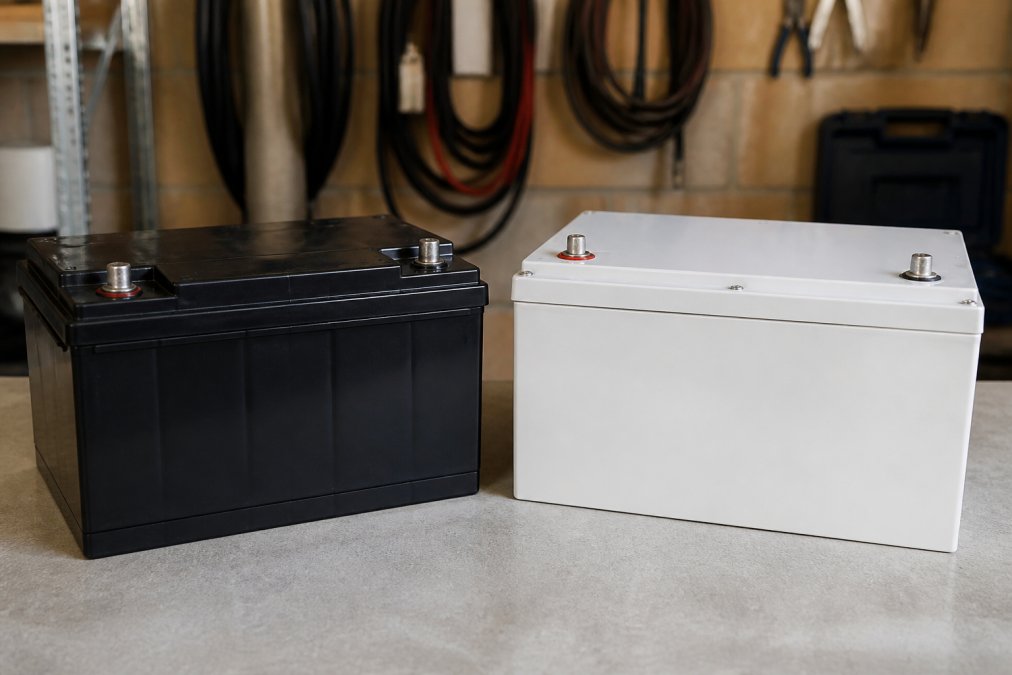
Usable capacity is the amount of a battery's rated energy you can actually draw without damaging it. Lithium iron phosphate (LiFePO4) batteries let you use 80-95% of rated capacity. Lead acid batteries should only be discharged to about 50%.
That means a 10 kWh lead acid bank gives you roughly 5 kWh of real power. A 10 kWh lithium bank gives you 8-9 kWh. You buy less battery for the same usable energy with lithium.
Weight, space and installation requirements
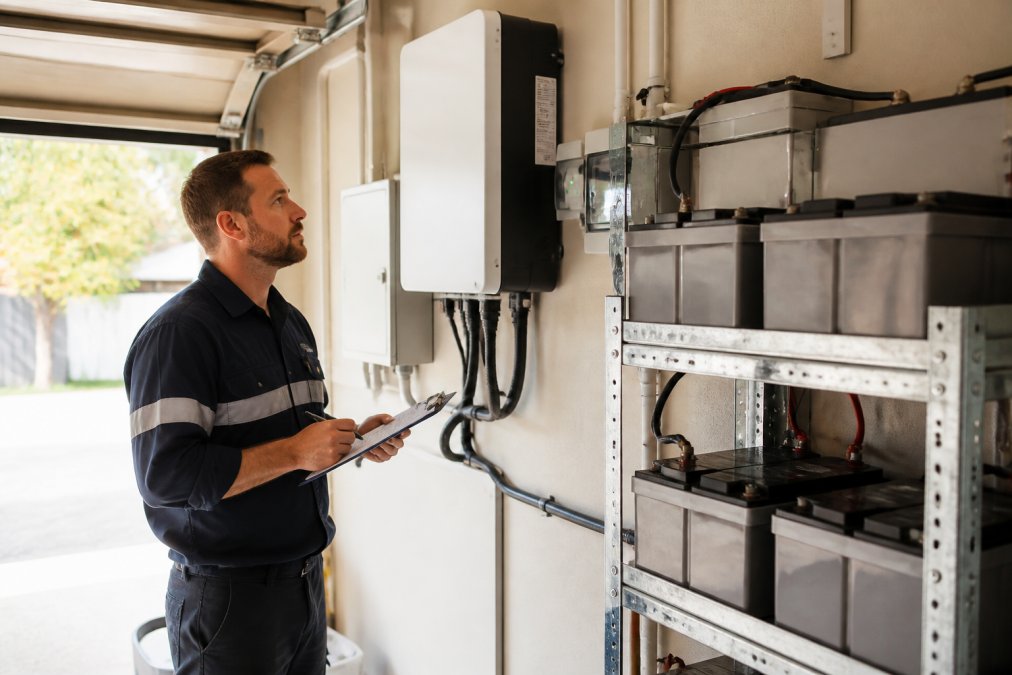
Lead acid banks are heavy and bulky. A typical lead acid setup needs a ventilated space, often a dedicated battery room or cabinet. Lithium batteries mount on a wall and take up a fraction of the space.
Solar Battery Depth of Discharge Explained
Depth of discharge (DoD) is the percentage of a battery's total capacity that has been used. A 90% DoD means you have drawn 90% of the stored energy. The higher the DoD a battery safely allows, the more of your investment you actually get to use.
Lead acid batteries are typically limited to 50% DoD to protect their plates. Push them deeper and cycle life drops fast. Lithium batteries handle 80-95% DoD without the same penalty.
This is why comparing batteries on rated capacity alone is misleading. Two batteries with the same kWh rating can deliver very different usable energy depending on their DoD limits.
Lifespan of Solar Batteries in Hot Climates
Heat is the biggest killer of solar battery life, and it matters more in Queensland than almost anywhere else in Australia. Both chemistries age faster in high temperatures, but lead acid suffers more.
Lithium batteries generally hold up better in the heat, partly because many models include thermal management. Lead acid batteries in a hot garage or shed degrade noticeably faster, and their cycle life, already lower, shrinks further.
Where you install the battery matters as much as what you buy. A shaded, ventilated position extends life for either chemistry. A baking hot western wall does the opposite.
Cost of Lithium Ion Solar Batteries in Australia
The cost of lithium ion solar batteries in Australia depends on capacity, brand and installation, so exact pricing varies by property. As a rule, lithium costs more upfront than lead acid but usually works out cheaper over the life of the system.
Upfront price versus total cost of ownership
The sticker price is only part of the story. Lead acid batteries are cheaper to buy but need replacing far more often, and you need a larger bank to match the same usable capacity.
Over ten years, a lead acid bank may be replaced two or three times. A quality lithium battery often lasts that whole period on a single purchase. Add the labour for each replacement and the gap narrows or disappears.
At Brux Electrical, we size systems to your actual energy bills rather than quoting the biggest bank on the shelf. That keeps you from paying for capacity you will never use. For current pricing on lithium and lead acid options, request an itemised quote.
Where Each Battery Type Wins
Lithium is the better choice for daily cycling, limited space and off-grid setups. Lead acid wins on upfront cost and simple backup roles.
Choose lithium if you cycle the battery daily, want minimal maintenance, or need maximum usable energy from a small footprint. LiFePO4 options are popular for exactly these reasons.
Choose lead acid if your budget is tight, you only need occasional backup power, and you have space for a ventilated bank. A Deep Cycle AGM is a proven, low-cost option for light use.
For off-grid properties around Tugun and the wider Gold Coast, lithium's higher DoD and longer cycle life usually make it the more practical pick, even at a higher upfront cost.
Common Mistakes When Choosing a Solar Battery
The most common mistake is comparing batteries on rated capacity instead of usable capacity. A lead acid bank and a lithium battery with identical kWh ratings deliver very different amounts of power.
Other frequent errors:
- Ignoring depth of discharge when comparing prices
- Underestimating how much heat shortens battery life
- Buying the biggest bank instead of one sized to actual usage
- Skipping a licensed installer and voiding the warranty
If you are searching for a solar battery installer near me, check that the quote is itemised and the installer is licensed and insured. Brux Electrical provides clear, itemised quotes and the same local expert who quotes the job handles the installation, with no subcontractors and no call centres.
Choosing between lithium and lead acid batteries for solar comes down to how you use the system and what you can spend upfront. For most Tugun and Gold Coast homes cycling a battery daily, lithium's usable capacity and lifespan make it the stronger long-term investment. Brux Electrical offers owner-operated, licensed and insured solar and battery installations, with clear itemised quotes, systems right-sized to your energy bills, and dependable local aftercare. Get a quote and find the right battery for your property.
Clean Energy Council guidance on battery storage
Australian Competition and Consumer Commission on solar and battery consumer rights
Australian Energy Regulator information on home energy storage
Frequently Asked Questions
Why are lithium batteries preferred over lead acid for solar systems in Australia?
Lithium batteries, particularly lithium iron phosphate (LiFePO4) types, offer higher usable capacity, longer cycle life, and better performance in Australian heat. They also require no maintenance and take up less space. Lead acid alternatives cost less upfront but need more frequent replacement, which affects long-term value.
What is the expected lifespan of a lithium battery compared to lead acid?
Lead acid batteries typically deliver around 300 to 500 cycles, while lithium options often exceed 3,000 cycles depending on depth of discharge and operating temperature. In hot climates, lead acid degrades faster because heat accelerates plate corrosion. Lithium batteries with built-in battery management systems handle high temperatures better, which extends their working life in Queensland conditions.
Are lead acid batteries still a viable option for off-grid solar in Queensland?
Yes, for smaller or low-frequency off-grid setups where upfront cost matters most. A Century Deep Cycle AGM is spill-proof and widely available. However, for year-round off-grid living in Queensland heat, lithium systems like the Tesla Powerwall or Pylontech US Series provide more usable capacity per dollar over their lifespan and handle deep discharges without the same damage.
How does depth of discharge differ between lithium and lead acid?
Depth of discharge (DoD) is the percentage of a battery's capacity you can use before recharging. Lead acid batteries should not be discharged below about 50% or their cycle life drops sharply. Lithium batteries can typically be discharged to 80% or more without significant damage. This means a smaller lithium bank can deliver the same usable energy as a much larger lead acid bank.
Do lithium batteries require less maintenance than lead acid?
Lithium batteries require virtually no maintenance. They have built-in battery management systems that monitor cells and protect against overcharging. Lead acid batteries need periodic checks, including terminal cleaning and electrolyte top-ups for flooded types. AGM variants are maintenance-free but still need ventilation and should not be discharged too deeply.
