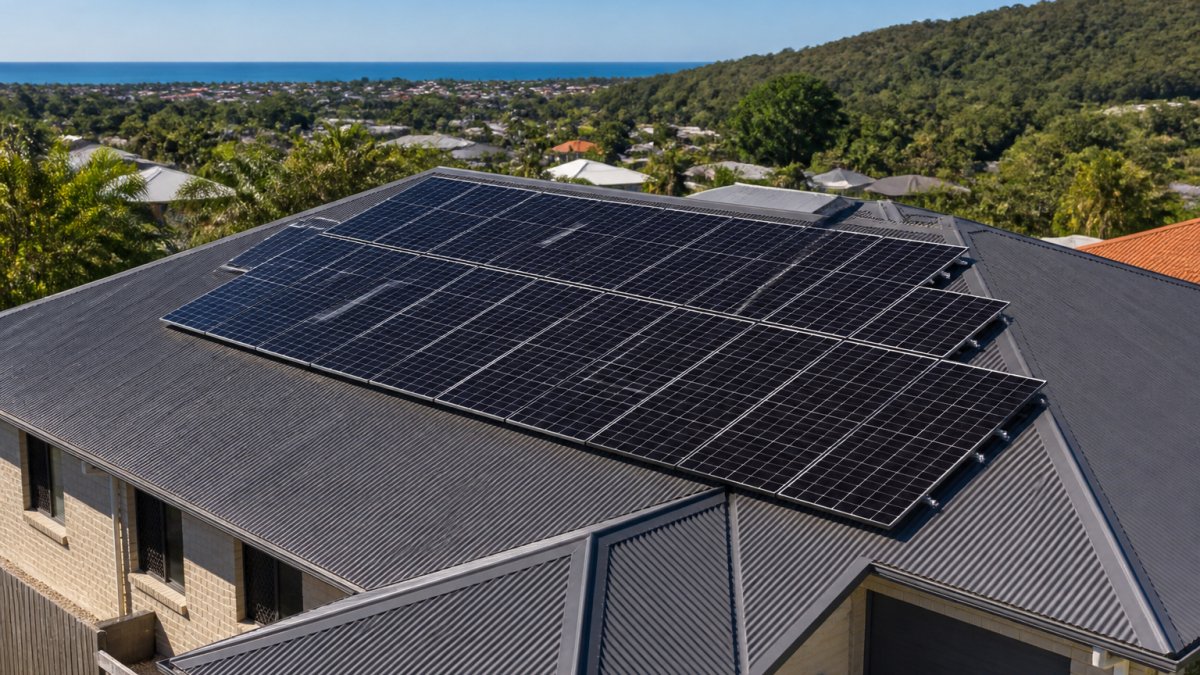
Is 10kW Solar Enough to Run a House?
Table of Contents
- Is 10kW Solar Enough to Run a House?
- How Much Electricity Does Your Home Actually Use?
- 10kW Solar System Output Per Day
- What Can a 10kW Solar System Run?
- 10kW Solar System With Battery Storage
- 10kW Solar System on Single Phase Supply
- Right-Sizing Your Solar System to Your Bills
- Frequently Asked Questions
Last Updated: October 12, 2026
Is 10kW Solar Enough to Run a House?
Whether 10kW solar enough to run a house depends entirely on how much electricity your home actually uses. For many households in Tugun and across the Gold Coast, a 10kW system can cover most daily energy needs, but the answer isn't one-size-fits-all.
The real question isn't whether 10kW is theoretically enough. It's whether it matches your specific consumption patterns, your local climate, and what you're trying to achieve. Some homes run comfortably on 10kW. Others need more. A few need less.
At Brux Electrical, we size systems based on your actual energy bills, not guesswork. This guide walks you through how to figure out whether 10kW is the right fit for your property, or whether you should go bigger or smaller.
How Much Electricity Does Your Home Actually Use?
Your household's daily electricity consumption is the starting point for everything. Most homes don't know their real usage because they only see a quarterly bill.
Typical household consumption patterns
An average Australian home uses between 15 and 20 kilowatt-hours (kWh) per day. Some use less, some use more. The difference comes down to:
- Heating and cooling: Air conditioning and heating are your biggest power draws. They can account for 40-60% of total consumption.
- Water heating: Electric hot water systems use substantial energy, especially if you're heating for a family.
- Refrigeration and cooking: Always-on appliances like fridges, plus occasional use of ovens and stovetops.
- Lighting and entertainment: LED lighting uses less than older bulbs, but it still adds up across a whole home.
- Pumps and motors: Pool pumps, spa heaters, or irrigation systems can push daily use higher.
To find your actual usage, check your electricity bill. It shows total kWh consumed over the billing period. Divide by the number of days to get your daily average.
Seasonal variation and peak demand
Queensland's climate means your energy use swings significantly between seasons. Summer air conditioning demand can double or triple your baseline consumption. Winter is gentler on the AC, but heating and lighting needs increase.
Peak demand also matters. If your household runs multiple high-power appliances at the same time, air conditioning, oven, electric hot water, and a pool pump simultaneously, you're drawing far more power than your daily average suggests. A 10kW system can generate that power, but only if the sun is shining and you don't have battery storage.
This is why understanding your consumption pattern, not just your total daily use, is critical. A home that uses 18 kWh per day but spreads it evenly across 24 hours behaves differently from a home that uses 18 kWh but concentrates most of it into a 6-hour afternoon window.
10kW Solar System Output Per Day
A 10kW solar system doesn't generate 10kW every hour. It generates 10kW at peak output, which happens for only a few hours around midday on a clear day.
How location and season affect generation
Your location on the Gold Coast affects how much a 10kW system actually produces. A system in Tugun receives different solar irradiance than one inland or further north. The angle of your roof, shading from trees or buildings, and your roof's orientation (north-facing is ideal) all shift the real-world output.
On a clear summer day in Tugun, a 10kW system typically generates 40-50 kWh. On a clear winter day, it generates 25-35 kWh. On a cloudy day, output drops to 5-15 kWh depending on cloud cover.
This variation is why seasonal consumption matters. A home using 20 kWh per day in summer might get most of that from a 10kW system on a sunny day. The same home in winter, using 18 kWh per day, might not generate enough from the system alone if the days are overcast.
What Can a 10kW Solar System Run?
A 10kW system can run most household appliances individually. The question is whether it can run them all at once.
Running air conditioning and large appliances
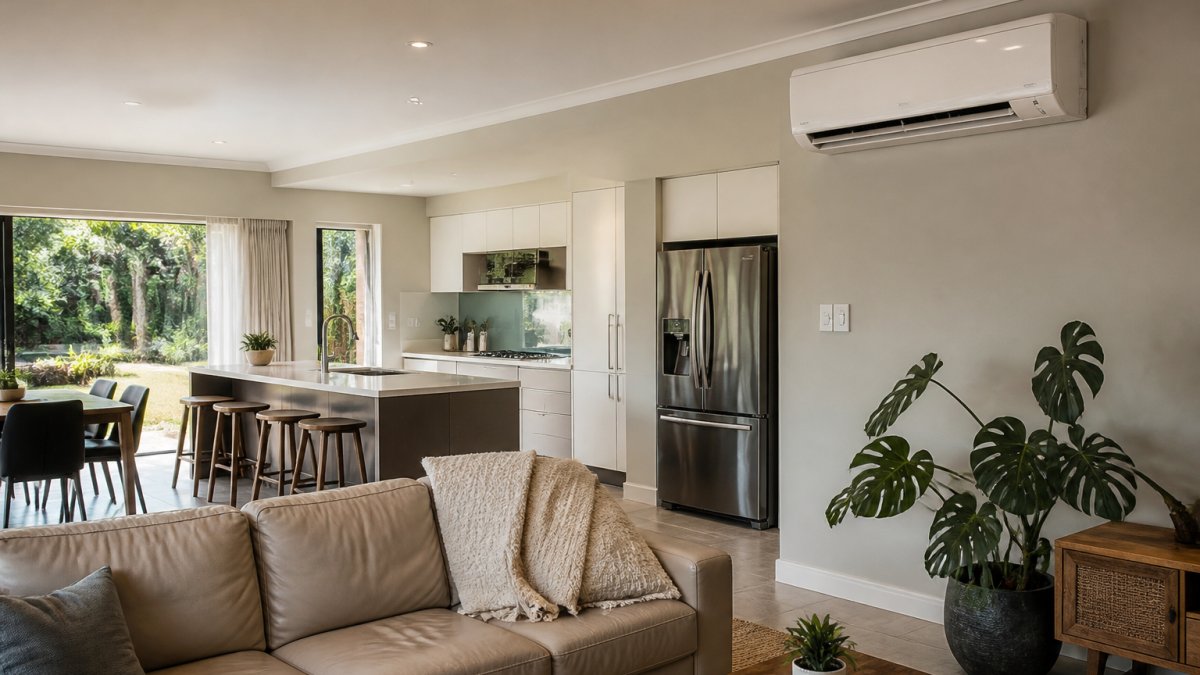
Air conditioning is the biggest single load in most homes. A typical split-system AC uses 3-5 kW while running. A 10kW system can power it easily, as long as nothing else is drawing power at the same time.
The same applies to electric ovens (2-4 kW), pool pumps (1-3 kW), and electric hot water systems (3-6 kW during heating cycles). Each one individually is fine. Together, they exceed 10kW.
Simultaneous load limitations
Here's where most people get surprised. If your air conditioning is running (4 kW), your oven is heating (3 kW), and your hot water system is cycling (4 kW), you're drawing 11 kW. Your 10kW system can't cover that. You'll pull 1 kW from the grid or your battery.
This happens regularly in real homes. Evening cooking while the AC runs and hot water heats is a common scenario. A 10kW system handles it by supplying what it can and letting the grid (or batteries) make up the difference.
Without battery storage, this isn't a problem, you just use grid power for the overage. With battery storage, you need enough battery capacity to cover these overlaps, or you'll drain your batteries faster than intended.
10kW Solar System With Battery Storage
Adding batteries changes the equation significantly. Batteries let you use solar power after sunset and during cloudy periods.
Why battery capacity matters
A 10kW solar system paired with a small battery (5 kWh) behaves differently from the same system with a large battery (15 kWh). The solar system generates the same power, but the battery determines how much of that power you can store and use later.
If you want to run your home entirely off-grid during an outage or reduce grid dependence overnight, battery capacity is critical. A 5 kWh battery might cover 3-4 hours of typical evening load. A 15 kWh battery covers 8-10 hours.
The cost difference is substantial. Larger batteries cost more to purchase and install. They also take longer to charge from your solar system. A 10kW system charging a 5 kWh battery reaches full charge quickly.
Off-grid reliability and sizing
For true off-grid living, the maths becomes more complex. You need enough battery capacity to cover multiple cloudy days plus your peak consumption. A typical off-grid home in Tugun might need a 20-30 kWh battery system paired with a 10-15 kW solar array to stay reliable year-round.
This is where professional sizing becomes essential. An undersized system leaves you without power during bad weather. An oversized system costs far more than necessary. The right size depends on your specific consumption, your tolerance for grid backup, and your budget.
10kW Solar System on Single Phase Supply
Most residential properties in Tugun and the Gold Coast have single-phase power supply (230V). A 10kW system on single phase is technically possible but creates challenges.
Single-phase supply limits how much current you can draw at any one time. A 10kW load on single phase requires approximately 43 amps at 230V. Most homes have 60-100 amp single-phase service.
If your property has three-phase power (common in larger homes or commercial properties), a 10kW system distributes across three phases more efficiently.
Before installing a 10kW system on single phase, have an electrician assess your service. You might need to upgrade your main switchboard or service connection.
At Brux Electrical, we assess your existing supply and recommend upgrades if needed. This prevents problems after installation and ensures your system performs as designed.
Right-Sizing Your Solar System to Your Bills
The most straightforward way to size your system is to match it to your actual electricity bills. Your annual consumption, divided by 365, gives your daily average. Multiply by a location factor (roughly 1.2-1.4 for Tugun, depending on shading and orientation) to account for system losses and seasonal variation.
Comparing your usage against system capacity
If your home uses 18 kWh per day on average, a 10kW system should generate roughly 40-50 kWh on a good day. That's more than double your daily need. On average days, it matches or exceeds your consumption. On poor days, it falls short.
This is healthy. You want your system to overproduce on good days so you can export excess to the grid (if you're grid-connected) or charge batteries (if you have them). Overshooting your average consumption is intentional, it ensures you're covered on mediocre days.
The risk is the opposite: undersizing. A home using 20 kWh per day with a 5kW system will rarely generate enough power. You'll be grid-dependent most of the time, and your solar payback period stretches out.
Why oversizing costs more without benefit
There's a temptation to "go big", install 15kW or 20kW when 10kW would do. More panels sound better. In reality, oversizing beyond your consumption wastes money.
If your home uses 18 kWh per day and you install a 20kW system, the extra capacity sits idle most of the time. You can't use power you don't need.
A properly sized 10kW system costs less upfront, takes up less roof space, and delivers the same financial outcome as an oversized 15kW system for the same home. This is why right-sizing matters.
Whether a 10kW solar system is enough for your home comes down to your actual energy consumption and your goals.
The key is matching the system to your bills, not to marketing hype or competitor quotes. At Brux Electrical, we start with your consumption data and size accordingly.
Frequently Asked Questions
Is a 10kW solar system enough to run a house in Australia?
Whether a 10kW solar system is enough depends on your home's energy consumption. The average Australian household uses 15-20 kWh daily, meaning 10kW can cover most needs during daylight hours. However, if your home uses air conditioning heavily or has electric heating, you may need a larger system. The best approach is to review your electricity bills to see your actual usage, then match the system size to that demand rather than guessing.
How much electricity does a 10kW solar system produce per day?
A 10kW solar system typically produces 35-45 kWh per day in Australia, depending on your location and season. Coastal areas receive more consistent sunlight year-round, while winter production drops significantly. Daily output also varies with weather: cloudy days reduce generation by 50% or more. Understanding your local seasonal patterns helps you decide whether 10kW meets your needs or if you should add battery storage to capture excess summer generation.
Do I need a battery with a 10kW solar system?
Battery storage depends on your priorities. If you want to use solar power at night or during cloudy periods, battery storage is essential. For grid-connected homes, batteries provide backup during outages and let you maximise self-consumption of solar generation. Off-grid properties need battery capacity sized to cover several days of poor weather. Battery requirements vary based on your household size and how much independence you want, so discussing this with your installer ensures you get the right setup.
Can a 10kW solar system work on a single-phase supply?
A 10kW system can work on single-phase supply, but there are practical limits. Single-phase connections typically allow up to 10 kW inverter capacity, though some networks permit slightly higher. If you need more than 10 kW, you'll require a three-phase upgrade, which involves council approval and additional costs. Your electrician can check your current supply and advise whether single-phase is suitable for your system size or if three-phase is necessary.
