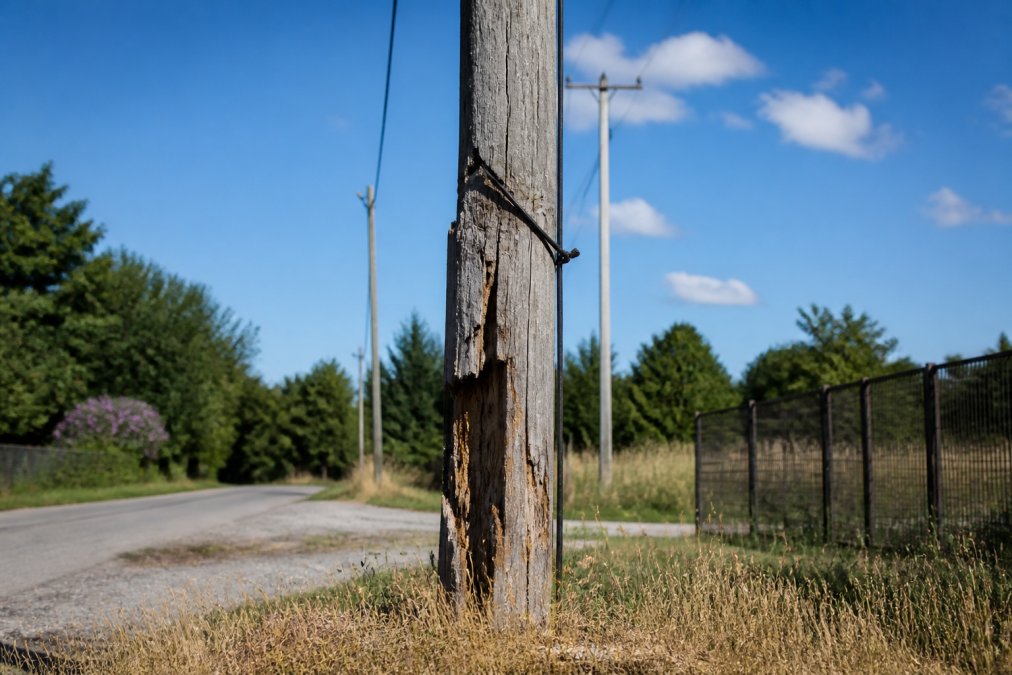
How to Spot Unsafe Power Poles: A Safety Guide
Table of Contents
- Why Spotting Unsafe Power Poles Matters
- Visual Signs of Structural Damage in Unsafe Power Poles
- Electrical Hazards and Deterioration Signs
- Private Power Pole Maintenance Requirements in QLD
- Is Private Power Pole Insurance Coverage Worth It?
- Who to Call for Downed Power Lines and Energex Involvement
- Safety Precautions When Inspecting or Observing Power Poles
- When to Call a Licensed Electrician for a Full Inspection
Last Updated: August 29, 2026
Why Spotting Unsafe Power Poles Matters
Unsafe power poles represent a genuine hazard to your property and safety. A deteriorating pole can collapse, bringing down power lines and potentially causing electrocution, property damage, or injury. For property owners in Tugun and across the Gold Coast region, identifying these hazards early means avoiding costly emergency repairs and preventing dangerous situations before they develop.
The risk escalates during severe weather. High winds, heavy rain, and storms place additional stress on compromised poles, making structural weaknesses more likely to fail. If you own property with a private power pole, or if you've noticed something odd about a pole near your home, learning to spot the warning signs puts you in control of the situation rather than waiting for an emergency to force your hand.
At Brux Electrical, we work regularly with property owners dealing with aging or damaged power poles. Many don't realise they can assess the condition themselves before calling in professionals. Understanding what unsafe power poles look like gives you the confidence to act decisively and protect your investment.
Visual Signs of Structural Damage in Unsafe Power Poles
The most obvious indicators of unsafe power poles are visible to the naked eye. Structural damage develops over years of exposure to weather, insects, and environmental stress. Learning to recognise these signs means you can catch problems before they become dangerous.
Leaning or tilted poles
A power pole that leans noticeably away from vertical is a clear warning sign. Poles should stand perfectly straight; any tilt suggests the foundation has shifted or the pole itself has weakened. This commonly occurs when soil around the base erodes, when roots from nearby trees destabilise the ground, or when the pole has absorbed water and begun to warp.
If you observe a lean, measure it by standing back and comparing the pole's angle to nearby vertical structures like fence posts or building corners. Even a slight tilt of 5 degrees or more warrants professional inspection (standards.org.au). Leaning poles lose structural integrity and cannot safely support the weight of power lines, transformers, and hardware.
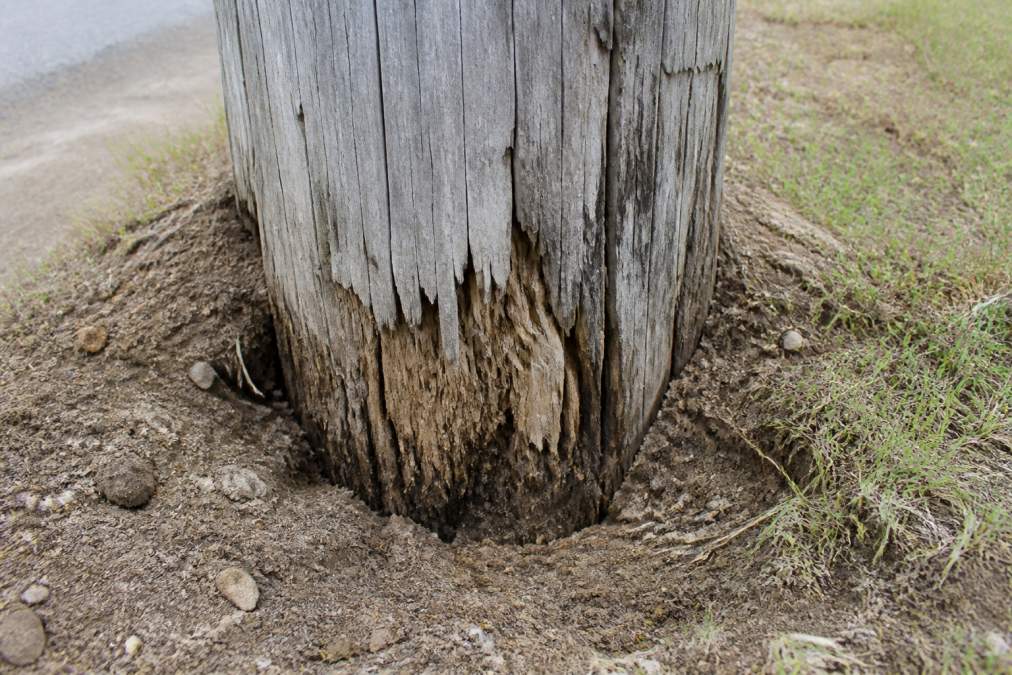
Cracks, splits and splintering
Vertical cracks running along the length of the pole indicate internal stress and weakening wood. Deep splits that penetrate more than a quarter of the pole's diameter are particularly serious. Splintering wood, especially at the top or where hardware attaches, signals advanced deterioration.
These cracks often start small and expand over time, especially in areas with temperature fluctuations and moisture exposure. Wood naturally shrinks and swells with seasonal changes, but a pole in good condition handles this movement. A compromised pole cannot, and cracks widen as stress accumulates.
Run your hand carefully along the pole's surface (avoiding splinters) to feel for rough, cracked sections. Visible cracks wider than 1 centimetre should trigger a call to a licensed electrician or your local network operator (energex.com.au).
Rot and decay at the base
The base of the pole, where it meets the ground, faces the most moisture exposure and is therefore most vulnerable to rot. Soft, spongy wood at the base is a serious red flag. Press gently on the wood with a screwdriver or similar tool; if it sinks in easily rather than resisting, rot has compromised the structural integrity.
Discolouration at the base, ranging from dark brown to black, often accompanies rot. This fungal decay weakens the wood from within, sometimes leaving the surface appearance relatively intact whilst the interior crumbles. A pole with significant rot at the base cannot safely bear its own weight plus the load of power lines and equipment.
The base is also where termites and wood-boring insects cause damage. Look for small holes, sawdust-like debris, or mud tunnels running up the pole. These signs indicate active infestation that will progressively weaken the structure.
Electrical Hazards and Deterioration Signs
Beyond structural damage, electrical hazards demand immediate attention. These signs indicate the pole poses a risk of electrocution or fire, not merely collapse.
Damaged or missing insulators
Insulators are the ceramic or composite components that separate electrical conductors from the pole and each other. Damaged, cracked, or missing insulators expose live wires and create electrocution hazards. Look for white, grey, or brown ceramic pieces that appear broken, chipped, or entirely absent from the hardware assembly.
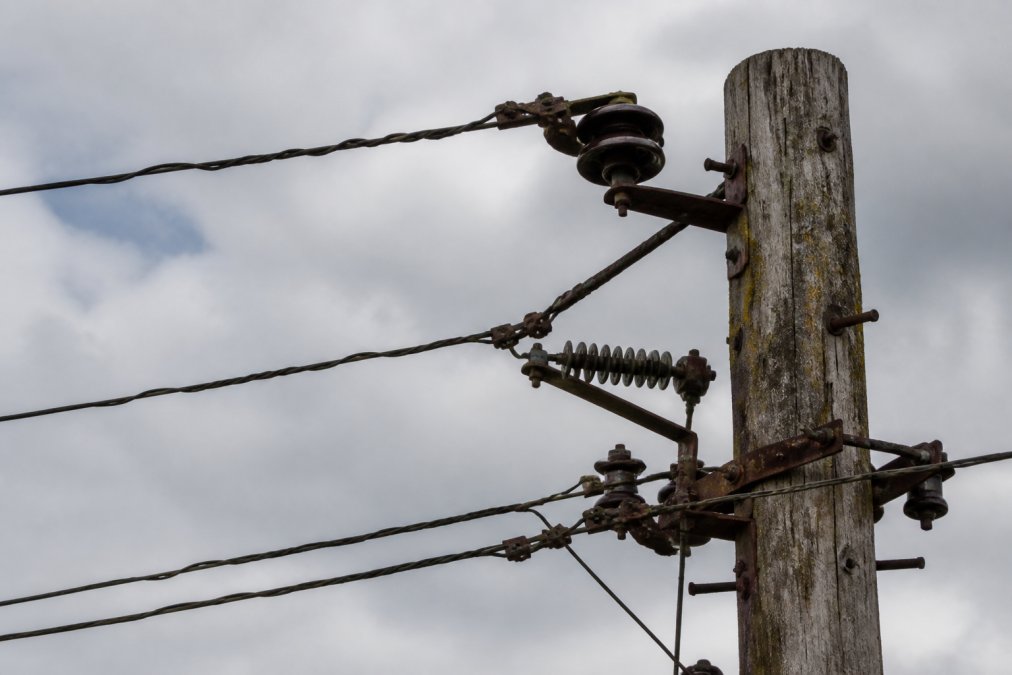
Missing insulators mean bare conductors may contact the pole itself, creating a shock hazard if anyone touches the pole during wet conditions or if animals come into contact with it. This is not a cosmetic issue; it requires immediate professional attention.
Sagging or loose power lines
Power lines should maintain consistent tension and clearance from the ground, trees, and structures. Sagging lines that dip noticeably between poles indicate either pole failure or deteriorated line hardware. Loose lines that move excessively in wind suggest failing attachment points.
Sagging lines also create fire hazards. If a line contacts a tree branch or structure, it can arc and ignite. In Tugun's subtropical climate with regular storms, this risk increases seasonally. Lines that sag below safe clearance heights (typically 5.5 metres above ground in most areas) must be reported to your network operator immediately (energex.com.au).
Burn marks or scorching
Black, charred, or scorched areas on a pole indicate electrical arcing or fire damage. This occurs when electrical current escapes its intended path and burns through the wood. Burn marks signal past electrical events that may have damaged internal components or created ongoing hazards.
Even if the burn appears old and the pole still stands, the structural integrity is compromised. Fire damage weakens wood significantly, and the pole may fail under stress that it would normally withstand. Any visible burn marks warrant professional inspection.
Private Power Pole Maintenance Requirements in QLD
Property owners in Queensland with private power poles have specific maintenance obligations. Understanding these requirements helps you stay compliant and avoid potential liability.
Private power poles must be maintained in a safe condition. The responsibility falls to the property owner, not the network operator. This means regular inspection, timely repairs, and replacement when necessary. Neglecting maintenance exposes you to liability if the pole fails and causes injury or property damage.
Queensland's electrical safety standards require that poles support their attached equipment safely. If a pole cannot safely bear the load of power lines, transformers, or other hardware, it must be repaired or replaced. Many councils in the Gold Coast region conduct periodic inspections and issue defect notices when poles fall below acceptable standards.
Regular maintenance typically includes clearing vegetation around the base, checking for rot and insect damage, and ensuring all hardware remains secure. For poles more than 30 years old, professional inspection every 3 to 5 years is advisable. Brux Electrical can assess the condition of your private pole and recommend maintenance or replacement based on what we find.
Documentation matters. Keep records of inspections, repairs, and maintenance work. If an issue arises, these records demonstrate you've acted responsibly and maintained the pole to standard.
Is Private Power Pole Insurance Coverage Worth It?
Insurance for private power poles is available but not universally required. Whether it makes sense depends on your risk tolerance, the pole's age, and your financial capacity to replace it if it fails.
Standard homeowner's insurance typically excludes damage to private poles or covers it only partially. Specialist electrical or property insurance can extend coverage to include poles. The cost varies based on the pole's age, condition, and replacement value.
Consider insurance if your pole is older than 20 years, shows signs of deterioration, or if replacement would create financial hardship. A new pole installation costs considerably more than annual insurance premiums. If a storm brings down your pole and it damages neighbouring property or injures someone, liability exposure is real.
Conversely, if your pole is relatively new, in good condition, and you have capacity to fund replacement, insurance may be unnecessary. Regular maintenance reduces risk significantly. The decision is ultimately personal, but consulting with your insurance provider and a licensed electrician like those at Brux Electrical can clarify your actual exposure.
Who to Call for Downed Power Lines and Energex Involvement
If a power pole fails or power lines come down, immediate action is critical. Never touch a downed power line, even if it appears inactive. Assume all lines are live.
Contact Energex (or your local network operator if you're outside their service area) immediately. Report the location, condition, and any immediate hazards. Energex responds to downed lines quickly and will isolate the line to make the area safe. Do not attempt repairs yourself.
For private poles that have failed but have not brought down Energex lines, you are responsible for engaging a licensed electrician to assess and repair the damage. Brux Electrical can handle this assessment and coordinate with Energex if their lines are involved. We'll determine whether repair is possible or if replacement is necessary.
If the pole failure has caused property damage or injury, document everything and contact your insurance provider. Photographs, witness statements, and the timeline of events matter for claims.
Safety Precautions When Inspecting or Observing Power Poles
If you decide to inspect a power pole yourself, follow strict safety protocols. Electrical hazards are invisible and unforgiving.
Never climb a power pole. Even if you're experienced with climbing, poles supporting live electrical equipment are off-limits. Trained electricians with proper equipment handle pole climbing safely. A slip or accidental contact with a conductor can be fatal.
Maintain distance from power lines. The safe clearance distance depends on voltage, but as a general rule, stay at least 3 metres away from any line. Wind can move lines, so even if they appear to have clearance, treat them as live.
Wear appropriate clothing. Avoid loose clothing that could catch on the pole or hardware. Wear sturdy shoes with good grip. On wet days, postpone inspection; wet conditions increase electrical risk and make footing unstable.
Use binoculars or a camera with zoom to examine hardware and insulators from a distance. Photograph any concerns and share them with a licensed electrician. This approach keeps you safe whilst capturing useful documentation.
Never inspect a pole during storms or high winds. Electrical hazards increase during severe weather, and unstable poles are more likely to shift or fail.
When to Call a Licensed Electrician for a Full Inspection
Certain situations require professional inspection without delay. If you observe any of the following, contact a licensed electrician immediately.
Visible rot, particularly at the base. If wood is soft, discoloured, or crumbling, structural failure is possible. A professional can assess the extent of damage and recommend repair or replacement.
Significant cracks or splits. Deep cracks that run vertically along the pole or penetrate more than a quarter of the pole's diameter warrant professional evaluation.
Leaning or tilted poles. Any noticeable deviation from vertical requires inspection. The foundation may have failed, or the pole itself may be warped beyond safe use.
Missing or damaged insulators. Exposed electrical conductors create immediate hazards. This is not something to monitor; it needs professional attention now.
Burn marks or evidence of electrical arcing. Past electrical events may have caused internal damage not visible from outside.
Age and lack of recent inspection. If your pole is more than 30 years old and has never been professionally inspected, schedule one. Many poles of this age show deterioration that benefits from early intervention.
Energex defect notices. If your local council or network operator has issued a defect notice for your pole, you have a legal obligation to address it. Brux Electrical can help you understand what's required and arrange repairs or replacement.
A licensed electrician will perform a detailed structural assessment, test electrical safety, and advise whether the pole can be repaired or must be replaced. In Tugun and across the Gold Coast, Brux Electrical provides comprehensive pole inspections and can handle repairs or coordinate replacement. We'll give you a clear, itemized assessment of the work needed and manage the project from start to finish, ensuring your pole meets current safety standards.
Unsafe power poles are a risk you don't have to manage alone. If you've noticed signs of deterioration on your property or you're simply uncertain about the condition of your pole, get a professional assessment. Brux Electrical provides licensed, insured electrical inspections and can handle private pole upgrades, repairs, and replacements to bring your system into compliance. We'll give you a clear, transparent quote and manage the work ourselves without subcontractors. Get a quote from Brux Electrical today and ensure your power pole is safe.
Frequently Asked Questions
What are the most common signs of an unsafe power pole?
The most visible warning signs include leaning or tilted poles, visible cracks or splits in the wood, rot or decay at the base, sagging power lines, and damaged or missing insulators. Any combination of these indicates the pole needs immediate inspection by a licensed electrician or Energex. Do not attempt to repair or touch the pole yourself.
Who is responsible for maintaining private power poles in Queensland?
Private power pole owners are responsible for maintenance and compliance with Queensland electrical safety standards. This includes regular inspections, repairs, and replacements as needed. Network-owned poles (supplied by Energex) remain the responsibility of the distributor. If you own a private pole, you must ensure it meets current safety requirements and arrange inspections by a licensed electrician.
Should I have insurance for my private power pole?
Private power pole insurance can be worthwhile if you own the pole, as repair or replacement costs are significant and unexpected damage from storms or deterioration can occur. Standard home insurance often excludes power poles or offers limited coverage. A dedicated policy protects you against liability claims and covers restoration expenses. Contact your insurer to discuss specific coverage options for your property.
What should I do if I find a downed power line or unsafe pole?
If you discover a downed power line or unsafe pole, do not touch it or allow anyone near it. Contact Energex immediately on 13 62 62 for network-owned poles, or a licensed electrician for private poles. If the pole poses an immediate danger to the public, also contact your local council. Stay clear of the area until professionals have assessed and resolved the hazard.
This article was written using GrandRanker
