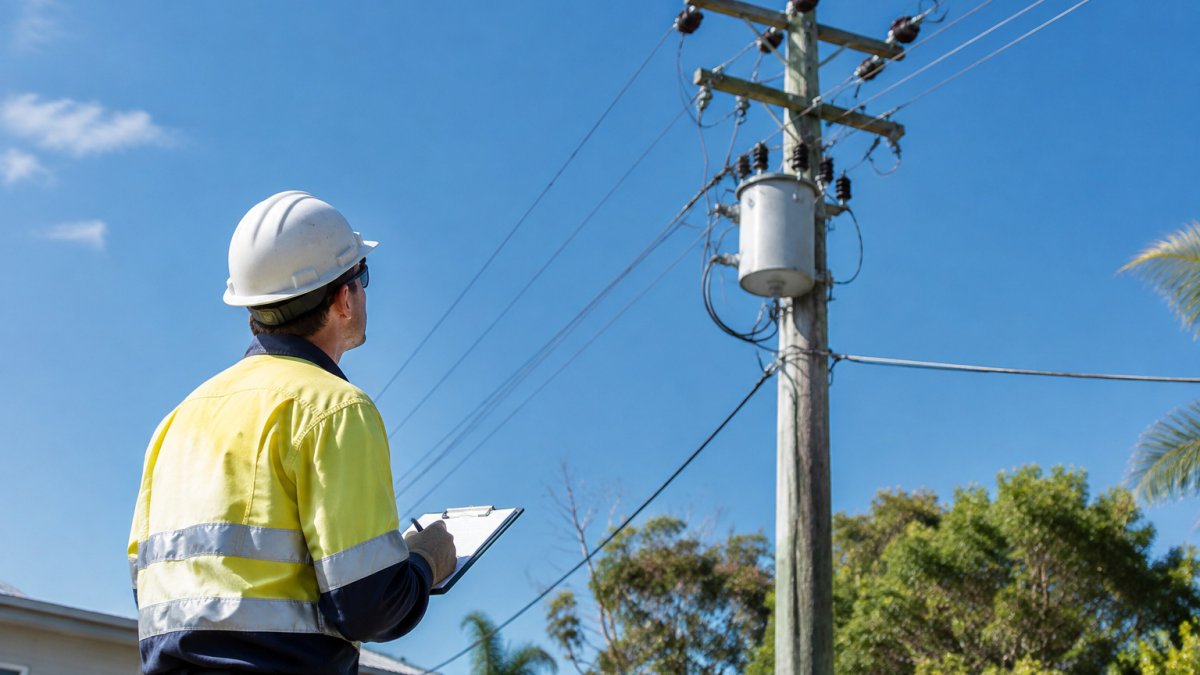
How to Carry Out a Private Power Pole Safety Inspection
Last Updated: November 6, 2026
Quick Summary
A private power pole safety inspection starts with a safe visual check from the ground, looking for cracks or splits at the base, leaning, rust, loose fittings and vegetation near the wires. Never climb the pole or touch the wires, and have a licensed professional carry out a full inspection and any repairs.
- Stand several metres away from the pole and never climb it.
- Check the base where timber meets the ground for cracks, splits or hollow sounds.
- Look for leaning, rust, loose brackets, stay-wires and vegetation growing into the wires.
- Inspect timber poles more often, especially if they are older than 20 years.
- Contact your distributor or a licensed electrician immediately if the pole looks unsafe.
Table of Contents
- What a Private Power Pole Is and Who Is Responsible for It
- How Often a Private Power Pole Should Be Inspected
- Private Power Pole Inspection Checklist You Can Safely Follow
- Signs a Power Pole Is Unsafe and What to Do Straight Away
- Private Power Pole Maintenance: Keeping Poles Sound Over Time
- Private Power Pole Inspection in Queensland and Tugun: Who Can Do It
- Booking Your Inspection and Acting on the Report
- Frequently Asked Questions
What a Private Power Pole Is and Who Is Responsible for It
A private power pole is a pole on your property that carries overhead electricity wires, usually from the street network to your home or shed. These poles are easy to forget until something goes wrong. Knowing who owns the pole is the first step in keeping it safe.
Private power pole: a pole on private land that carries electricity supply lines, where the property owner usually holds responsibility for its condition beyond the point where the network operator's wires connect.
Responsibility is usually split. The electricity distributor typically looks after the wires and equipment it owns, while the property owner is generally responsible for the pole structure on their land. Check your distributor's guidance and any notice you have received before assuming who is responsible in your case.
A defect notice from your distributor is a formal warning that the pole needs attention. Read it carefully, note any deadline, and keep a copy. Energy Safe Victoria guidance on private poles and powerlines
Watch out: do not assume a pole is safe because it has stood for decades. Age alone does not show whether timber has rotted below ground.
How Often a Private Power Pole Should Be Inspected
There is no single fixed rule for every property, so inspection timing depends on the pole's age, material and exposure. Sooner is better after storms or if the pole looks different.
- Timber poles: check more often, especially if older than 20 years
- Steel poles: check for rust and loose fixings at regular intervals
- After severe weather such as storms, cyclones or flooding
- After any vehicle strike, tree fall or nearby construction
- When a defect notice or inspection request arrives
Inspection intervals set by your distributor or local rules take priority over general guidance. Queensland Electricity Supply Industry safety resources
Private Power Pole Inspection Checklist You Can Safely Follow
You can do a basic visual check from the ground without touching the pole or any wires. This is a starting point, not a substitute for a qualified inspection.
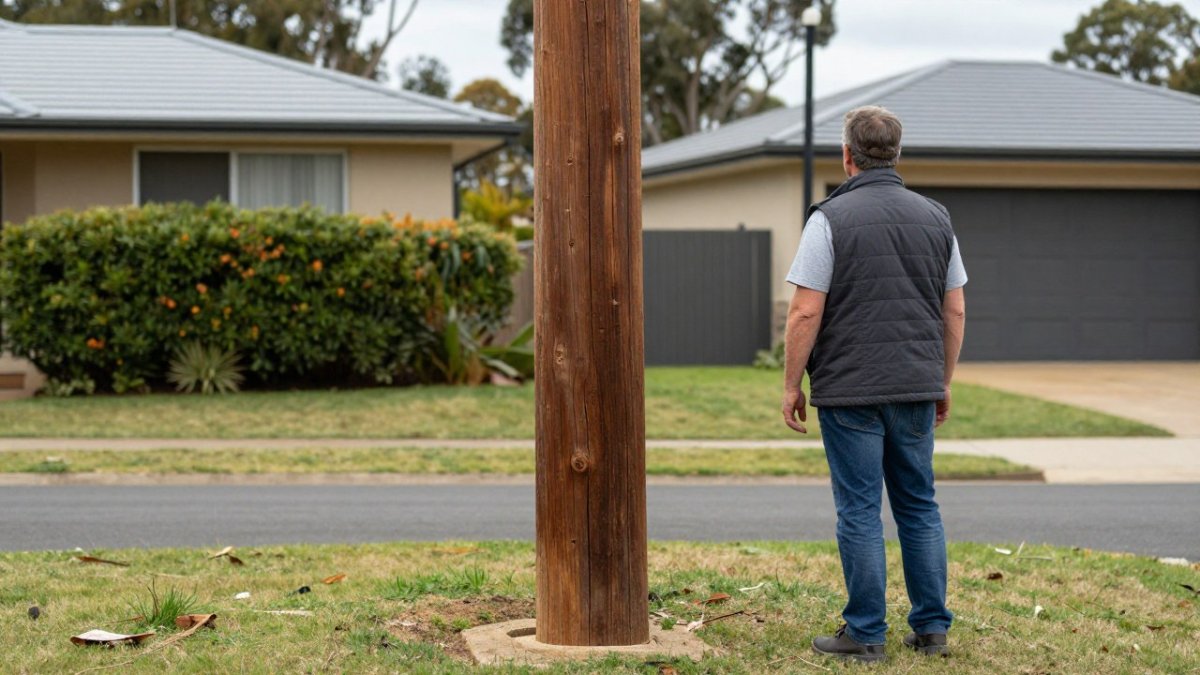
- Stand at least several metres away from the pole and never climb it.
- Look for cracks, splits or hollow sounds at the base where timber meets the ground.
- Check whether the pole leans compared with nearby poles or fences.
- Look for rust, flaking paint or pitting on steel poles.
- Note any loose brackets, stay-wires or cross-arms.
- Check for vegetation growing into the wires or around the pole.
- Photograph anything concerning from a safe distance.
- Keep children and pets away from the pole area.
Never touch wires, tap the pole with tools or dig around the base yourself. Those tasks belong to licensed professionals.
The steps below summarise the ground-level checks you can safely make before calling a licensed professional.
| Step | What to do | Note |
|---|---|---|
| 1 | Stand several metres away and never climb | Safe distance |
| 2 | Check base where timber meets ground | Look for cracks, splits, hollow sounds |
| 3 | Check whether the pole leans | Compare with nearby poles or fences |
| 4 | Look for rust or flaking on steel poles | Check for pitting |
| 5 | Note loose brackets, stay-wires or cross-arms | Record for the inspector |
| 6 | Check vegetation growing into wires | Look around the pole too |
| 7 | Photograph concerns from a safe distance | Keep for the report |
| 8 | Keep children and pets away from the area | Safety precaution |
Signs a Power Pole Is Unsafe and What to Do Straight Away
Some signs mean the pole may be unsafe right now. Common warning signs include:
- A visible lean or movement in the pole
- Splitting, soft or crumbling timber near the ground
- Heavy rust or corrosion eating into steel
- Sagging or damaged wires
- Sparks, buzzing, burning smells or scorch marks
If you see any of these, keep well clear and contact your electricity distributor or a licensed electrician immediately. In an emergency, call triple zero (000) (Classroom). Do not attempt repairs yourself.
Private Power Pole Maintenance: Keeping Poles Sound Over Time
Good maintenance is mostly about catching small problems early. A common mistake is waiting until a defect notice arrives before acting.
- Keep vegetation trimmed well back from the pole and lines
- Keep soil and drainage around the base free of build-up that traps moisture
- Record the pole's condition and any repairs in one place
- Arrange professional repairs promptly after an inspection report
Brux Electrical can help plan maintenance once a qualified inspector has assessed the pole.
Private Power Pole Inspection in Queensland and Tugun: Who Can Do It
In Queensland, private power pole inspection and any associated electrical work should be carried out by a licensed electrical contractor, and the relevant state regulator oversees electrical safety and licensing.
For a Tugun property, the relevant electricity distributor is generally the network operator for the area. Distributors typically own and maintain the network up to the connection point, while the property owner is generally responsible for the private pole and any private overhead wiring beyond that point. If you have received a defect notice or a request to inspect, it will usually come from your distributor, and the notice should state what needs to be done and by when.
Before you engage anyone, verify the contractor's licence. You can check an electrical contractor's licence through the relevant state government licence register. Ask for:
- The contractor's Queensland electrical contractor licence number, and check it is current.
- Evidence of public liability insurance, with a certificate of currency.
- Experience specifically with private power poles, defect notices and overhead service lines, not just general domestic wiring.
- Confirmation of who will attend the site and carry out the inspection, and whether that person holds the relevant qualifications.
A common pattern is for a licensed electrician to carry out a visual inspection and, where needed, arrange specialist testing such as timber decay drilling or pole integrity assessment. A written report with photographs and a clear scope of recommended works is generally more useful than a verbal opinion, particularly if you need to respond to a distributor notice.
Watch out: a quote that is significantly cheaper than others may exclude pole testing, report documentation or safe access, so compare what is actually included rather than the headline price.
For Tugun and the southern Gold Coast, ask whether the contractor regularly works in the area and is familiar with Energex requirements. Brux Electrical is a Gold Coast-based, owner-operated team, so the person who quotes your job is the one who performs it. [PAGE LINK: Read how to verify licensed electrical work in Queensland | page:5]
If you are unsure who your distributor is, check your electricity bill or the Energex network area map. Do not arrange for anyone unlicensed to climb, test or repair a private pole, regardless of how minor the issue appears.
Booking Your Inspection and Acting on the Report
Booking a private power pole inspection is straightforward, but knowing what to prepare and what to expect from the report makes the process far more useful.
Before the inspection:
- Gather any distributor notice (for Tugun, usually from Energex), previous inspection reports, and photos you have taken from a safe distance.
- Confirm safe access to the pole and the surrounding area, clear locked gates, move vehicles, and keep pets inside.
- Tell the contractor about any known issues, such as a lean, recent storm damage, or a vehicle strike.
- Ask for a written quote that itemises the inspection, any testing, and report preparation.
During the inspection, a qualified inspector will typically assess the pole from ground level and, where safe and necessary, use tools to check for timber decay, corrosion, loose fittings, stay tension, cross-arm condition, and clearance from vegetation and structures. They should not need to climb live equipment; if climbing or testing is required, it should be done under controlled electrical safety procedures.
A useful inspection report should include:
- The pole location and a unique identifier or photo.
- Pole material, approximate age if known, and visible condition.
- Findings for the base, pole shaft, cross-arms, brackets, stays and attached wires.
- Photographs of any defects.
- A clear classification of each finding as urgent, requiring attention, or monitor-only.
- Recommended actions and a scope of works for any repairs.
After the report:
- Read the urgent items first. If the report identifies an immediate hazard, keep clear and act on it promptly.
- Ask the inspector to explain any technical findings and what would happen if left untreated.
- Obtain an itemised quote for the recommended repairs, and compare scope rather than just total price.
- Keep the report and any repair records together, as they may be requested by your distributor or a future buyer.
- Schedule non-urgent work within a reasonable timeframe and re-inspect sooner if conditions change.
Watch out: a report that lists defects without classifying urgency or recommending specific actions is hard to act on, so ask for that detail before work begins.
The cost of inspection and repairs depends on the pole's condition, access, height, materials and whether specialist testing is needed, so ask for a clear, itemised quote before work begins.
Frequently Asked Questions
Who is responsible for inspecting a private power pole in Queensland?
The property owner is generally responsible for a privately owned power pole and the powerline it carries on their land, including its condition and safety. Electricity distributors are responsible for their own network assets, not private poles, so an owner should not assume the distributor will inspect or repair a private pole. Arrange inspection through a licensed electrician or qualified pole inspector, and check with your distributor if you are unsure where the pole ownership boundary sits on your property.
How often should a private power pole be inspected?
Many electrical safety guidance sources recommend a professional inspection at regular intervals, with more frequent checks after storms, flooding, vehicle impact or if you notice any warning signs. Timber poles in coastal areas can deteriorate faster due to salt air and humidity, so an owner may choose a shorter interval. Confirm the recommended interval with a licensed electrician or your local electrical authority for your specific pole.
Can I inspect a private power pole myself?
You can carry out a visual check from the ground, looking for leaning, cracks, rot, rust, loose fittings or damaged wires. However, you should not climb the pole, touch the conductors or attempt repairs yourself, as contact with live wires can cause electric shock or death. A full safety inspection, including testing the pole base and structure, should be performed by a licensed electrician or qualified pole inspector.
What should I do if a private power pole is leaning or damaged?
Keep yourself, children, pets and vehicles well clear of the pole and any sagging or broken wires. Treat any fallen or arcing line as live. Contact your electricity distributor on its emergency line for any immediate danger, then arrange an urgent inspection with a licensed electrician or qualified pole inspector. Do not attempt to brace, prop or straighten the pole yourself.

