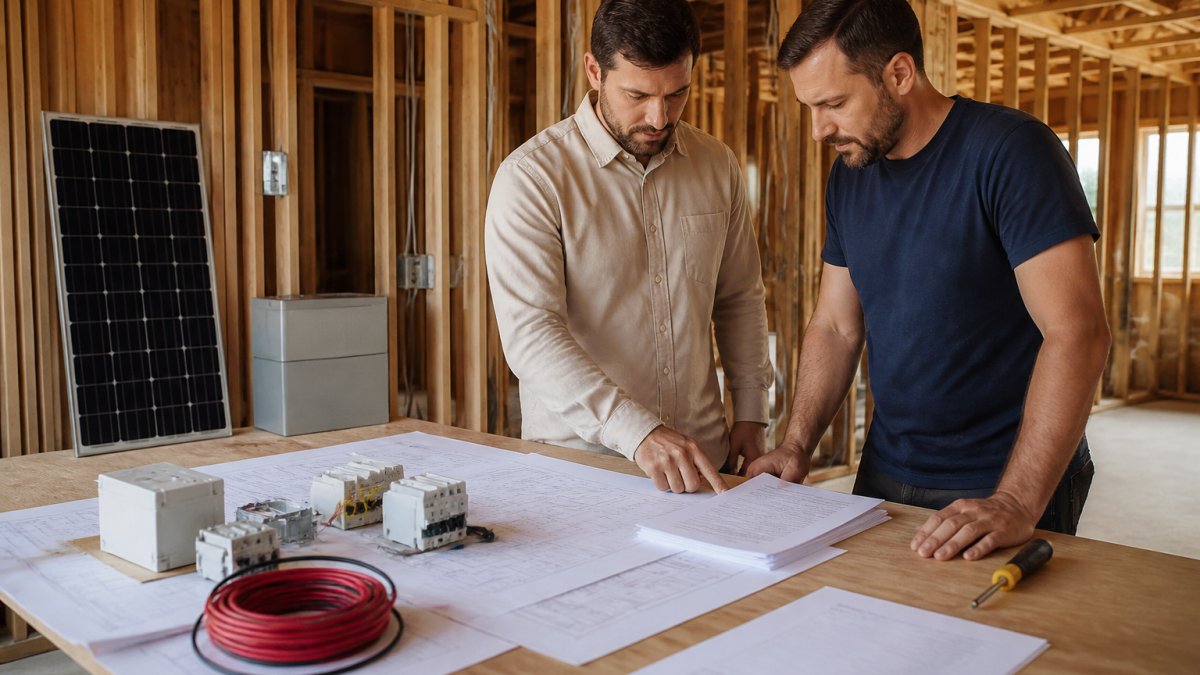
Clear, itemised quotes for sustainable construction
Table of Contents
- Why clear, itemised quotes matter for sustainable construction
- How to compare building quotes fairly
- Using an itemised building quote checklist
- Construction quote inclusions and exclusions explained
- Key questions to ask a sustainable builder
- Decoding construction jargon in your quote
- Red flags that signal an unclear or inflated quote
- Frequently Asked Questions
Last Updated: October 18, 2026
Why clear, itemised quotes matter for sustainable construction
Getting itemised quotes sustainable construction work should be straightforward. Too often, it isn't. Vague numbers, hidden costs, and industry jargon leave homeowners confused and worried they're paying too much.
A clear, itemised quote without jargon is your protection. It shows exactly what you're paying for, why each item costs what it does, and what happens if circumstances change. When you're investing in solar, battery storage, electrical fit-outs, or power pole upgrades in Tugun or anywhere on the Gold Coast, this transparency matters.
At Brux Electrical, we've learned that homeowners who understand their quote before work starts sleep better at night. They know what to expect. They spot problems early. They trust the process.
The difference between a vague quote and a clear one often determines whether a project runs smoothly or becomes a source of stress. A detailed breakdown protects both you and the builder. It prevents disputes, keeps costs predictable, and ensures the work delivered matches what was promised.
How to compare building quotes fairly
Comparing quotes is harder than it looks. Two builders might quote the same project at vastly different prices, and the lower number doesn't always mean better value.
Start by ensuring all quotes cover the same scope of work. One builder might include site cleanup; another might not. One might supply all materials; another might ask you to source them. These differences explain price gaps that have nothing to do with quality or experience.
Line-by-line comparison reveals the real story. Look at labour rates, material costs, and equipment hire separately. If one quote is significantly lower on labour, ask why. Are they using junior staff? Working faster (which sometimes means less carefully)? Or simply more efficient?
For sustainable construction work like solar installations or battery systems, compare the quality of equipment too. Two quotes might both include a battery system, but one specifies a premium brand with a 10-year warranty while the other uses a budget alternative. The price difference makes sense when you understand what you're actually getting.
Ask each builder the same questions. How long will the work take? What happens if weather delays the project? Are there penalties for running over time? Do they guarantee their workmanship? These answers should be consistent across quotes, or they should explain why they differ.
Using an itemised building quote checklist
A strong itemised quote includes specific sections. Use this checklist to evaluate what you receive.
Labour costs should break down by task or trade. Instead of "Electrical work: $5,000", you want "Wiring installation: $2,400, switchboard upgrade: $1,800, testing and certification: $800". This shows how the builder estimates effort and lets you spot if one task seems overpriced.
Materials need individual line items with quantities and unit costs. "Solar panels: 10 × 400W panels at $X each" tells you what you're buying. "Solar system: $8,000" tells you nothing.
Equipment and hire should be itemised if relevant. If the builder needs to hire scaffolding or a cherry picker, that should appear as a separate line with duration and daily rate.
Site costs cover cleanup, waste removal, temporary fencing, or site access. These are easy to overlook but add up quickly.
Permits and approvals should be listed separately, especially for power pole upgrades or grid-connected solar in Tugun. Some builders include these; others pass the cost to you.
Contingency or provisional sum is a buffer for unforeseen issues. It's normal to see 5-10% of the total quoted as contingency, but it should be clearly marked as provisional, not guaranteed cost.
| Quote Section | What It Covers | Red Flag |
|---|---|---|
| Labour | Hourly rates, task breakdown | Vague total with no breakdown |
| Materials | Item, quantity, unit cost | "Materials: $X" with no detail |
| Equipment | Hire costs, duration, daily rate | Missing or bundled into labour |
| Site Costs | Cleanup, waste, access | Not mentioned or itemised |
| Permits | Council approvals, certifications | Unclear who pays or timeline |
| Contingency | Buffer for unknowns | Over 10% or no contingency listed |
Check that every line item has a quantity and a unit cost. This prevents surprises later.
Construction quote inclusions and exclusions explained
What's included in a quote matters as much as what's excluded. Builders phrase this differently, so read carefully.
Inclusions are what the builder provides. For sustainable construction work, this typically covers labour, materials, equipment hire, and basic site cleanup. Some builders include permits and council fees; others don't. Some include testing and certification; others charge separately.
Ask whether inclusions cover all inspections required by local authorities. For electrical work in Tugun, this might include council inspections or certification by a licensed electrician. If the quote doesn't mention it, ask.
Exclusions are costs you'll pay separately. Common exclusions include:
- Specialist inspections or certifications beyond standard testing
- Damage to existing structures (e.g., cutting through walls or digging trenches)
- Supply of materials you've already purchased
- Work outside the defined scope
- Upgrades or changes you request after the quote is issued
A good quote lists exclusions clearly. If it doesn't, ask the builder to list them. Surprises during construction are expensive.
Provisional items are estimated costs for work that can't be priced exactly until the job starts. For example, if the builder needs to assess your existing power pole before quoting replacement, the cost might be provisional until inspection. These should be clearly marked and explained.
Ask what happens if provisional items cost more than estimated. Does the builder charge you the difference, or is there a maximum? Getting this in writing prevents disputes.
Key questions to ask a sustainable builder
Before you accept itemised quotes sustainable construction, ask these questions. The answers reveal how thorough and honest the builder is.
How did you calculate this price? A builder who can walk you through their thinking is confident in their quote. They understand the scope and have planned the work carefully.
What happens if the work takes longer than estimated? Weather delays, unforeseen site conditions, or supply issues can extend timelines. How does the builder handle this? Do they charge you extra, or absorb the cost?
Are you using subcontractors, or doing the work yourself? For electrical work and sustainable systems in Tugun, this matters. Brux Electrical, for example, ensures the person who quotes the job performs the installation, eliminating the variability of subcontractors.
What warranty comes with your work? Labour warranty and material warranty are different. A builder might guarantee their workmanship for 12 months but the equipment manufacturer provides a 10-year warranty. Understand what you're covered for and for how long.
What's your process if something goes wrong after completion? Can you reach the builder directly, or do you go through a call centre? How quickly do they respond?
Will you handle all permits and council approvals, or do I need to? Sustainable construction often requires council sign-off. Clarify who manages this and who pays for it.
What if I want to change the scope during the work? Changes cost money and time. Ask how the builder handles this. Do they provide a new quote for each change, or do they have a change order process?
Decoding construction jargon in your quote
Construction quotes use terms that confuse homeowners. Learning what they mean prevents misunderstandings and helps you spot inflated costs.

Provisional sum (PS) is an estimated cost for work that can't be priced exactly yet. The builder will charge the actual cost once they know more.
Prime cost (PC) is the cost of materials the builder sources on your behalf. The final bill depends on actual prices paid, not the estimate.
Contingency is a buffer for unforeseen costs. It's often 5-10% of the total and covers surprises like hidden damage or supply delays.
Dayworks means the builder charges by the hour or day, not a fixed price. This applies when the scope is unclear or changes mid-project.
Retention or holdback is money you keep from the final payment until the builder completes defects or a warranty period passes.
Practical completion means the work is finished and usable, even if minor defects remain. It's different from final completion, when everything is done perfectly.
Certification or sign-off means an independent inspector (often a council inspector or licensed professional) has verified the work meets standards. For electrical work in Tugun, this is mandatory.
Defects liability period is the timeframe after completion when the builder is responsible for fixing problems that appear. It's typically 12 months but varies by contract.
Variation or change order is a written agreement to change the scope of work and adjust the price accordingly. Always get these in writing before proceeding.
When you see these terms in a quote, ask the builder to explain what they mean in your specific project.
Red flags that signal an unclear or inflated quote
Some quotes hide problems. Learn to spot them.
No itemisation. If the quote is just a single number with no breakdown, walk away.
Vague descriptions. "Electrical work" or "solar installation" tells you nothing.
No quantity or unit cost. If materials are listed without quantities or per-unit prices, you can't verify the cost. "Materials: $8,000" could mean anything.
Unusually low price. If one quote is significantly cheaper than others, ask why. Are they cutting corners on materials? Using inexperienced labour? Planning to upsell you later?
Unusually high price. Conversely, if one quote is much higher, ask for a detailed explanation. Sometimes higher cost reflects better quality or experience. Sometimes it reflects inflated pricing.
No exclusions listed. If the quote doesn't say what's not included, you're at risk of surprise costs. Insist on a clear exclusions list.
Pressure to decide quickly. Reputable builders give you time to compare quotes and ask questions. Pressure to commit immediately suggests they're not confident in their pricing.
No warranty or guarantee. Every builder should offer a warranty on their workmanship. If the quote doesn't mention one, ask. If they refuse to provide one, that's a red flag.
Hidden or unclear contingency. Contingency should be a separate line item, clearly marked as provisional. If it's buried or not mentioned, the builder might be hiding costs.
For sustainable construction work in Tugun, especially solar, battery, or electrical systems, ask whether the builder is accredited by the relevant bodies.
Getting a clear, itemised quote without jargon is the foundation of a successful build. It protects your investment, prevents disputes, and gives you confidence in the work ahead.
Frequently Asked Questions
What should an itemised construction quote include?
A clear, itemised quote breaks down labour, materials, and equipment as separate line items. For sustainable construction, expect separate entries for solar panels, battery storage, electrical work, and any structural upgrades. Each line should show quantity, unit cost, and total. Avoid quotes that lump everything into vague categories like 'installation' or 'materials'. A proper itemised quote lets you see exactly what you're paying for and makes comparing quotes between builders straightforward.
How do I know if a sustainable construction quote includes all required work?
Check the quote against your project scope and any council or building compliance requirements. For solar and battery installations, the quote should cover design, supply, installation, testing, and grid connection or off-grid setup. For new builds, electrical fit-outs should include cabling, switchboards, safety switches, and all circuits. Ask the builder to confirm what's excluded in writing. If something feels missing, ask directly rather than assume it's included. A good builder will clarify without hesitation.
What is the difference between an estimate and a fixed-price quote?
An estimate is an approximate cost that may change once work begins. A fixed-price quote is a commitment to a specific total, provided nothing outside the agreed scope changes. For sustainable construction projects, a fixed-price itemised quote is preferable because it protects you from unexpected costs. Make sure the quote clearly states whether it's fixed or an estimate, and what conditions might trigger a variation. This clarity prevents disputes later.
Should sustainable features such as solar and batteries be itemised separately?
Yes. Solar panels, inverters, battery systems, and electrical infrastructure should each have their own line items showing cost, specifications, and warranty. This separation helps you understand the true cost of each component and makes it easier to compare quotes. It also clarifies which items carry manufacturer warranties and which are covered by the installer's workmanship guarantee. Separate itemisation also makes it clear if you decide to add or remove a feature later.
