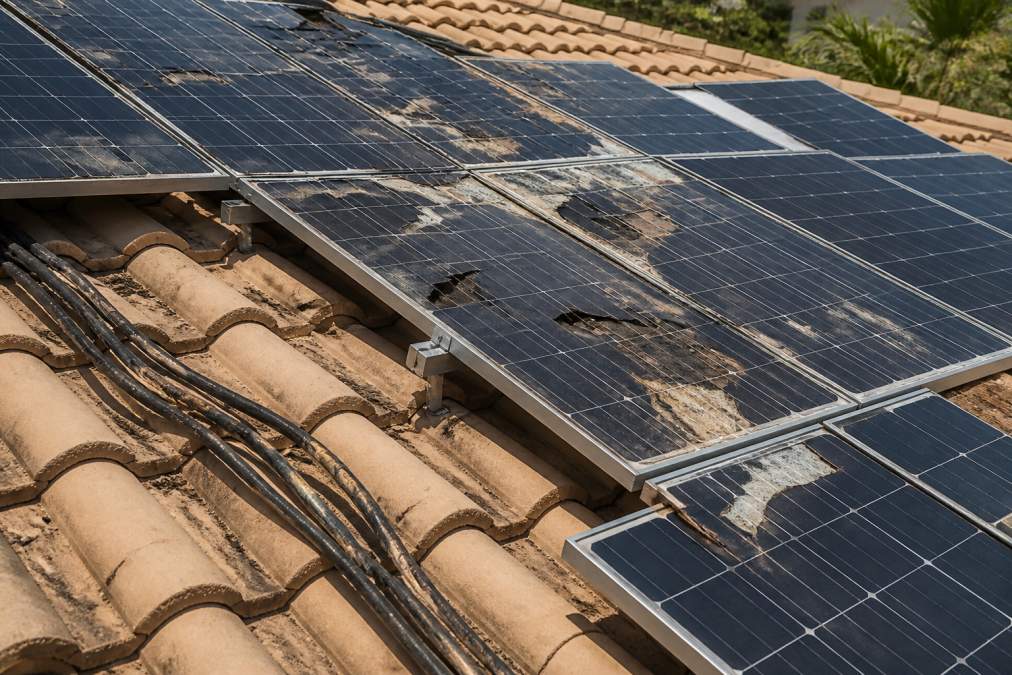
Avoiding Cheap Solar Panel Failures: Gold Coast Guide
Table of Contents
- Why Cheap Solar Panels Fail on the Gold Coast
- The Impact of Salt Air on Solar Panels
- How to Identify CEC Accredited Solar Installers
- What to Look for in a Solar Quote
- Solar System Inspection Checklist Before Installation
- Warranty and Aftercare: Your Protection Against Failure
- Conclusion
Last Updated: August 29, 2026
Why Cheap Solar Panels Fail on the Gold Coast
Cheap solar panels fail on the Gold Coast because they're not built for this environment. Intense UV exposure, high humidity, and salt-laden air expose manufacturing shortcuts almost immediately. A panel surviving five years inland can degrade significantly faster when installed near the coast.
The problem extends beyond the panels themselves. Cheap installations cut corners on mounting hardware, wiring, inverters, and installation quality. When systems fail, homeowners face underperforming equipment, voided warranties, and no one taking responsibility. Working with CEC accredited solar installers is critical.
Avoiding cheap solar panel failures requires understanding three things: how local climate attacks solar equipment, what separates quality installers from budget operators, and what to check before your system goes live.
The Impact of Salt Air on Solar Panels
Salt air corrodes metal components faster than almost any other environmental factor. Solar panels contain aluminium frames, steel mounting hardware, and copper wiring, all vulnerable to salt-induced corrosion. On the Gold Coast, salt spray reaches inland properties regularly during storms and high winds.
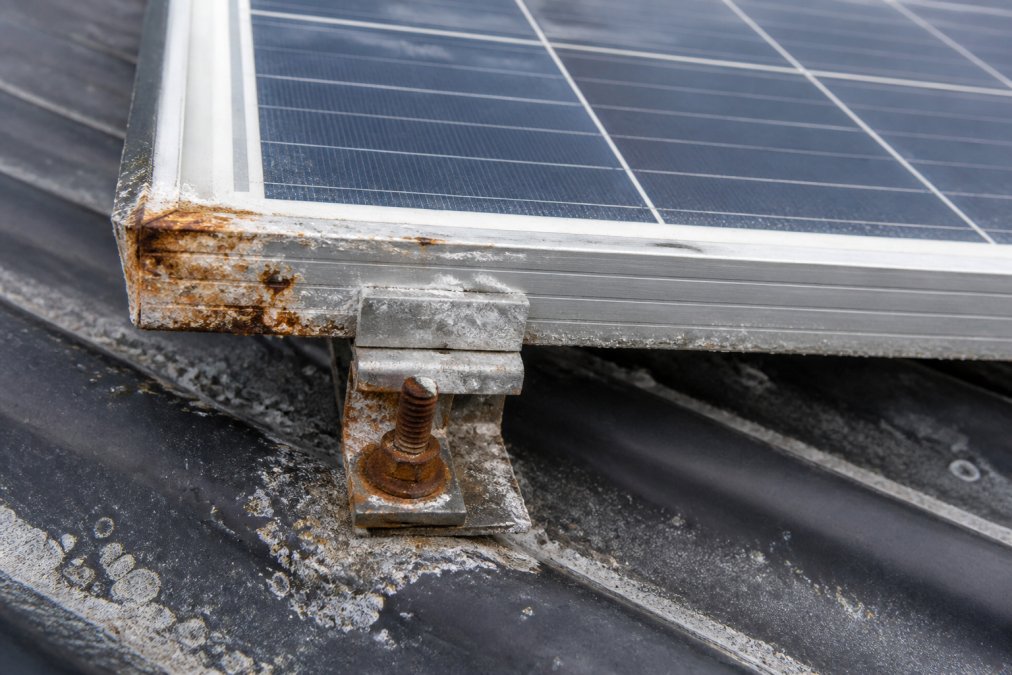
Cheap panels use lower-grade aluminium and minimal protective coatings. Within two to three years, frames show visible corrosion and internal connections fail, reducing power output and creating fire hazards (peer-reviewed research). Quality panels use marine-grade aluminium, anodised finishes, and sealed connectors designed for coastal environments.
The mounting system matters equally. Budget installations use standard stainless steel bolts and basic brackets. Coastal-grade systems use duplex stainless steel or hot-dip galvanised hardware rated for salt spray exposure, verified through AS/NZS 3995 testing standards (standards.org.au).
Wiring degrades faster in salt air. Cheap installations use standard PV cable with minimal UV and salt protection. Quality systems use marine-grade cable with superior sheathing. Failed cable connections can cause complete system shutdown and often aren't covered if cable doesn't meet installation standards.
Budget inverters corrode internally when exposed to salt air, reducing efficiency and eventually failing. Quality installations mount inverters in protected locations or use marine-rated enclosures. When cheap solar panels fail on the Gold Coast, corrosion is almost always the root cause, often progressing internally before visible degradation appears.
How to Identify CEC Accredited Solar Installers
CEC accreditation confirms installers meet strict technical standards, carry proper insurance, and maintain ongoing training. However, accreditation confirms minimum standards, not that they're right for your property or won't oversell unnecessary capacity.
Start by verifying accreditation directly on the CEC website using the installer's name and licence number. Confirm their accreditation is current, covers solar PV installation, and they're licensed in Queensland with proper insurance.
Ask how long they've been operating. Installers with five-plus years of Gold Coast experience understand local conditions, council requirements, and which systems perform well in this climate. Request references from recent installations on similar properties, asking about system performance, installer responsiveness, and whether promised energy production was achieved.
Watch for red flags: pressure to decide immediately, systems dramatically larger than energy bills justify, or prices far below market rates. These indicate corner-cutting or overselling.
Ask whether the same person who quotes your job supervises installation. At Brux Electrical, the person providing your quote handles installation from start to finish, eliminating disconnect between promise and delivery. Many larger installers use call centres for quotes and subcontractors for installation, often leading to miscommunication and lower quality.
What to Look for in a Solar Quote
A quality solar quote explains why you need a specific system size, what equipment is included, how the system will perform, and what happens after installation. A cheap quote is just a price and generic product names.
System sizing should reference your electricity bills and explain how the proposed system matches your consumption. The quote should specify equipment brands and models, not generic descriptions. Cross-reference panels and inverters against Australian reviews and performance data, checking whether equipment carries Australian warranties.
Ask about the mounting system. The quote should specify racking type, materials used, and how it's rated for your roof type and local wind loads. On the Gold Coast, proper quotes address wind loads with marine-grade hardware and engineering calculations specific to your property.
Wiring and switchboard work should be itemised with cable gauges, protection devices, and system integration details. The quote should include a performance estimate showing annual energy production in kilowatt-hours, which you can verify against independent solar calculators.
Labour costs should be transparent, showing labour hours, site assessment, council applications, and inspection fees rather than bundling everything into one line. Quality panels carry 25-year product warranties and 10-year performance warranties (seia.org). Check whether warranties cover salt-air corrosion and whether claims are easily processed in Australia.
Ask about aftercare. What happens if something fails in year three? Will the installer still be in business and willing to help? Get at least three quotes from different installers, comparing detail and logic behind each, not just price.
Solar System Inspection Checklist Before Installation
Before your system goes live, inspect it thoroughly to catch installation errors and verify equipment quality matches your quote.
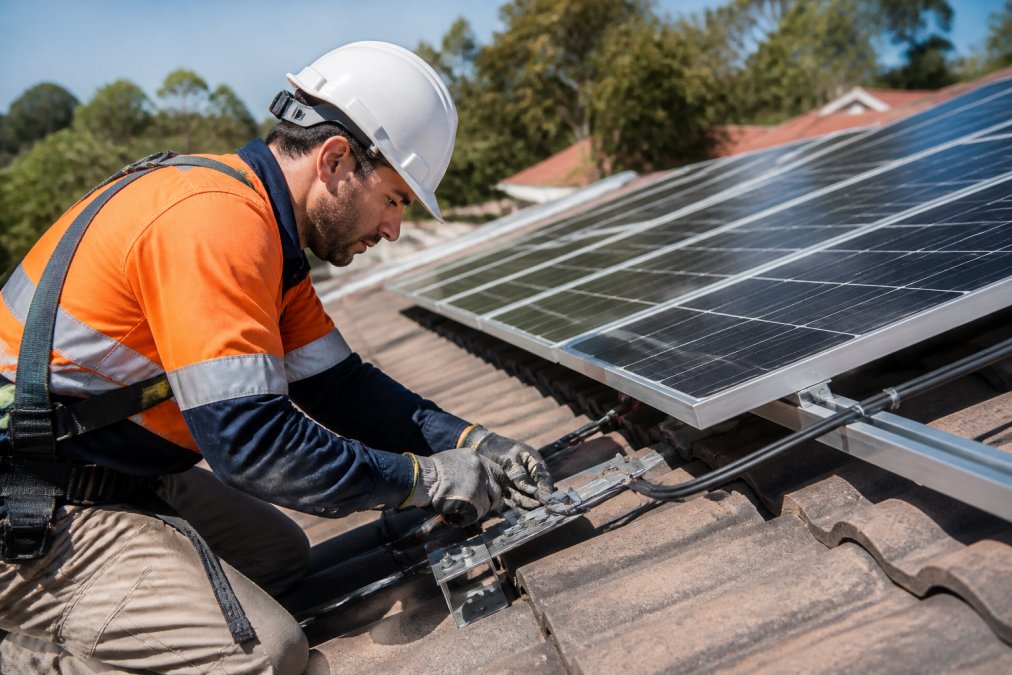
Check the physical installation. Are panels level and properly spaced? Is racking securely fastened with tight bolts and corrosion-resistant hardware? Proper fastening is critical on the Gold Coast where wind can lift poorly mounted panels.
Inspect wiring for UV-resistant cable properly clipped and routed away from sharp edges or heat sources. Connections should be tight and weather-protected. Check junction boxes on each panel for sealing, as open boxes allow moisture and salt air inside, accelerating corrosion. Connectors should be MC4 or equivalent marine-rated types.
Inspect switchboard and inverter installation. The switchboard should be properly labelled with all safety devices installed correctly. The inverter should be in a protected location, not exposed to direct sun, rain, or salt spray. Verify proper earthing system with earth rods, bonding straps, and grounding conductors installed to Australian standards.
Request documentation including system diagram, performance estimate, warranty documentation, and certificate of compliance confirming the system meets Australian standards. Test the system before signing off, asking the installer to demonstrate the monitoring app and explain normal performance. Don't accept vague assurances; a quality installer welcomes questions.
Warranty and Aftercare: Your Protection Against Failure
Your warranty is only valuable if the installer honours it. Quality installers back their work with written warranties covering equipment and installation labour, typically 10 years for parts and five years for labour. Cheap installers offer minimal warranties with exclusions making them practically worthless.
Read warranty terms carefully. Does it cover salt-air corrosion? Many cheap warranties exclude environmental damage. Does it cover the inverter? Inverter replacement costs are high. Ask potential installers about their aftercare process, response time, and whether diagnostics are included.
Consider whether the installer will still be in business in five years. Local installers like Brux Electrical have deep community roots and are more likely to provide support when needed. Keep all documentation stored safely, providing it to new owners if you sell the property.
Conclusion
Avoiding cheap solar panel failures on the Gold Coast comes down to choosing quality equipment designed for coastal conditions, selecting a CEC accredited installer with local experience, and inspecting the system thoroughly before it goes live.
The cheapest system today often becomes the most expensive in five years when it fails and warranties won't cover repairs. A quality installation costs more upfront but delivers reliable energy production for 25 years, backed by warranty and aftercare you can rely on.
Brux Electrical specialises in solar, battery, and off-grid systems designed for the Gold Coast environment. We provide clear, itemised quotes without jargon, with the same local expert who quotes your job performing your installation from start to finish. We use marine-grade equipment, proper coastal-rated hardware, and comprehensive aftercare.
Get a quote from Brux Electrical and see how a quality solar installation protects your investment while delivering the energy independence you're looking for.
Frequently Asked Questions
What are the common signs of cheap solar panel failures in coastal environments?
Cheap solar panels in coastal areas often show corrosion on frames and connectors within 2-3 years, reduced output without obvious damage, and inverter failures. Salt air accelerates degradation of low-grade materials. Panels with poor junction box sealing fail faster. Performance drops of 10-15% annually signal low-quality components. Regular monitoring catches these issues early, but prevention through quality installation is far more cost-effective than replacing failed systems.
How can I verify if a solar installer is CEC accredited?
Check the Clean Energy Council's installer register on their website, search by company name or licence number. Genuine CEC accredited solar installers display their accreditation certificate and licence number on quotes and websites. Ask to see proof of current accreditation before signing any contract. CEC accreditation means the installer has met training, safety, and quality standards. Unaccredited installers may offer lower quotes but risk poor workmanship, voided warranties, and systems that fail prematurely.
Why should I pay more for quality solar installation when cheaper quotes are available?
Cheap solar quotes often use low-grade panels, undersized inverters, or poor installation practices that fail within years. Replacing a failed system costs far more than the initial savings. Quality installers right-size systems to your actual energy needs, use durable components rated for coastal conditions, and provide reliable aftercare. You're not paying for a brand name, you're paying for systems that actually work, warranties that are honoured, and direct access to someone who stands behind their work.
What should I look for in a solar quote to spot low-quality components?
Request specific brand names and model numbers for panels, inverters, and mounting hardware, generic descriptions are a red flag. Check that panels carry 25-year performance warranties and inverters have 10+ year coverage. Vague quotes without itemised breakdowns hide cheap components. Ask how the system size was calculated based on your actual electricity bills. Quality quotes explain why the system suits your roof, climate, and usage. Compare the warranty terms and aftercare commitment, not just the price, that's where cheap installers cut corners.
Ready to protect your solar investment with a system built for the Gold Coast? Contact Brux Electrical for a transparent quote tailored to your property and energy needs. We'll explain exactly what you're getting, why it's right for your situation, and how we'll support your system long after installation. Call us today or request a quote online, no pressure, just straightforward advice from a local team that's been installing quality solar systems on the Gold Coast for years.
This article was written using GrandRanker
